If you have dear ones whose health you can’t stop thinking about—even while on your dream trip to Japan—why not bring back a healing gift to show how much you care? Japan has many healing shrines and temples—some specific, some general—and you need not be a practicing Buddhist or a Shinto believer to enjoy the benefits of these ancient power spots.
Asking for healing help at a Japanese shrine or temple is more akin to wishing on a star or petitioning a saint for intercession than praying to a god that’s not your own. Japanese people believe power resides in all living things and natural landmarks, and you can ask it to assist you by making an offering and asking sincerely for what you need.
The gift of caring can be as simple as buying a healing memento from any shrine or temple, or as elaborate as seeking out one of the places renowned for healing and making your specific wish according to the customs of that place. Read on, for both!
Healing souvenirs you can get at any shrine or temple
O-mamori healing amulets
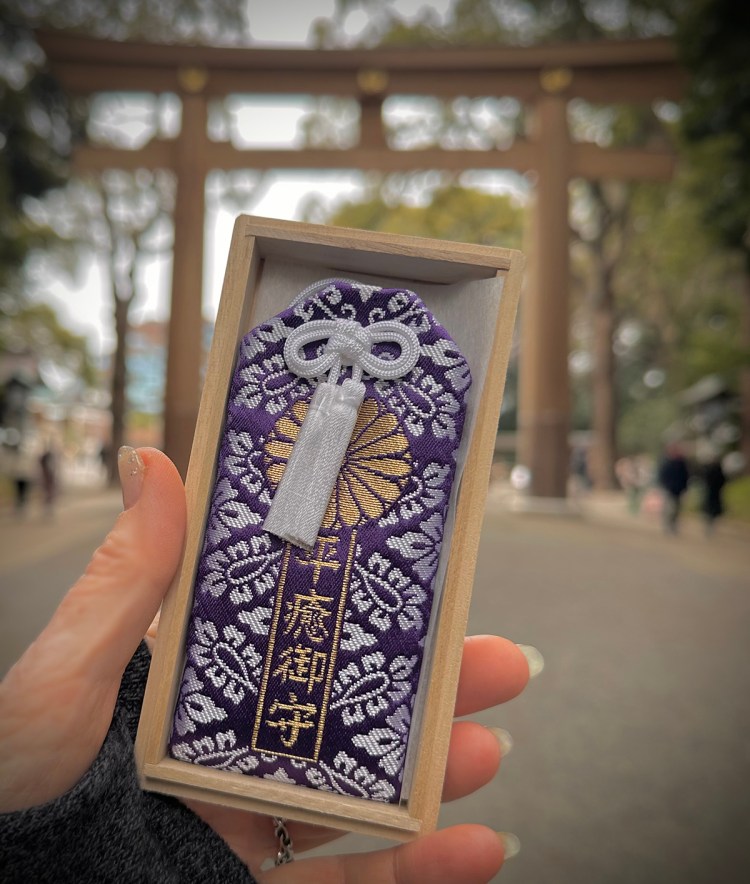
Every shrine and temple sells the beautiful brocade amulets called o-mamori. Not only are they lovely, they’re small and easy to pack!

Each o-mamori has a specific purpose—children carry the “safety-in-traffic” one to protect them on their way to and from school, students carry the “do well on examinations” amulet into every test, and so forth—but the one you want for your ailing loved one is called “byōki heiyū” (pronounced byō-key hey you). It harnesses the power of the temple or shrine to heal someone who is sick.
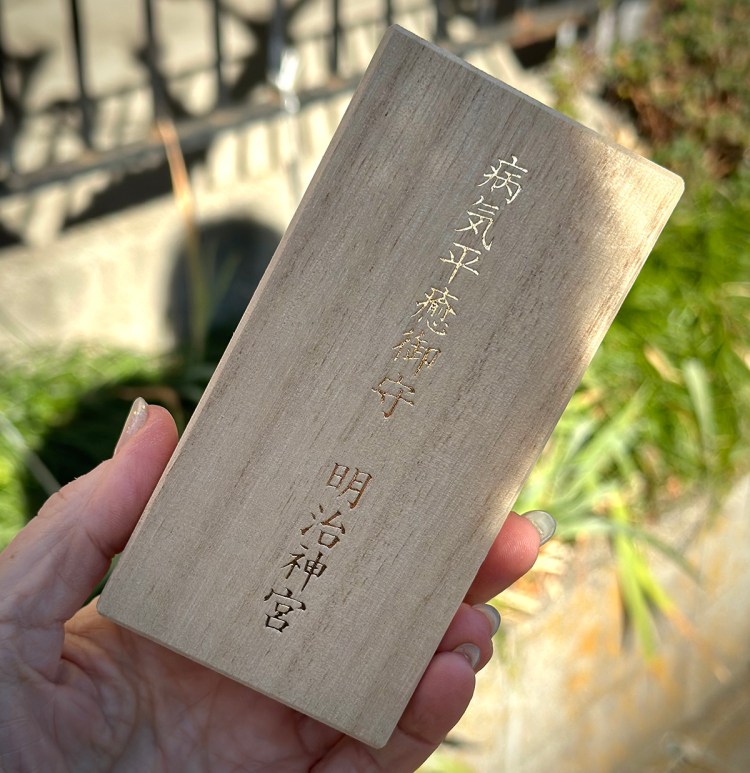
Even though these can be bought at any shrine or temple, they can still be a handsome and meaningful gift. Usually less than ¥1000, you can sometimes get magnificent ones for a little more. For ¥1500, this one from the venerable (and must-see) Meiji Shrine…
comes wrapped in a lovely wooden box. Your loved ones can’t help but get the message that you care after receiving one of these!
Ema wooden plaques

All shrines and temples sell their own unique ema plaque designs. Write your wish on the back, leave it on the rack and take a picture to send, or take your ema home to convey your healing wishes.
Daruma figures
These roly-poly figures represent a Buddhist saint known as Daruma, and they make delightful gifts because not only can they be bought all over the place (in stores as well as at some temples) they come in many colors, shapes and sizes.

Even…Elvis!

How to wish for healing (or anything else): Color in one eye of the Daruma figure when you make your wish, then color in the other after your wish comes true.

Visit a shrine or temple renowned for healing
Here are my favorites in and around Tokyo, and how to go about tapping a little of their healing energy for yourself or your beloveds. Check here to see if some of them are near your other must-see spots!
Togenuki Jizo at Kogan-ji temple

The most famous healing figure in Tokyo is at the temple right on the charming Koshinzuka Shopping Street, which is one of the most delightful traditional shopping streets in Tokyo. The Togenuki Jizo is especially renowned because you can direct its powers toward the body part where healing is most needed.
How to wish for healing from the Togenuki Jizo:
1: Buy a white washcloth at the nearby stand (¥100) or bring your own special one to give your friend when you get home. (If you bring your own, it’s a good idea to also bring a plastic bag to take home the wet washcloth.) As you stand in line, watch what other people are doing and follow their example. If nobody is there:
2: Put a coin in the offering box. Any amount is fine, but ¥100 is customary.
3: Use a ladle to dip some sacred water from the basin and pour it over the figure’s head. There’s no limit to how many times you can do this, so keep ladling until the entire figure is wet.

4: Use the ladle to get your washcloth completely wet. Never dip your washcloth or hands in the water directly.
5: Use your wet cloth to “wash” the body area that needs healing. If it’s the whole body, wash the whole figure.
6: Put your wet washcloth in a plastic bag and hang it up to dry naturally the next time you have a chance.
7: When you get home, give it to your loved one and tell them how you made a trip to Kogan-ji to think of them and wish for their recovery.
Kobo Daishi figure at Nishiarai Daishi temple
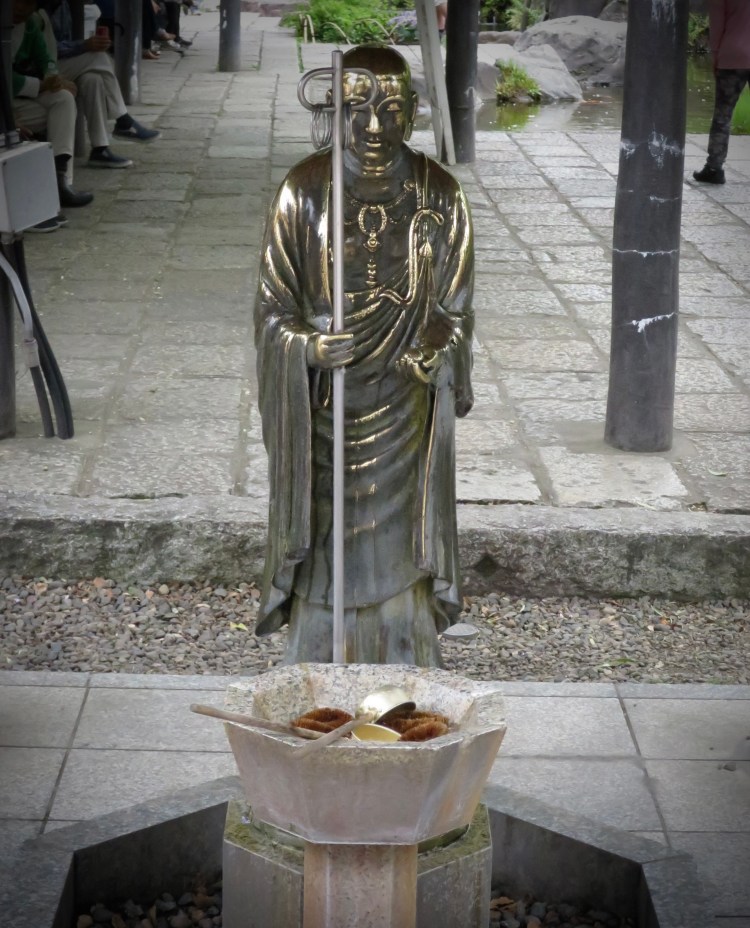
This statue of Shingon Buddhism founder Kobo Daishi (installed at one end of Nishiarai Daishi temple’s giant wisteria trellis) is also a healing figure. You can wish for healing (for yourself or another) by putting a coin in the offering box, then rubbing one of the scrub brushes over the body part that you’re hoping to heal.
There’s another healing shrine on the grounds of Nishiarai Daishi temple, and you might want to swing by if you have…warts!
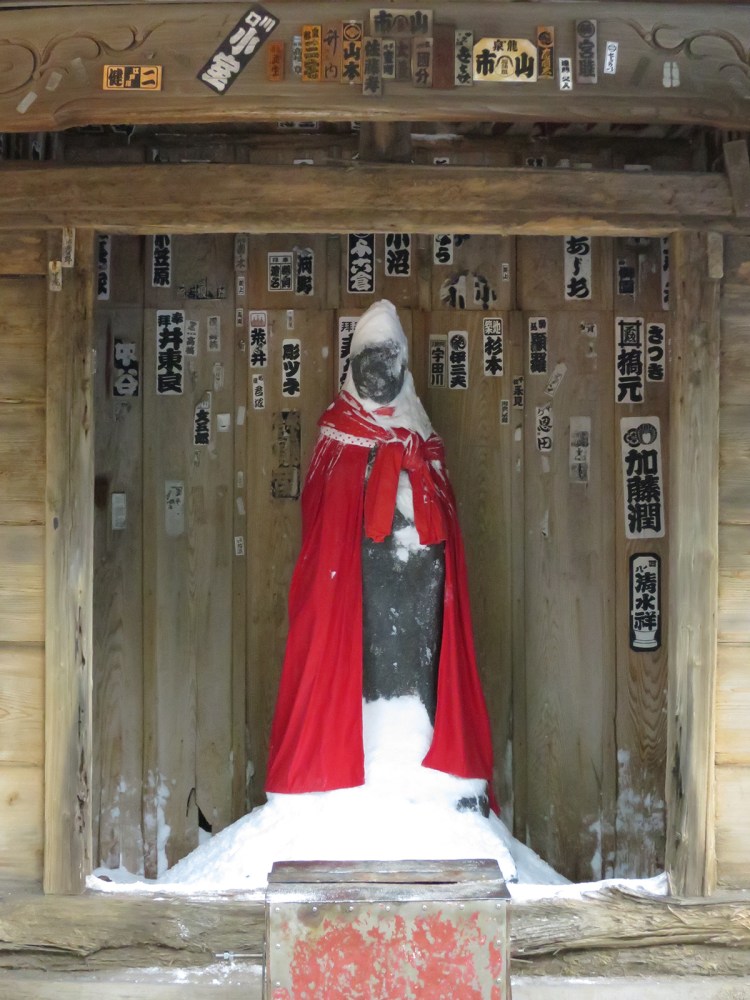
This Jizo figure is believed to cure your carbuncles if you put a coin in the offering box, scoop up some salt to pour over Jizo-san’s head, then rub a pinch on your offending bump.
The Substitute Samurai at Kamakura-gu shrine

Behind the main sanctuary at Kamakura-gu shrine in Kamakura (my favorite day trip from Tokyo), there’s a statue of a samurai warrior that’s known for taking on the suffering of others in their place.
1: Toss a coin into the offering box (at least ¥100), bow twice, clap your hands, then hold them together as you make your wish for healing. Bow again.
2 (optional): I’ve never seen anyone doing this—I’m usually the only one visiting—but the figure has several spots that have been worn shiny, suggesting many people touch the part of the body that needs healing.
What souvenir to bring back for your loved one:
One of these charming dragon clappers might be just the thing! They’re unique to this shrine and not only can they be given as a memento of your healing wishes, they can be clapped with a very satisfying clacking sound around the house to banish any bad energy that may be lurking.

Or you can buy an ema.

Usually people write their wish on the back of these wooden plaques and hang them on the rack at the shrine (or temple), but you can also buy them to carry back as a memento of the visit you made on someone’s behalf to wish for them to be healed.
Shibarare Jizo at Nanzo-in temple
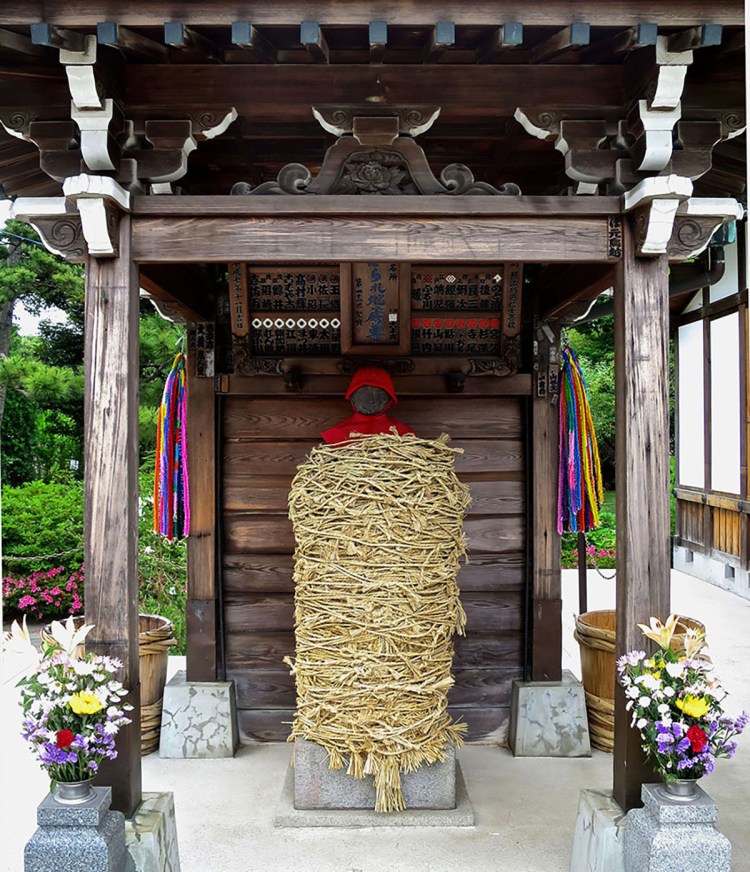
The Shibarare Jizo is known for getting people out of desperate circumstances, and that extends to health issues too. Here’s the story behind this particular Buddhist saint, and here’s how to make a wish at this unusual temple!
Nanzo-in sells an especially charming ema plaque, if you’re looking for a cheering souvenir, or a more serious representation of the Shibarare Jizo if you’re going for serious and heartfelt.

Three Dragons Wishing Fountain at Fukugawa Fudo-san

The three-dragon fountain at Fukugawa Fudo-san temple is where you can write your healing wish on special paper and when it dissolves completely, your wish will be granted.
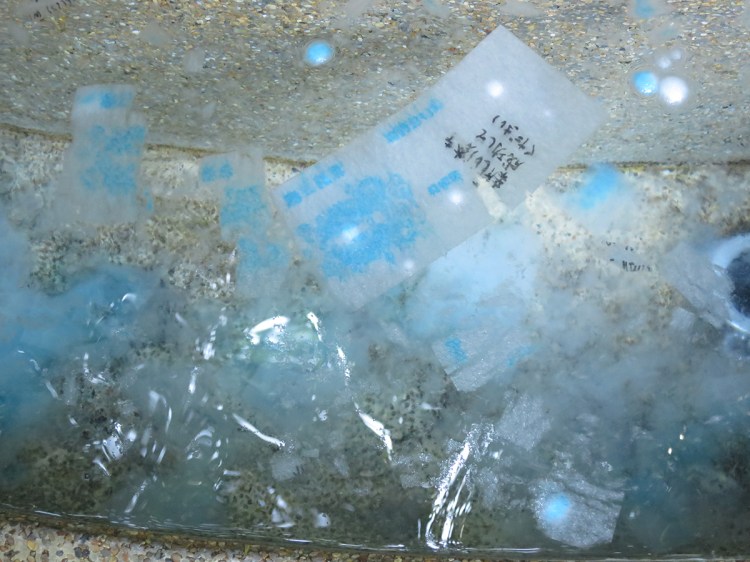
The place where you pay your coin and write your wish looks like this:

If you don’t have time to make a special stop at one of these shrines and temples, no worries, you can still bring back a healing gift!
And finally, this last one isn’t for illness, but if you know someone who’s pregnant or trying to get pregnant, this is the place to wish for conception and safe baby deliveries!
The Puppy figure at Suitengu shrine

The Suitengu shrine specializes in everything having to do with childbirth, so if anyone you know is facing labor and delivery in the near future, toss a coin in the offering box by the puppy figure and rub it’s head while also giving a pat to its mom. You can see just where to do it by how shiny those spots are! Dogs and cats are popular figures at Japanese childbirth shrines, because they give birth so effortlessly.
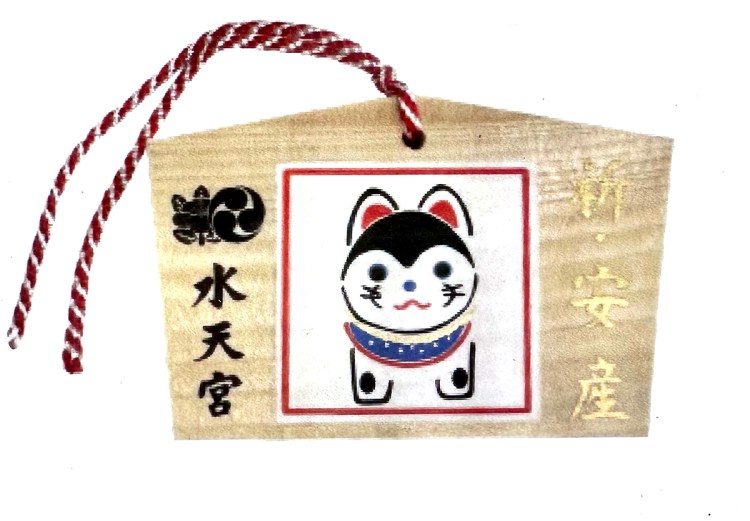
After bestowing your pat-pats, bring back one of these ema to hang in the mother-to-be’s room.
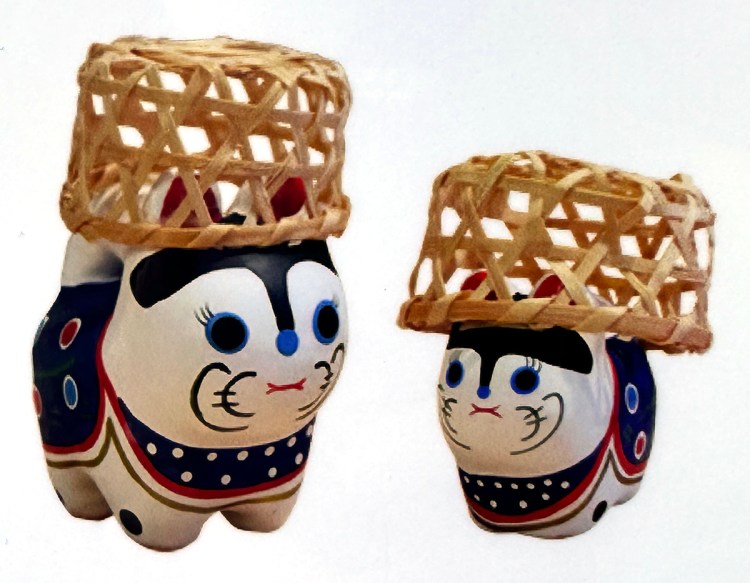
And if you know someone who’s trying to get pregnant, this little figure of a dog carrying a basket is believed to help things along…
And if nobody you know needs healing at the moment, check out the Eleven Strangest Shrines in Tokyo because there’s sure to be a shrine that specializes in whatever YOUR heart desires!
•
If you enjoyed this, subscribe!
Get all the latest Japan travel tips and tricks for free ヽ(*^ω^*)ノ
Here are some more tips to make your Japan travel easier:

And here are the other places I take my friends when they come to town
•
Jonelle Patrick writes novels set in Japan, produces the monthly e-magazine Japanagram, and blogs at Only In Japan and The Tokyo Guide I Wish I’d Had
 Jonelle Patrick writes about Japan