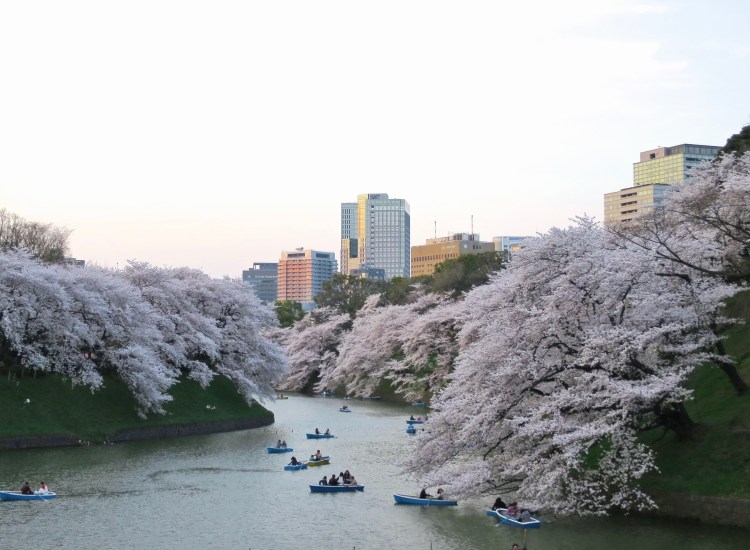
Kudanshita is home to the astonishing cherry blossom display at the Imperial Palace moat, as well as an annual amateur sumo tournament, a WWII museum like no other on earth, and Tokyo’s most controversial shrine. Don’t miss being in Kudanshita for: New Year’s festivities, the annual amateur sumo tournament at the beginning of April, cherry blossom season from late March through mid-April, and July for the Mitama Festival
For festivals, WWII deep dives, and sheer cherry blossom goodness, Kudanshita is the place to be. Let’s skip right to The Pinkness, because this is the place where you can hire a boat during cherry blossom season to go out on the Imperial Palace moat and float beneath the heavenly branches…

stroll along the top of the levee beneath a bower of flowers…

or just enjoy them from one of the many vantage points atop the levee.
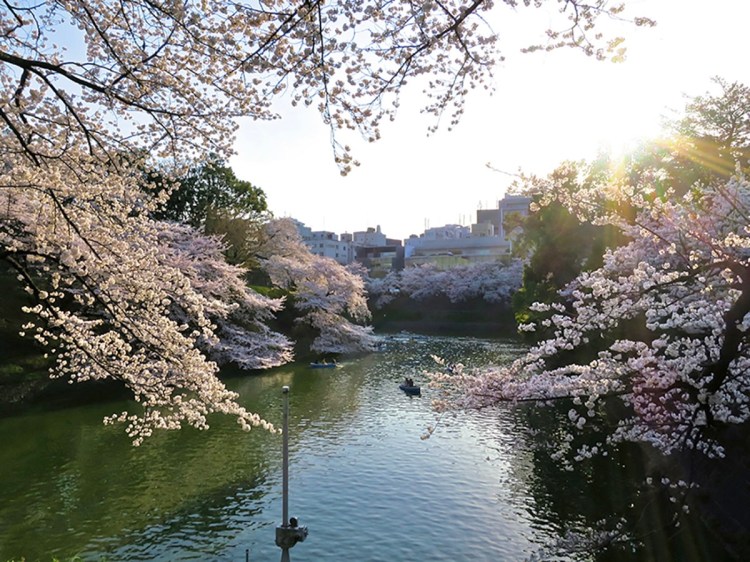
They even light up the cherry blossoms at night, so everyone can enjoy the trees after work.

•
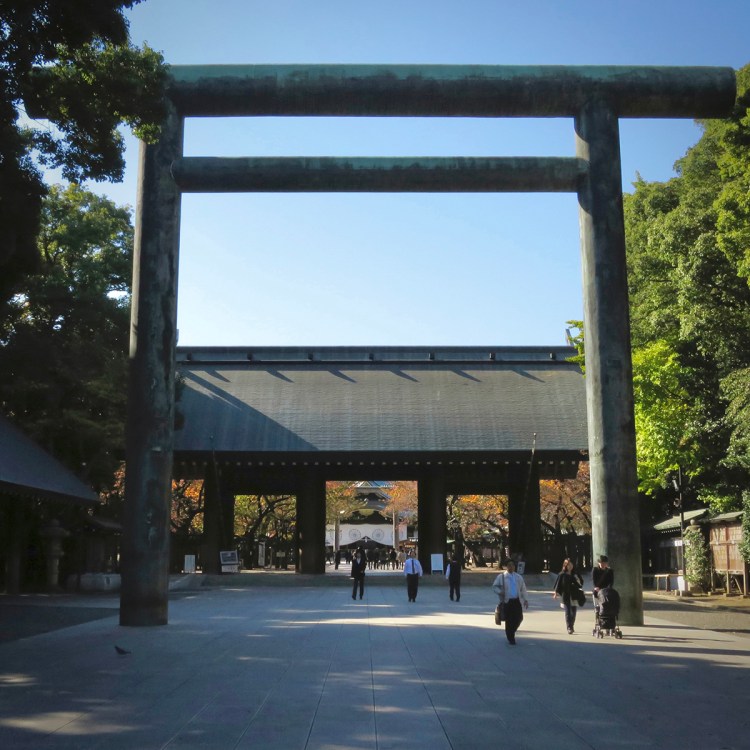
Kudanshita is also home to the Yasukuni Shrine, one of the most magnificent—and certainly the most controversial—shrines in Japan.
Like all Imperial shrines, the sanctuary at the Yasukuni shrine is built of plain cedar, with gold fittings.
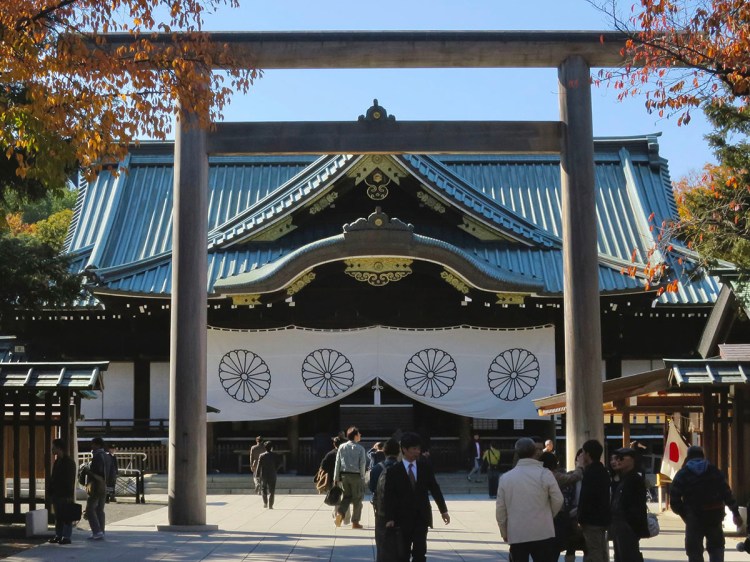
The spirits of all who died in service to their country are enshrined at Yasukuni, including some souls that belonged to people who are considered war criminals outside Japan, so it makes the news anytime someone in government goes there to publicly pay their respects.

But because this is the most staunchly traditional of shrines, festivals are an old-fashioned feast of sizzling street food and entertainment, and they happen several times a year: first at New Years, then in spring when the cherry trees are blooming, in fall when the ginkgo trees turn to gold, and in July for the Mitama Matsuri.
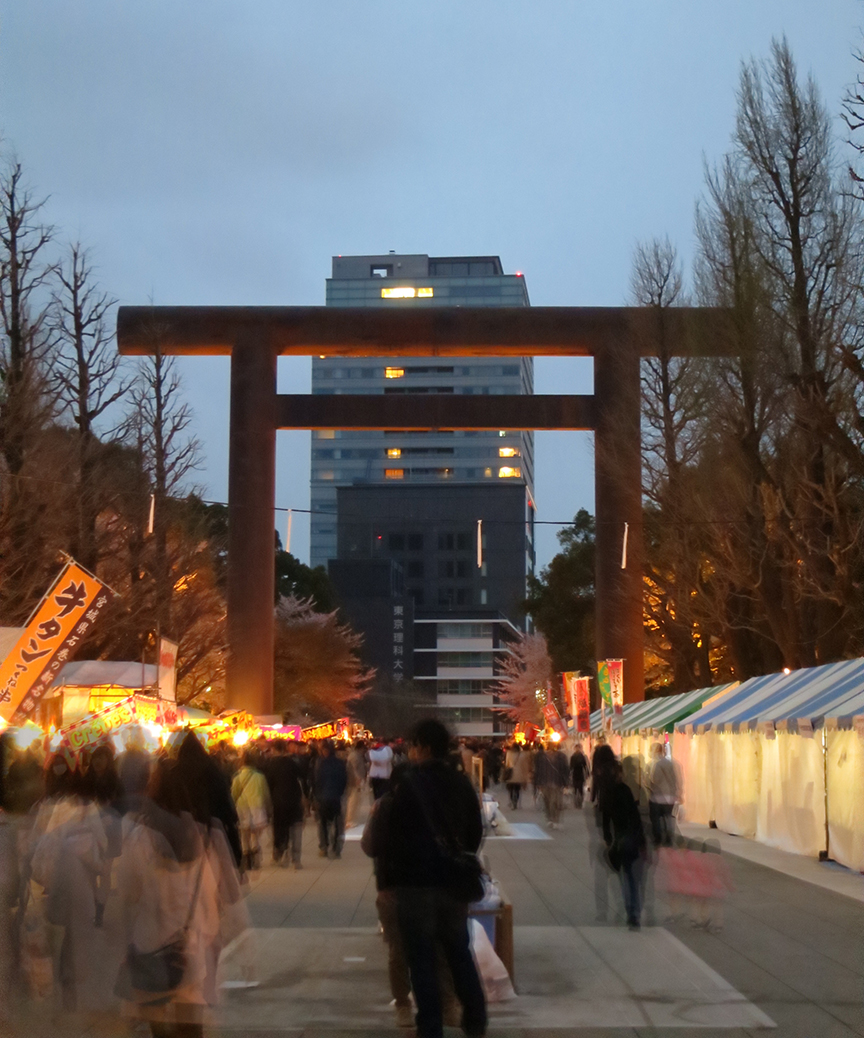
Nostaligic street food like skewered ayu fish, octopus balls, fried noodles, and other treats that remain unchanged in generations are served up by dozens of booths.

This could be your big chance to try squid on a stick!

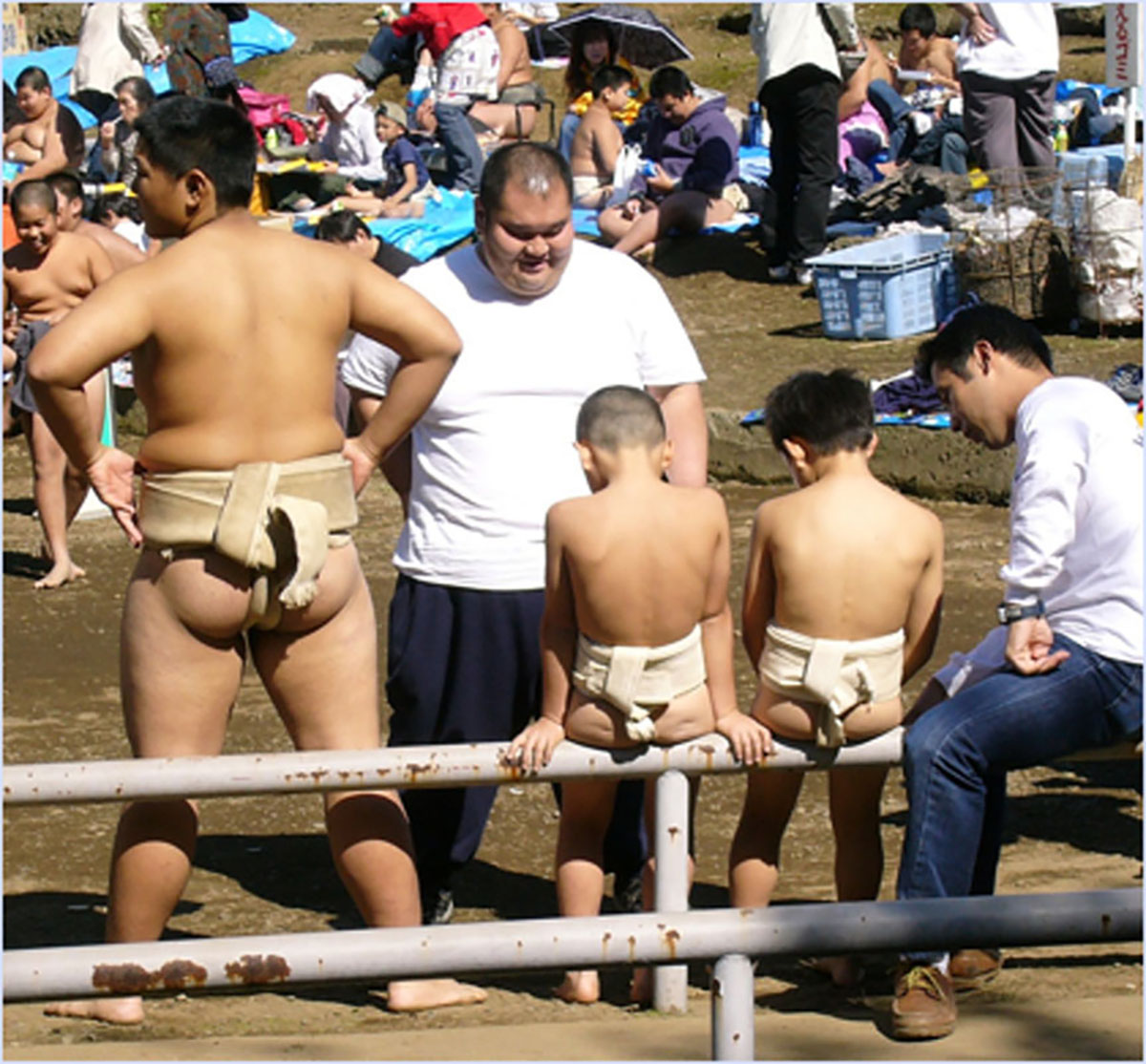
Once a year at the beginning of April, the shrine hosts a free sumo tournament for all ages in their outdoor amphitheater.
It also hosts an extensive WWII museum. The Yushūkan houses a fascinating collection of Japanese wartime artifacts and weapons…

including two rooms of personal memorabilia from kamikaze pilots. There’s also a surprising hall exhibiting planes, tanks and torpedoes, where I learned that they didn’t just fly planes.
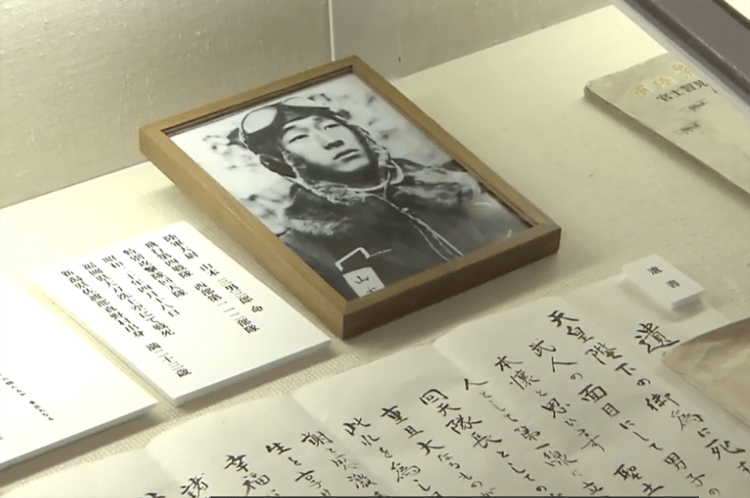
This museum is the only place in the world that gives the Japanese perspective on events leading up to their decision to attack Pearl Harbor, and it’s well worth a visit to see the exhibits illustrating a side of the war that’s not well known outside Japan.
•
If you enjoyed this, subscribe!
Get all the latest Japan travel tips and tricks for free ヽ(*^ω^*)ノ
And here are the other places I take my friends when they come to town
•
Jonelle Patrick writes novels set in Japan, produces the monthly e-magazine Japanagram, and blogs at Only In Japan and The Tokyo Guide I Wish I’d Had
 Jonelle Patrick writes about Japan