
The Tomo Museum showcases artists taking traditional techniques in whole new directions, and the way they exhibit each piece is a work of art in itself. It’s an especially nice place to visit on a hot or rainy day.
This is the most spectacular ceramics museum in Japan. The galleries are designed to frame many different perspectives of the pieces on display and create a wonderful, relaxed atmosphere for viewing the collection. They’re not shy about using rich colors to make each piece look its best, and instead of being shut away behind glass, much of the art can be appreciated in all its glory with nothing between your eyes and all that fabulous clay.
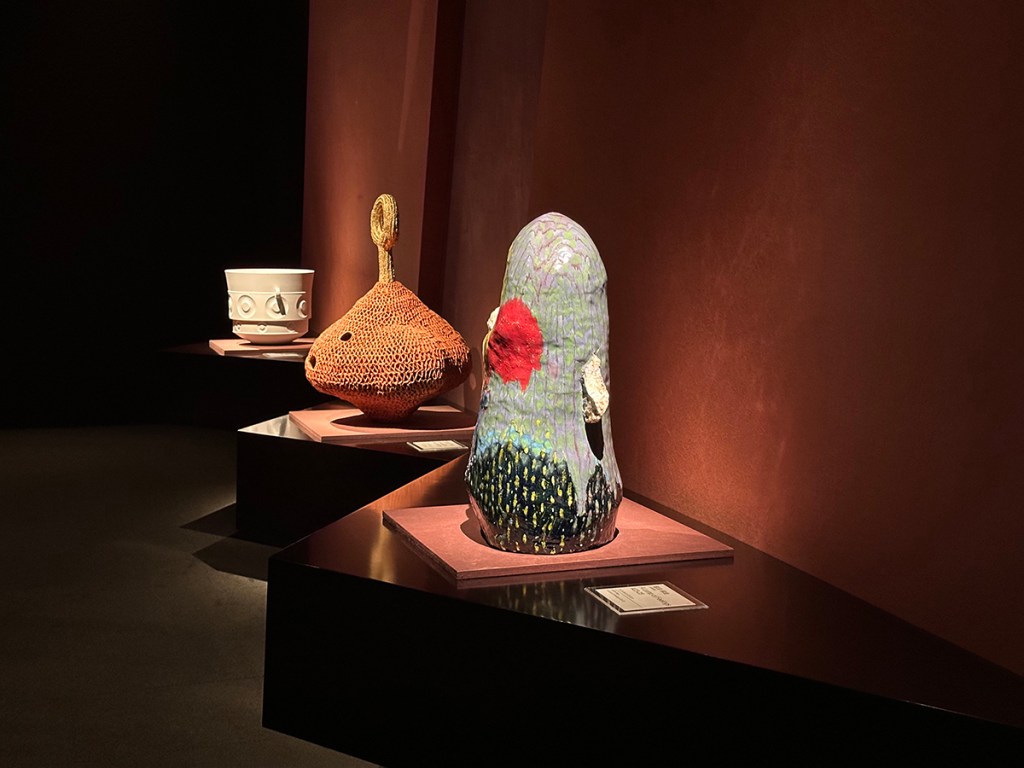
The curator must have been a stage manager in another life, because each artwork shines like a diva in the spotlight

and the sets for each artwork are graphically intentional, sometimes referencing the work’s theme, like this vase under a full moon…

Some displays draw you in to examine a delightful piece that otherwise might get lost among the grander artworks.

Some items in the collection are, of course, merely the most achingly beautiful example of their type
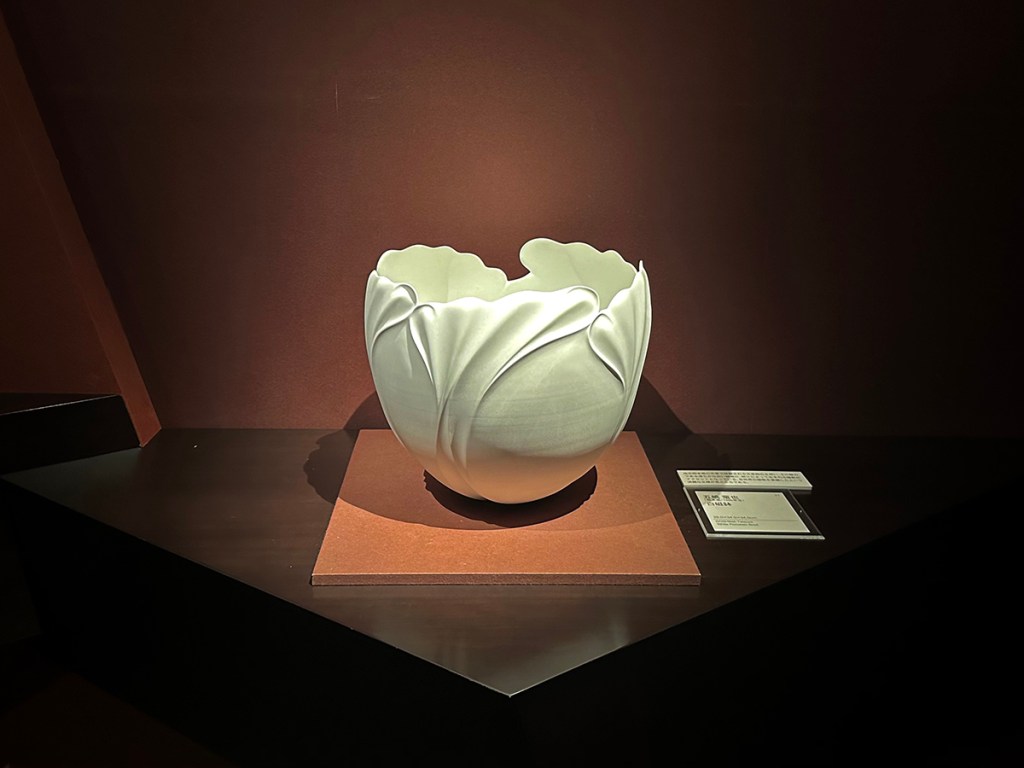
but many of them are made by the most skilled clay artists in Japan doing conceptually groundbreaking work.
There are pieces made in traditional ways, but with quirky new subjects…
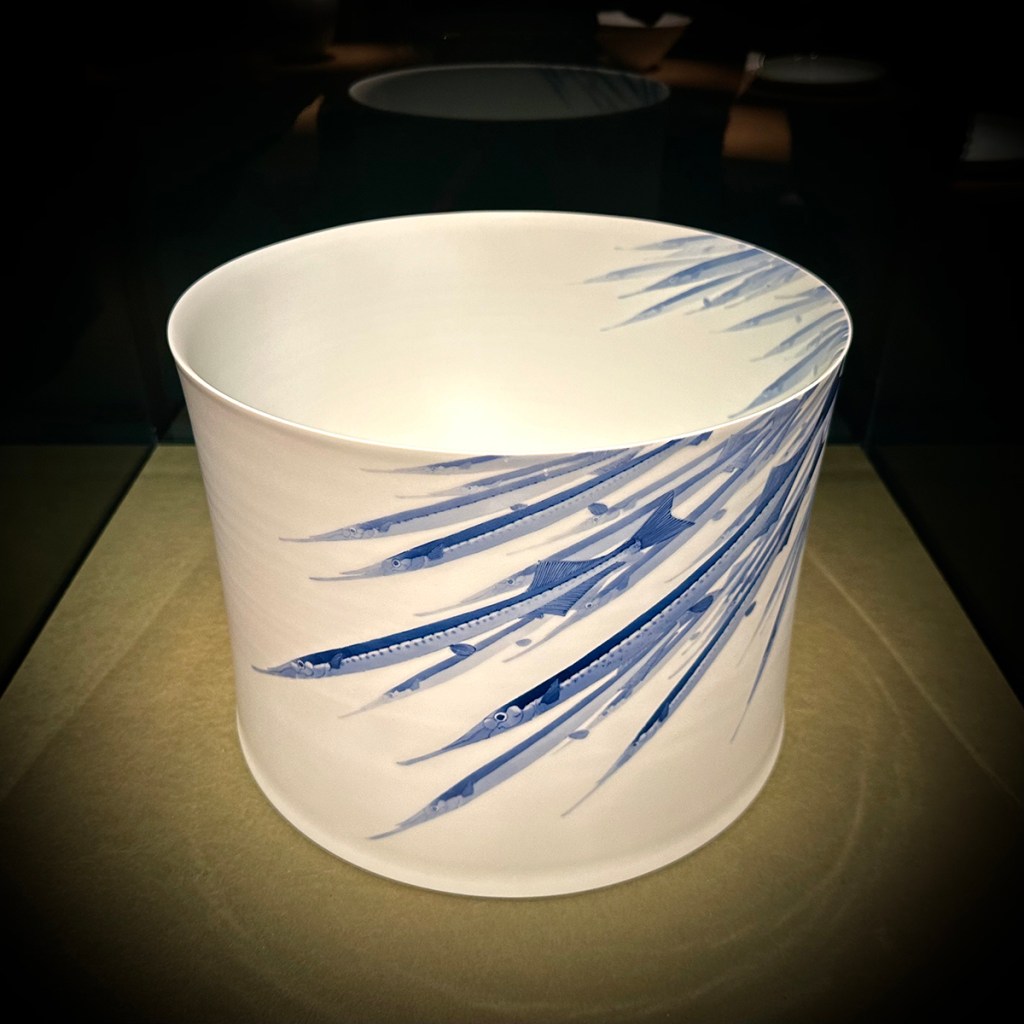
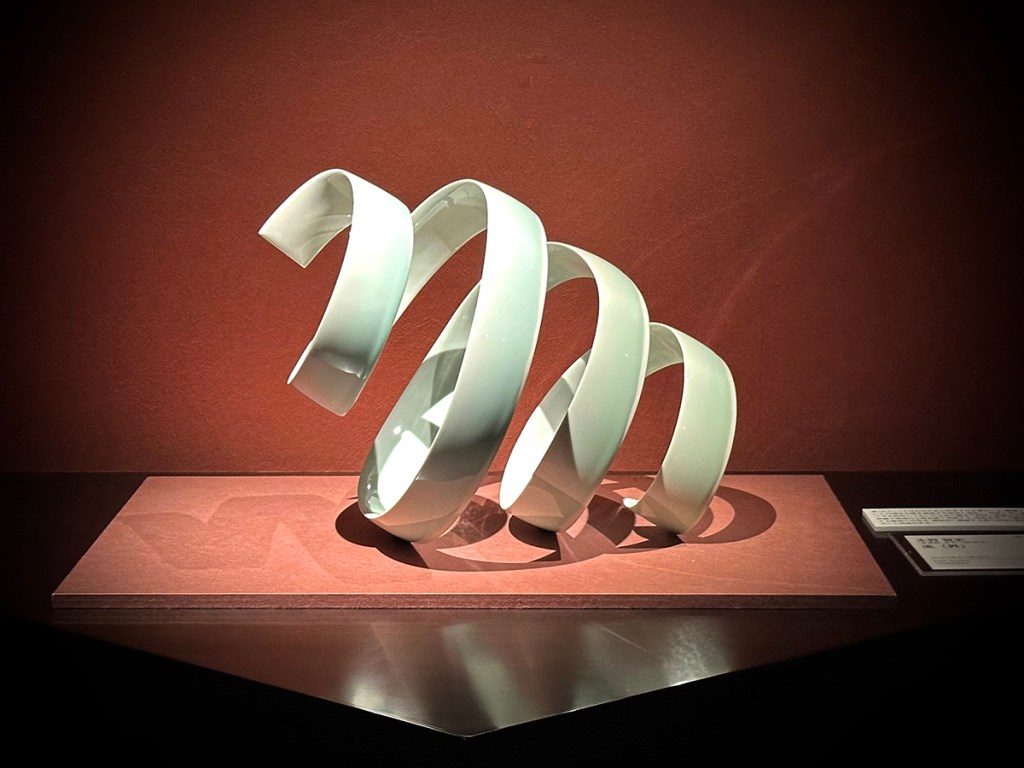
and artists who use traditional porcelain, glazes and techniques to create completely new forms
Some are by foreign clay artists who bring fresh eyes to old Japanese symbols, like this ceramic version of the traditional tomeishi “do not enter” sign (the rocks bound by knotted twine you sometimes see placed in the center of forbidden pathways)
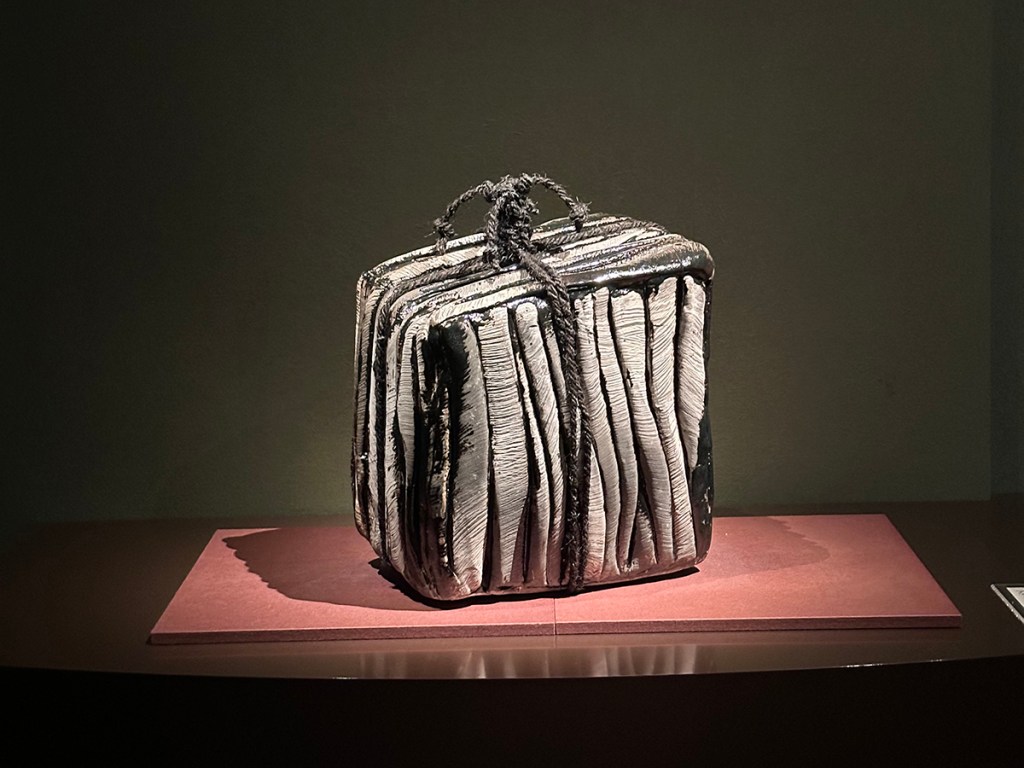
Not only does the Tomo Museum’s ever-changing collection exhibit works from every ceramic tradition from all over Japan, they demonstrate multiple visions of how that technique can be used.
These, for example, look like glazed blue and white export-ware at first, but upon closer inspection, you can see the pattern is actually a mosaic of blue and white clay (see how the pattern is the same on the inside surface and the outside?)
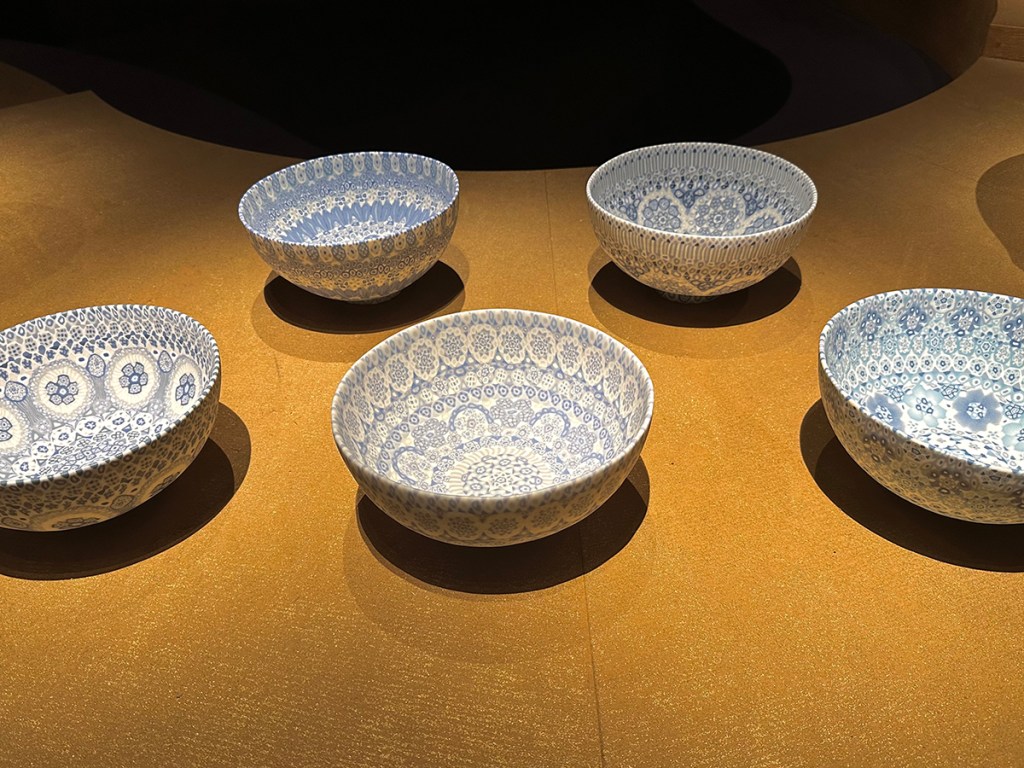
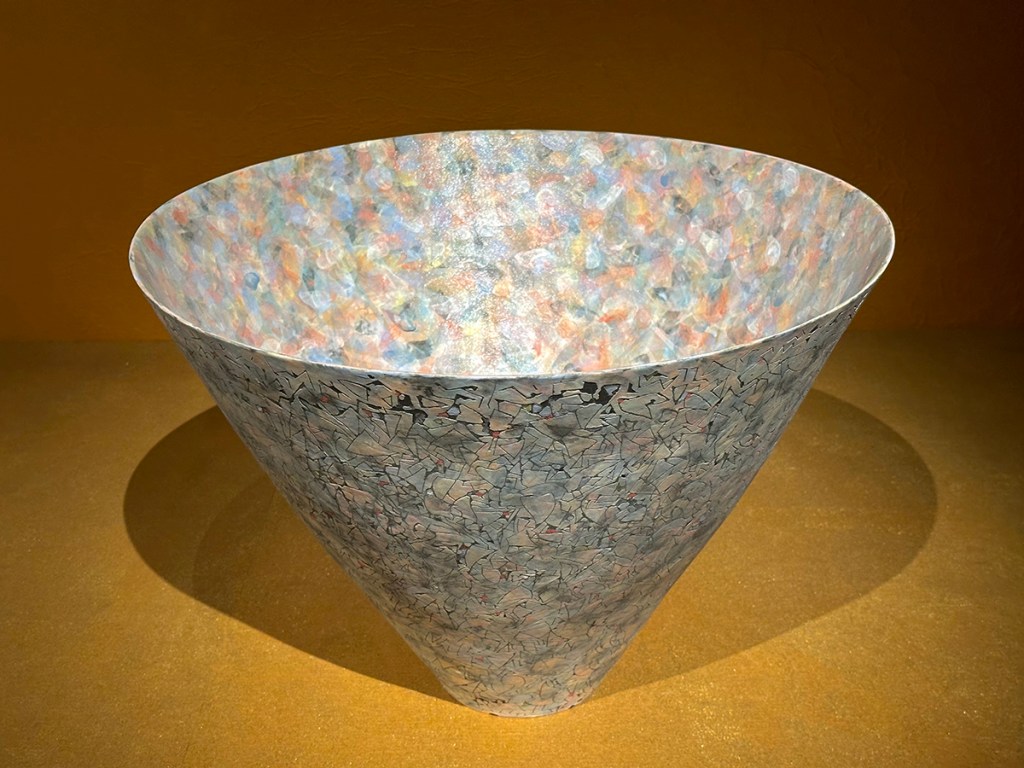
The same technique of building a pattern from different colors of clay rods (not unlike Italian millefiore glass) can produce vastly different effects in the hands of different artists. Compare the previous photo to this!

Some of the artists experiment by mixing glazing and firing techniques to produce all-new looks…
or are inspired by other traditional disciplines, like textile art…
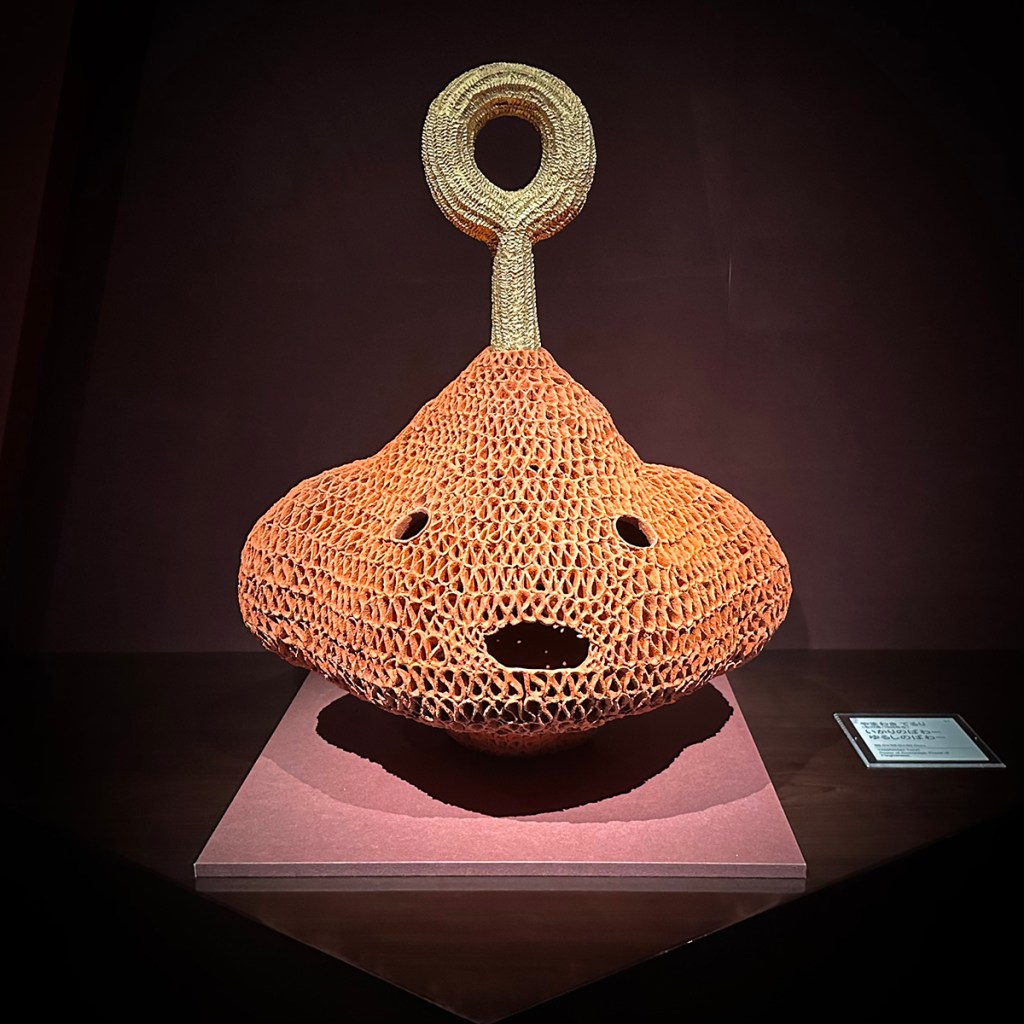
or elements of the natural world that don’t usually provide models for those who work in clay.

There is even space for pieces far too big to be exhibited on a shelf. This sculptural marvel was nearly as tall as me, and was placed in a dark room on a low plinth, so you could walk around it and admire it from every angle.

And finally, not least of the reasons to visit this museum is that two amazing Toko Shinoda paintings were commissioned for the site.
This beauty greets you as you enter, and there’s a rare (and forbidden to photograph) mural painted on silver leaf that encircles the grand spiral staircase leading to the galleries below.

If you have any interest at all in Japanese ceramics, this museum is a must-see when you’re in Tokyo!
These were the works on display at the time I was there, but they change all the time, so be prepared that there will be different—but equally amazing— pieces on display when you go.
Tomo Museum
Open: Every day, except closed Mon and during exhibition preparation periods
Please check the website before going
Hours: 11:00 – 18:00
Admission: Varies by exhibition
Check the current and upcoming exhibitions on the Musee Tomo website
•
If you enjoyed this, subscribe!
Get all the latest Japan travel tips and tricks for free ヽ(*^ω^*)ノ
And here are the other places I take my friends when they come to town

•
Jonelle Patrick writes novels set in Japan, produces the monthly e-magazine Japanagram, and blogs at Only In Japan and The Tokyo Guide I Wish I’d Had
 Jonelle Patrick writes about Japan