
Forget the Michelin-starred restaurants—true Japanese food aficionados check out the wonders of Japanese supermarkets!
I’m really not kidding—the first time I lived in Japan, I was struck speechless the first time I ventured into a grocery store. The produce was all so beautiful, it looked like a food stylist had chosen each spear of asparagus and head of lettuce to feature in a magazine shot.

It wasn’t just unblemished and all the same size, it was at the perfect stage of ripeness. Then I got another shock. Where were the strawberries? I looked high and low, and there wasn’t a single strawberry in the whole store.
Turned out, it was a bad idea to plan strawberries for dessert that day, because it wasn’t strawberry season. These days, you can buy quite a few fruits and vegetables imported from other hemispheres, but back then, they only sold fruits and vegetables grown in Japan, and they only appeared in stores during the seasons they naturally ripened.
But even today, Japanese cuisine celebrates seasonal delicacies above all else, so…
You should check out a grocery store before you visit those restaurants you’ve been looking forward to
There’s nowhere better than a Japanese grocery store for discovering what’s in season right now. If it’s orange season, there won’t just be oranges, there will be six distinct varieties that you can only buy in Japan, they’ll each have their own name, and they’ll only be available for three weeks a year.
Same with fish, vegetables, and even chocolate.*

Before you snap up one of each, though, better check the price!
Some feature numbers we’re not used to seeing in a supermarket. Those melons on the top shelf will set you back about $100 USD…
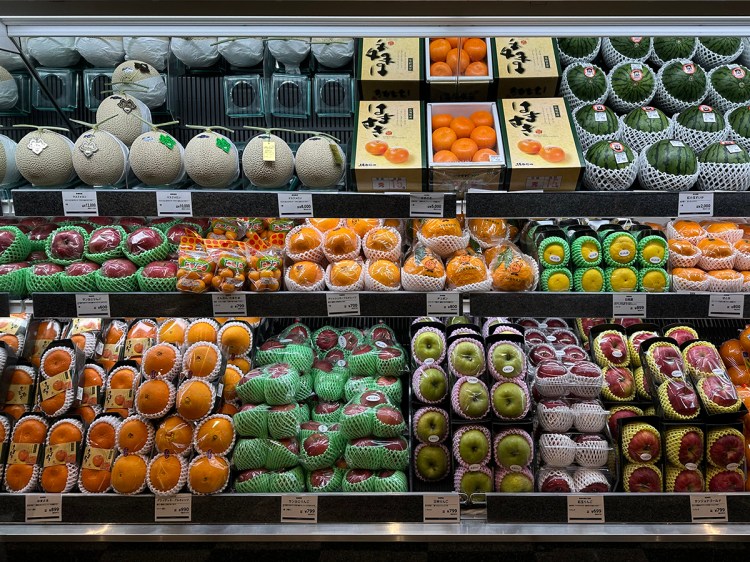
and at the time I took this picture, this basket of matsutake mushrooms cost over $250 USD!

Most of the crazy-expensive ones are given as gifts, of course (much like you might bring a nice bottle of wine to a dinner party), but if you buy one of these rarified items, don’t be surprised when the cashier asks if you’d like it gift-wrapped.
Ordinary produce is much more affordable, of course, but it’s still expensive by Western standards. Japanese consumers are willing to pay a premium for fruits and vegetables that look as good as they taste, though, so even lunchbox apples can set you back about $4 USD apiece.
Are you wondering why everything is wrapped in plastic?
In Japan they do famously recycle every scrap of plastic with tediously detailed sorting protocols, but it’s true you aren’t free to pick and choose which fruits and vegetables to put in your bag or how many to buy at once. The upside is, you don’t get food that’s been handled by heaven knows how many strangers, and having a pre-marked price (instead of weighing it at the check-out counter) does make the cashier lines pretty speedy.
But perfect produce isn’t all that’s different about a Japanese market. The snack aisle is so miniscule as to be nearly unfindable, but tofu in all its many incarnations—freshly made, soft, firm, basket-style, grilled, fried, tofu skin & more…

gets major real estate!

(By the way, Japanese tofu was one of my biggest food revelations ever. I hated tofu before I came to Japan, but once I tasted zaru-dofu—the freshly-made spoonable tofu that comes in baskets—I realized it didn’t resemble the tofu I’d been eating any more than those rubbery balls of plastic-wrapped mozzarella resemble a fresh ball of burrata!)
The seafood section is also a lot bigger than the one devoted to beef, pork and chicken, and it’s not unusual to see whole fish for sale, as well as live seafood, cracked, cut, and cleaned to order.

Seaweed, pickles and condiments, oh my!
There will probably be quite a few items you’ve never seen at your local market back home—the seaweed, pickles and sauces/marinades aisles always reward a browse—and you’ll be happy you were forewarned by Google Translate that the seasonal delicacy in the fish department is cod testicles before you make the mistake of ordering the “special” at an izakaya.
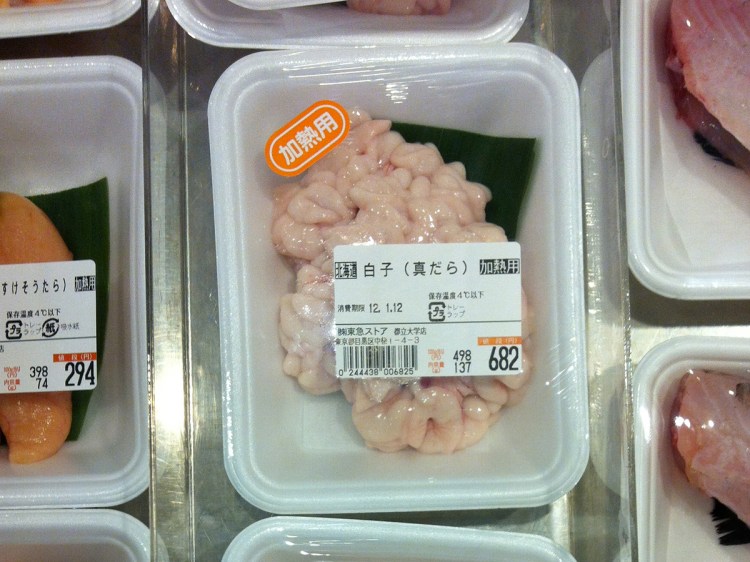
But don’t skip the packaged goods section! They’re a revelation too.
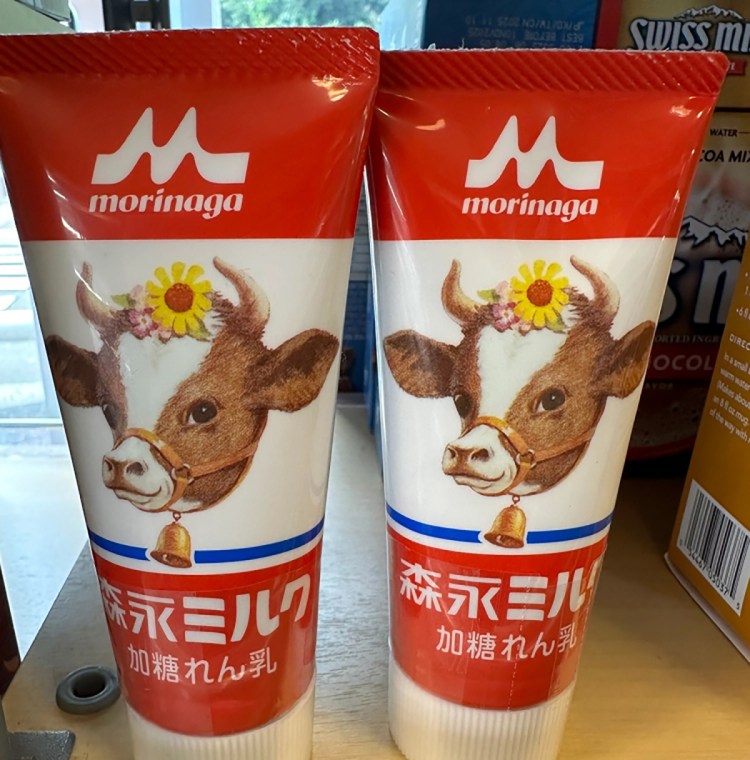
Japanese foods are packaged with consumer convenience and easy of use in mind, and usually come in smaller amounts than elsewhere, because freshness is prized over bulk. There’s no better example of this than condensed milk. (I mean, why isn’t it sold in these handy tubes everywhere in the world?)
All kinds of other things are sold in tubes too, like (another no-brainer!) this peanut butter…
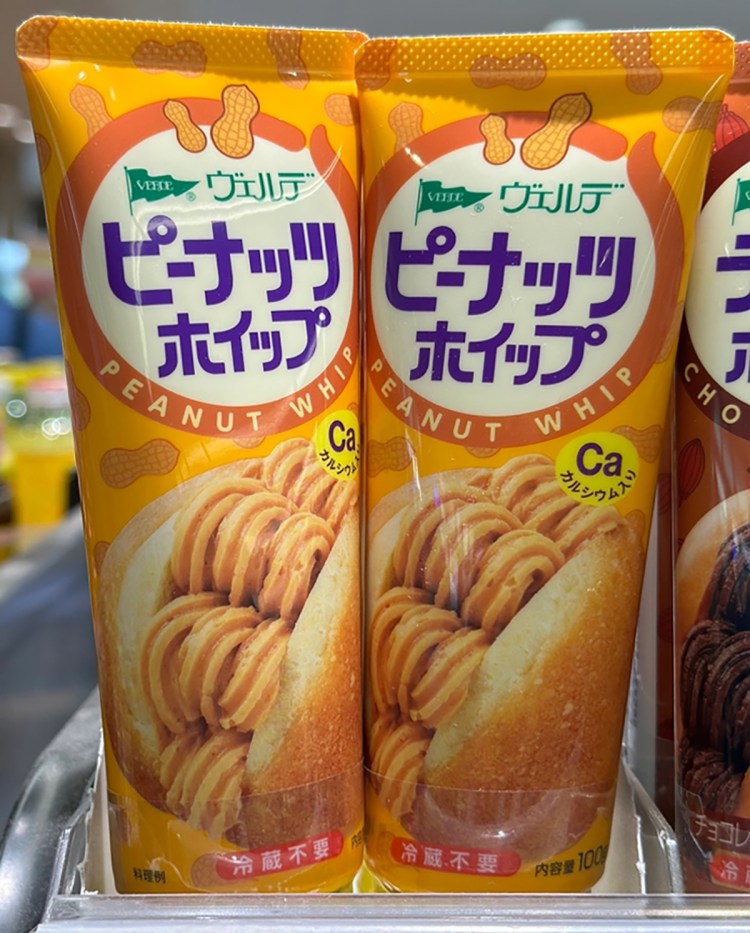
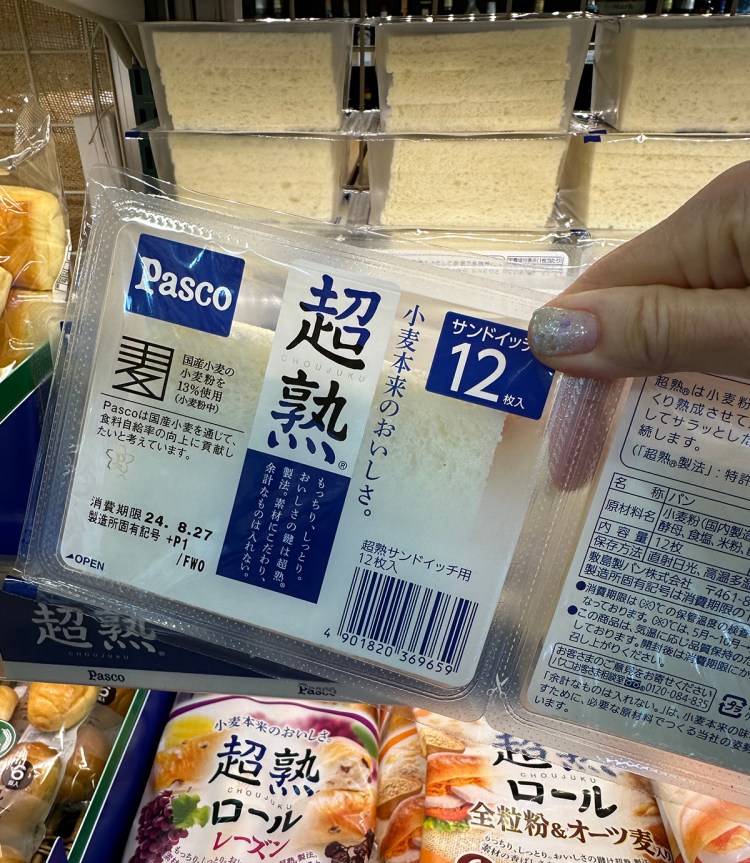
which pairs perfectly with this bread with the crusts already cut off.
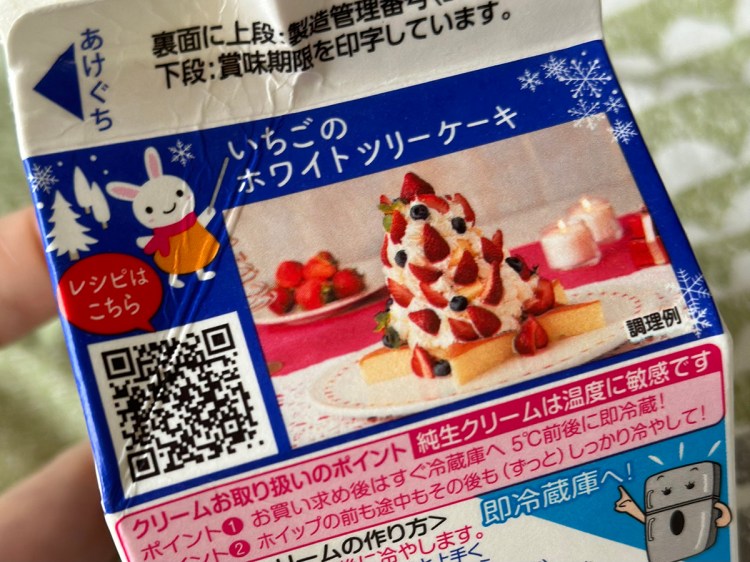
If you really want to do a deep dive, you can enjoy the “serving suggestions” for various “foreign” foods like this carton of whipping cream…
and notice that all alcoholic beverages have braille on top of the cans so blind people don’t accidentally buy beer instead of a Coke…

Or you can just wander the aisles with your antennae fully extended and discover your new favorite snack!

*I once scoured Tokyo maniacally for the Meltykiss chocolates I’d fallen in love with the previous time I was in Japan, only to discover that they don’t sell that brand of chocolate at all from May-September. They only sell the varieties with a hard shell that won’t melt in your purse or all over your hands!
The major Japanese grocery store chains in Tokyo are
Tokyu/Precce, Peacock, Kinokuniya & Meidi-ya
For a truly premium grocery store experience, though, the Meidi-ya stores are the best. I still sometimes shop at the one in Hiroo, even though I don’t live near there anymore.
Here’s where to find Meidi-ya stores in Tokyo:
The other shops that true foodies search out are the prefectural Antenna Stores, which sell regional specialties that aren’t usually available outside their local area.
•
Know someone who’s planning a trip to Japan? Share this post!
And here’s where to click for all the great things I take my friends to see when they come to town:

If you enjoyed this, subscribe!
Get all the latest Japan travel tips and tricks for free ヽ(*^ω^*)ノ
Jonelle Patrick writes novels set in Japan, produces the monthly e-magazine Japanagram, and blogs at Only In Japan and The Tokyo Guide I Wish I’d Had
 Jonelle Patrick writes about Japan