Deep Dive #1: Spectacular off-the-beaten path cherry blossoms that nobody knows about yet
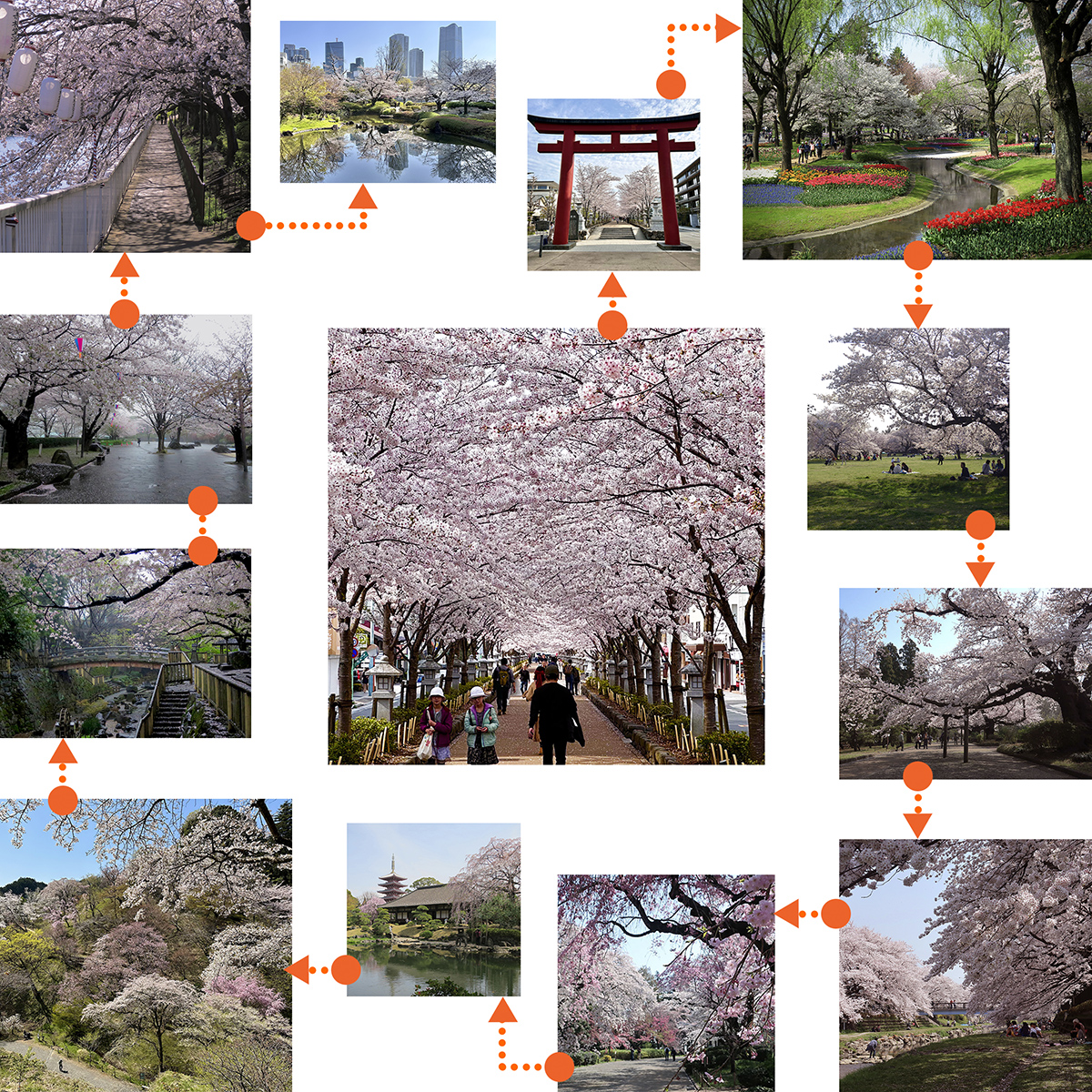
You have to spend slightly more time getting to some of these, but it’s totally worth it if you truly want to live the cherry blossom dream, without the crowds!
Half-day destinations
Budget at least a half-day for each of these, because travel time eats up about an hour (each way) from major Tokyo train stations. Going on a weekday delivers maximum solitude, but even on the weekends these are unbelievably uncrowded by Tokyo standards, and each one offers extensive sakura viewing!
Jindai Botanical Gardens: Closed Mondays, open other days 9:30 – 17:00; Adults ¥500
Showa Kinen Park: Open every day, 9:30 – 17:00, Adults ¥410
Tama Forest Science Garden: Open every day, 9:30 – 16:00 (no entry after 15:30)
Kamakura “Danzakura” promenade: Open 24/7, free
Or you can slip into these undiscovered cherry blossom spots right in Tokyo:
Monzen-Nakachō River Walk: Open 24/7, free
Denpō-in Garden at Sensō-ji temple: Open every day during cherry blossom season 10:00 – 16:00, Adults ¥300
Asukayama Park & Otonashi Water Park: Open 24/7, free
Mohri Garden: Open 7:00 – sunset, free
To make the travel time worth it, timing is key. Here’s the site that publishes the Cherry Blossom Forecast every year, so you can choose the best day for peak bloom.
• Kamakura tends to reach peak bloom at the same time as central Tokyo.
• Jindai, Showa Kinen and the Tama Forest are outside the central Tokyo “heat island” so they tend to peak 3-7 days later than the peak bloom date predicted for Tokyo.
• If you’re in Japan before peak bloom, your best bets are: Jindai and Tama Forest, for early-blooming varieties.
• If you arrive after peak Tokyo bloom, Jindai, Showa Kinen, Tama Forest and Asukayama Park are your best bets.
•
Jindai Botanical Garden

Why this spot is epic: It’s a huge park, with enormous cherry trees of every variety.
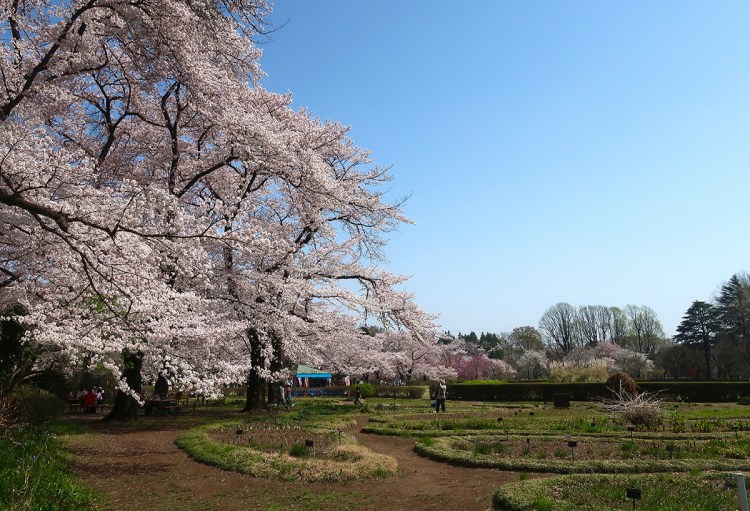
The beauty of Jindai Botanical Garden is that it’s big, and it has many kinds of cherry trees—all spectacular—so even if one kind isn’t blooming yet or has already finished, you won’t go home disappointed. They put on a spectacular show, all season long. And this garden is so vast that if you get there when the gates open at 9:30,* (especially on a weekday) you’ll feel like you have the entire place to yourself, even if there are lots of people waiting to get in.
Here’s what makes the travel time worth it:
The early-blooming shidarezakura (weeping cherries) look like this…

and when the classic sakura are in full bloom they look like this…
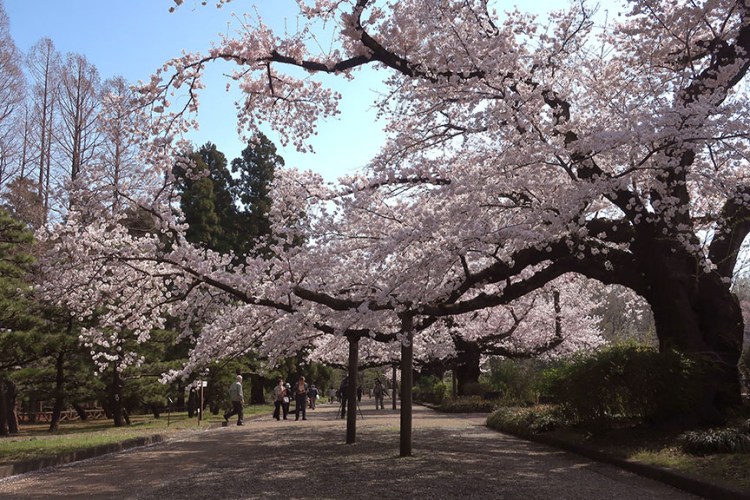
and, uh, this. (Check out the tiny photographer, in case you didn’t believe me when I said “enormous.”)
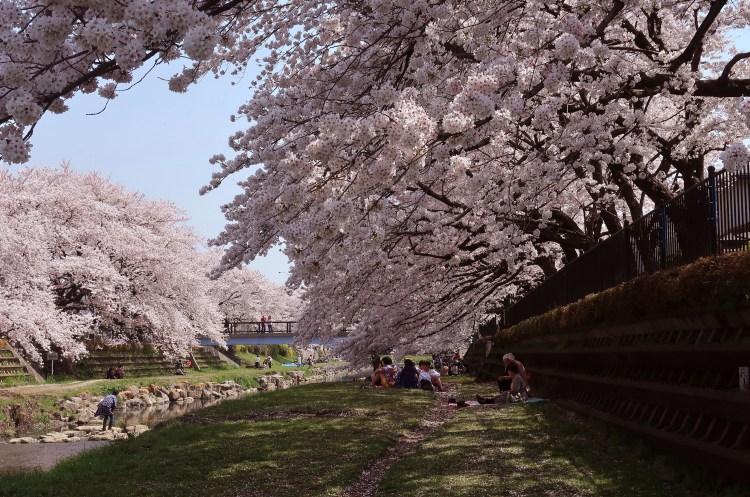
Oh, and if you choose to walk back to Chofu Station instead of taking the bus, you’ll cross the Nogawa River, which may look like this if you hit it just right:
MAP
Nearest station: Chōfu
•
Showa Kinen Park
Why this spot is epic: It has a lovely, large, picnic lawn beneath gigantic cherry trees PLUS a fabulous tulip garden that begins to bloom while the cherry trees are still going strong
Here’s what makes the travel time worth it:
The spacious grove of traditional sakura is picnic-friendly…

You can eat and drink and live the hanami party dream, without the crowds:

and take advantage of fun photo ops, like this mirrored platform they set up on certain days…

And then there are the tulips. They start blooming around the time the cherry trees reach peak bloom, and new bulbs continue to bloom throughout the month of April. If you miss the cherry blossoms, it’s still worth the trip.

MAP
Nearest station: Tachikawa
•
Tama Forest Science Park
Why this spot is epic: It’s a rambling natural preserve planted with hundreds of heirloom cherry trees. More like a forest than a garden, the hiking trails take you in and around several valleys, and allow you to choose whether to take the high road—to gaze out over the tops of the trees—or the low road, and marvel up at the bloom from below. It takes several hours to walk all the trails, but you can do shorter loops too.
Here’s what makes the travel time worth it:
This is the only place I know that feels like hiking through a forest of wild cherries, not a garden. See the little guy down on the road? When Japanese cherry trees are allowed to spread out naturally, they grow TALL.
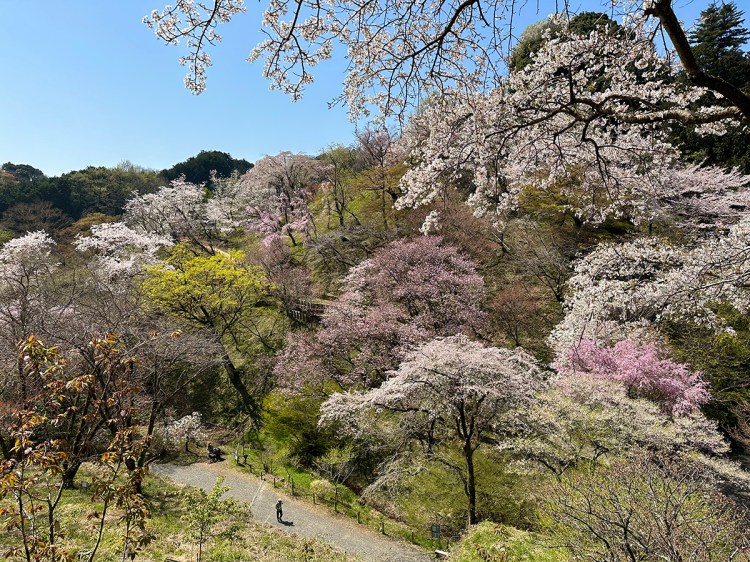
These trees aren’t shaped or artfully composed in pleasing groupings by master gardeners, but the sheer number and range of pinkness creates stunning new vistas around every bend.

This is also your chance to see rare types that are being preserved for posterity—this is a working research facility, in addition to being a soul-restoring ramble.

MAP
Nearest station: Tama
•
Dankazura Promenade
Why this spot is epic: Right outside Kamakura Station, the Dankazura is a long promenade leading to a grand shrine, and it becomes a lantern-lined tunnel of cherry blossoms at peak season.
Here’s what makes the travel time worth it:
The Dankazura looks like this:
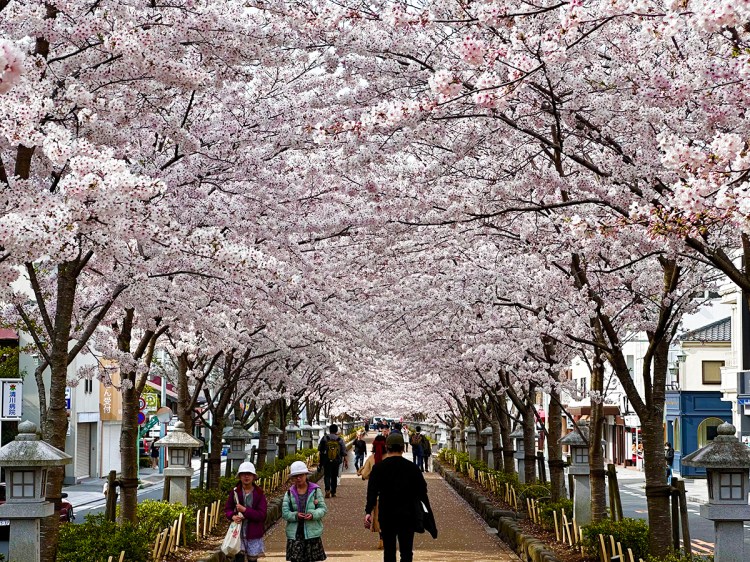
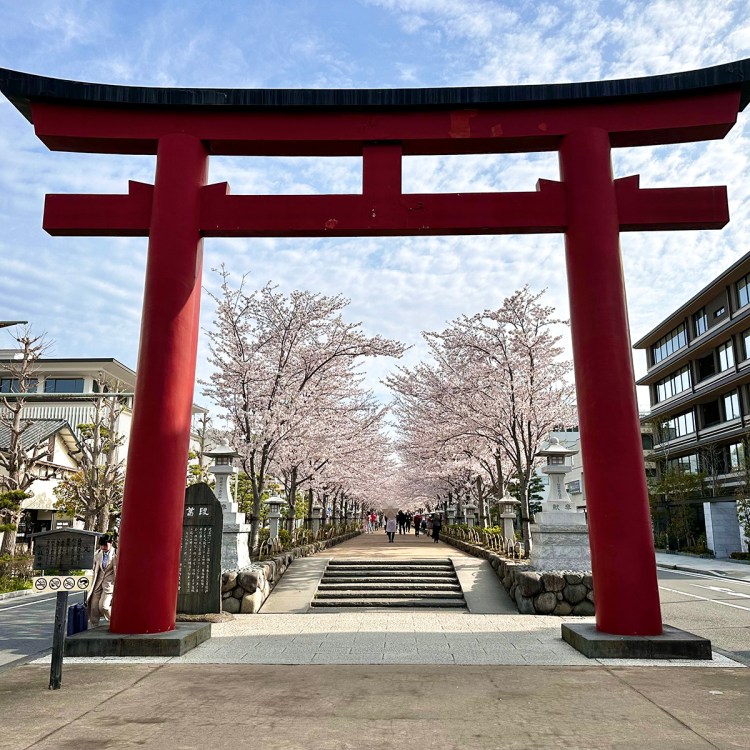
and when you reach the end…

look back and be rewarded with this:
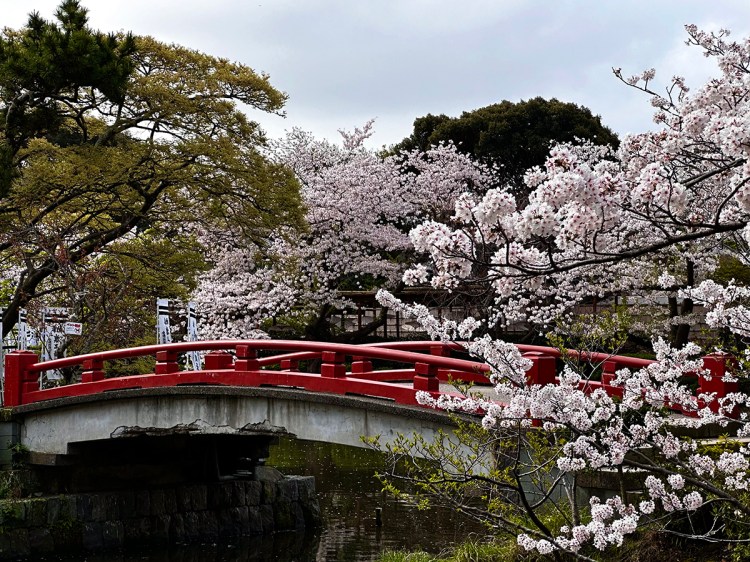
There are also lots of cherry trees framing picturesque views on the grounds of Tsurugaoka Hachimangu…
And (bonus!) a peony garden that happens to bloom at the same time as the cherry trees. (The entrance is right before the first bridge as you enter the shrine grounds.)
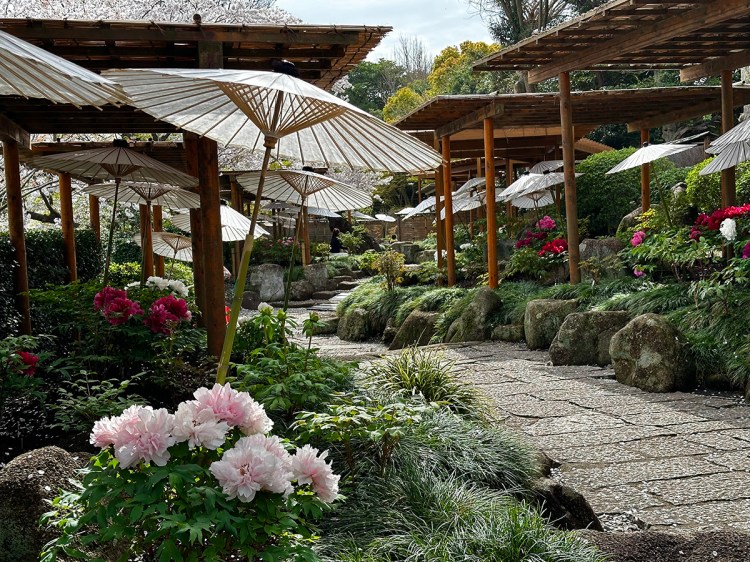
The Dankazura cherry tree promenade stretches from right outside Kamakura Station to the Tsurugaoka Hachiman-gu shrine. Cherry trees also bloom on the grounds of many of the visit-worthy shrines and temples of Kamakura
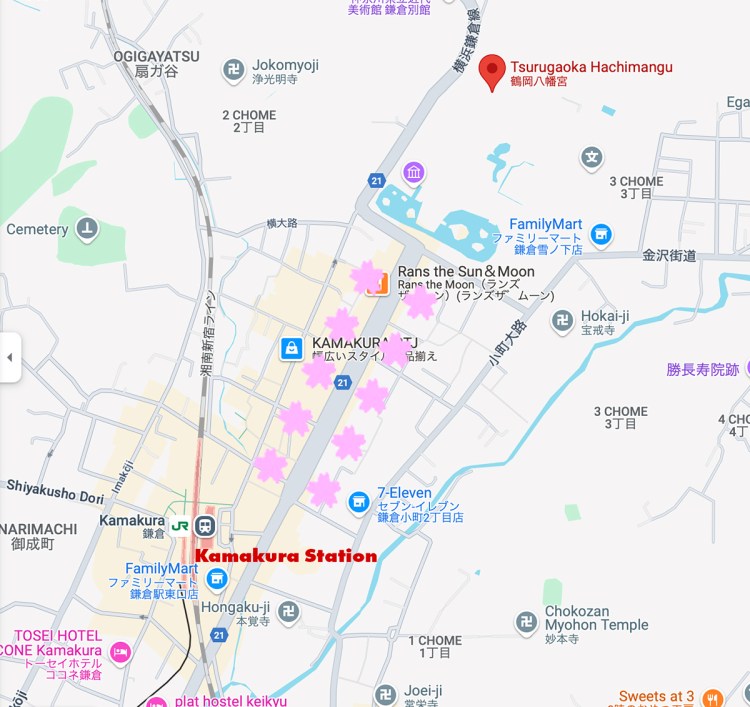
MAP
Nearest station: Kamakura
•
And if you don’t have a half-day to spare, here are some secret (and uncrowded) cherry blossom spots right in Tokyo…
Monzen-Nakachō River Walk
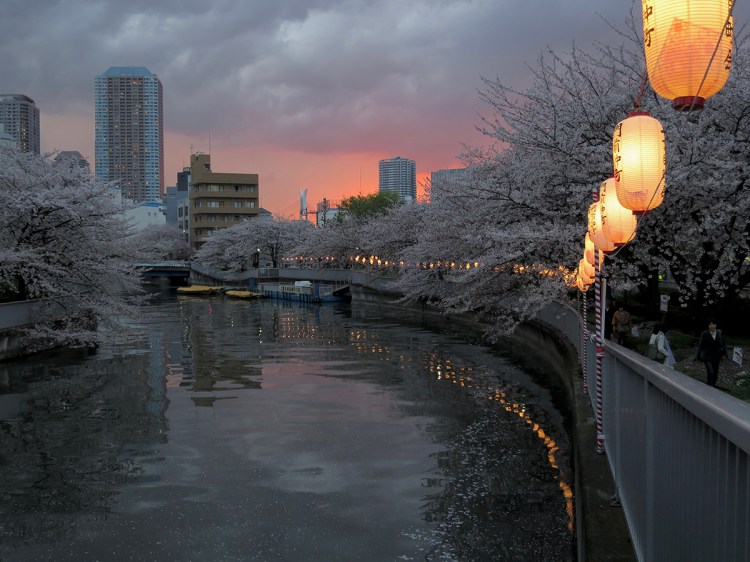
Why this spot is epic: The trees are lovely, it’s lit up with lanterns at night, and only nearby residents seem to know about it.
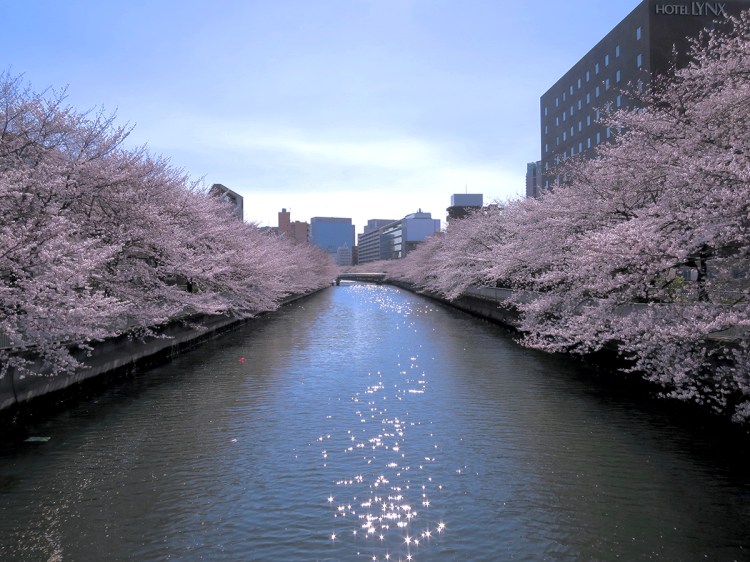
The riverside stroll under the cherry trees is pretty nice in the daytime…

and you can enjoy the blooming trees from the many bridges that cross the water…
but this neighborhood display is especially enchanting (and still uncrowded) at twilight…

and at night.

Here’s where the cherry-lined canal is:

Here are some other great things to do nearby:
MAP
Nearest station: Monzen-Nakachō
•
Denpō-in Secret Garden
Why this spot is epic: This serene garden is closed to the public except during cherry blossom season, and it’s an unbelievably calm oasis in the heart of bustling Asakusa

This walled garden is small, but choice, and although it only has a few cherry trees…

they’re amazing specimens.

Instead of wowing with sheer numbers, the delight you as you come around a bend…
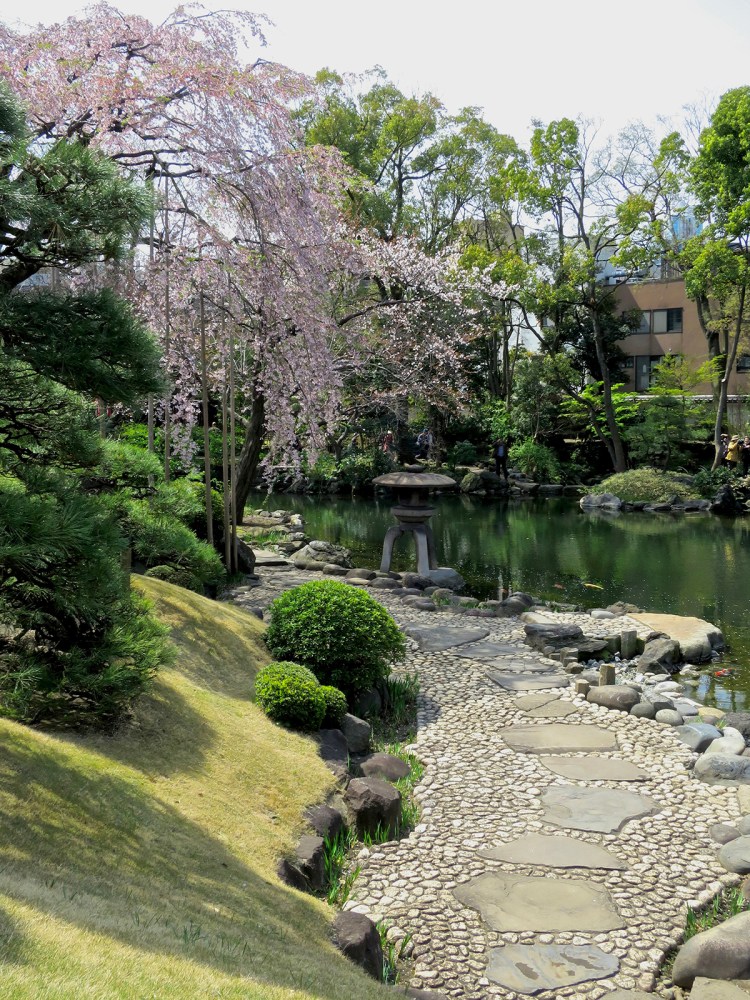
os spot them peeking out from behind a temple building.

There is, of course, lots of other great stuff to do in the Asakusa neighborhood:
MAP
Nearest station: Asakusa
Note: They’ve been doing construction lately at Sensō-ji, so sometimes this garden is closed. Check the hours on the Google map to make sure they’re admitting visitors.
•
Asukayama Park & Otonashi Water Park
Why this pair of spots is epic: One is big, with a grand plaza, fountains, and tons of huge, old cherry trees…

while the one across the street is tucked below street level in a narrow canyon, with cherry trees arching over an artfully landscaped stream.

Asukayama Park is an island of beauty visited only by local residents. It’s surrounded by busy streets, but its main plaza is a masterpiece of Japanese landscape architecture. It feels like a secluded Japanese garden—with boulders and rough-hewn fountains and waterfalls that children can play in when it’s hot—while also being big and tough enough to withstand public gatherings and festivals.
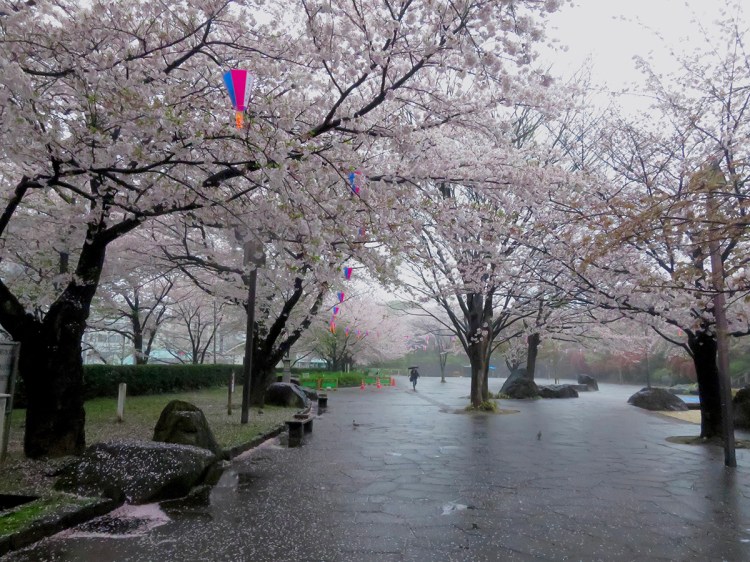
Its upper lever is home to enormous old cherry trees…

that are even delightful to stroll through in the rain.
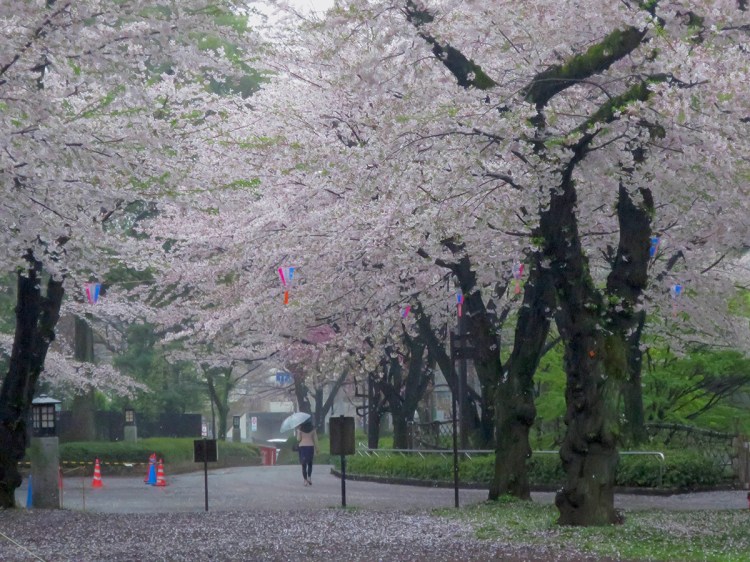
The upper garden also has an excellent alley of late-blooming double cherries (yaezakura), so even if you miss the main cherry blossom season, you can still get a dose of fluffy pinkness.

Right across the street is Otonashi Water Park, but you’d never know it’s there if nobody pointed it out! Tucked between the stone walls of what used to be an ordinary Tokyo canal…
cherry trees line the rim…

and an attractively-landscaped stream meanders below.

MAP
Nearest station: Ōji
The easiest way to Otanashi Water Park is from the North Exit of the Ōji JR station or Exit 3 of the Ōji subway station.
•
Mohri Garden
Why this spot is epic: You don’t expect to find a jewel of Japanese garden right in the middle of a soulless development like Roppongi Hills, but the Mohri Garden isn’t just lovely, it’s shockingly uncrowded.

It’s not big, but its paths invite you to slow down and stroll…
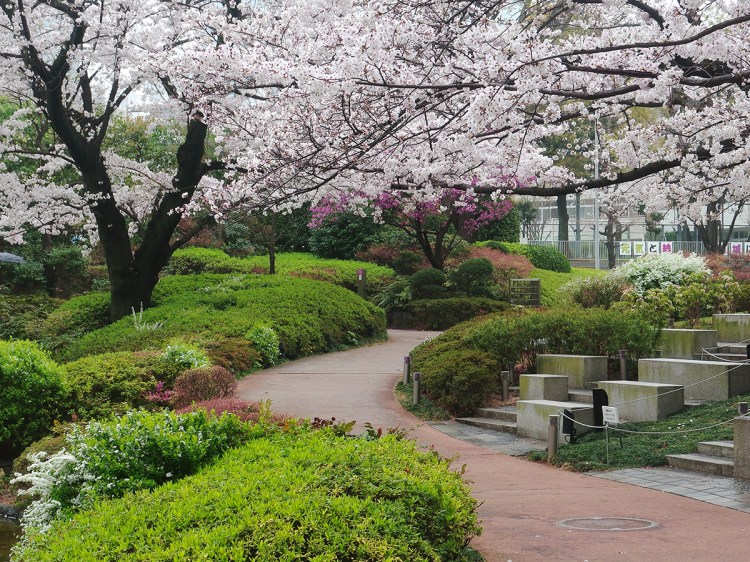
and it’s lit up at night…

long into the evening.
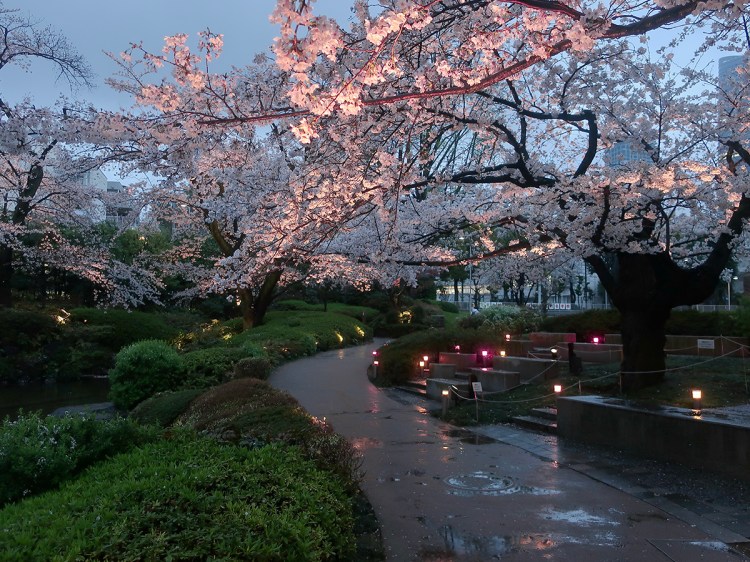
There’s even a surprise view of Tokyo Tower shining beyond!

MAP
Nearest station: Roppongi
•
Back to:

or browse the destinations at The Tokyo Guide I Wish I’d Had

•
If you enjoyed this, subscribe!
Get all the latest Japan travel tips and tricks for free ヽ(*^ω^*)ノ
•
If you’d like to browse all the gardens or shrines or individual neighborhoods in Tokyo, links are on The Tokyo Guide I Wish I’d Had

If you’d like info on seasonal secrets and beyond Tokyo destinations, subscribe to my monthly e-magazine Japanagram (it’s free!)
and if you’d like to discover super quirky things to do, do a search at Only In Japan

•
Jonelle Patrick writes novels set in Japan, produces the monthly e-magazine Japanagram, and blogs at Only In Japan and The Tokyo Guide I Wish I’d Had
 Jonelle Patrick writes about Japan