Come for the plastic sushi, stay for the worlds’ sharpest knives! Kappabashi Street is where Tokyo restaurants find everything they need, from super-realistic mugs of beer to gorgeous bowls from Japan’s best kilns. Whether you’re in the market for a stag beetle cookie cutter or a little branding iron to sear your name onto your burger bun, this is the place to shop. Even if you’re not a big foodie, the kitchenware district is filled with all kinds of entertaining things you’ll only find in Japan.
You can tell you’re at the gateway to kitchen goodness by the giant chef’s head on the left and the stack of teacups on the right

The stores lining Kappabashi Street sell everything from super-realistic food models (including the best refrigerator magnets and sushi clocks of all time) to gigantic rice cookers, branding irons for little traditional cakes, rice molds that look like bullet trains, vases, iron kettles shaped like cats, banners advertising food shops, and more.
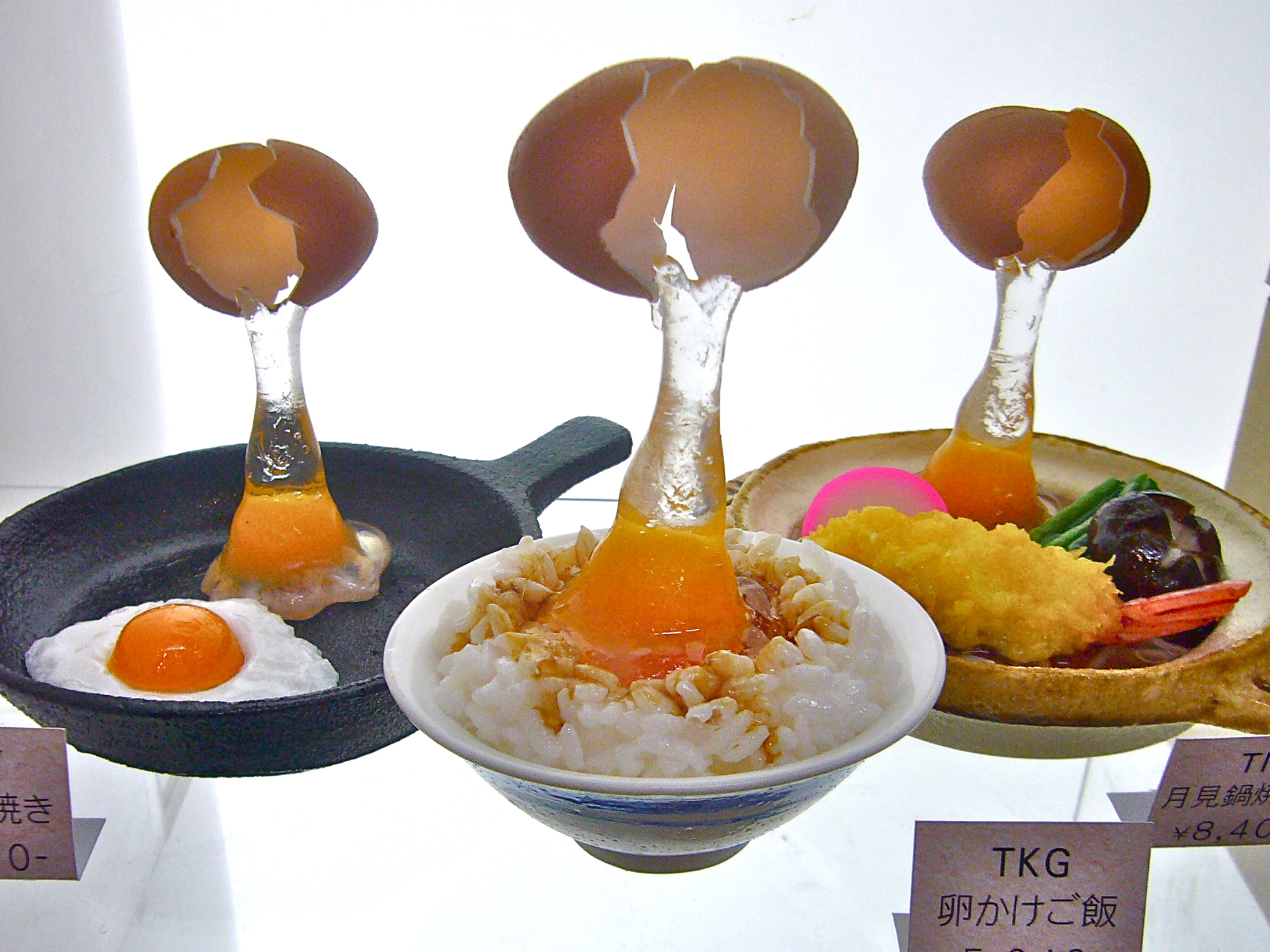
First, the food model shops! You’ve probably seen these good-enough-to-eat works of art in display windows outside Tokyo restaurants.
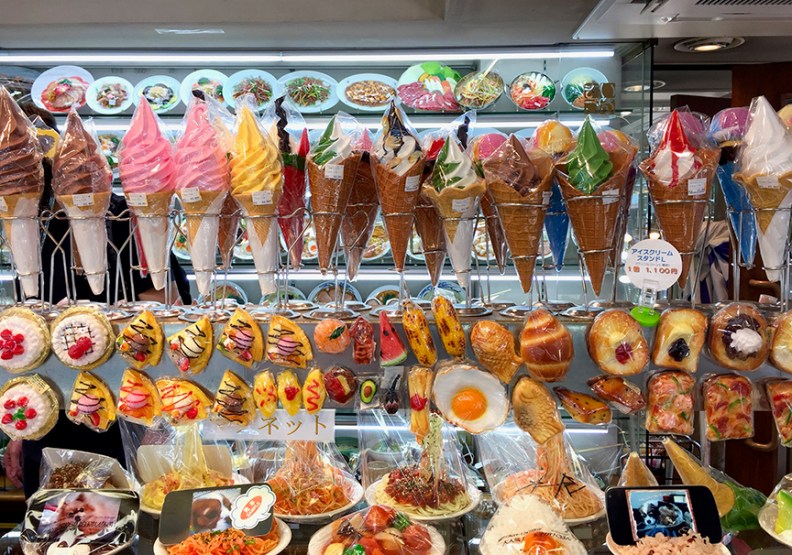
Each dish is custom-made to exactly replicate the dish as it’s made at the restaurant. The chef delivers the real thing to the food model artist, so the ingredients, cutting style, and amounts can be faithfully rendered in plastic.

Be prepared to be totally fooled by how realistic the food models are. They’re masters of every kind of sushi…

…and their beer artistry makes you want to lift that glass and take a swig

The custom models are ultra-expensive, but many shops sell fantastic fridge magnets and keychains for more reasonable prices, and I guarantee there’s a perfect souvenir for everyone on your list.

With a little advance planning you can even go to a workshop and make some plastic food yourself. Or you can buy kits to take home and DIY. This is what it’s like making lettuce at the plastic food workshop…

Some shops even sell kits to take home and DIY

But Kappabashi Street offers more than just plastic food!
You can find things sold only in Japan at nearly every store. And if you’re shopping for knives—like these ultra-sharp Japanese knives made by former swordsmiths—you can also buy sharpening stones and get tips for sharpening your new knife from most of the shopkeepers

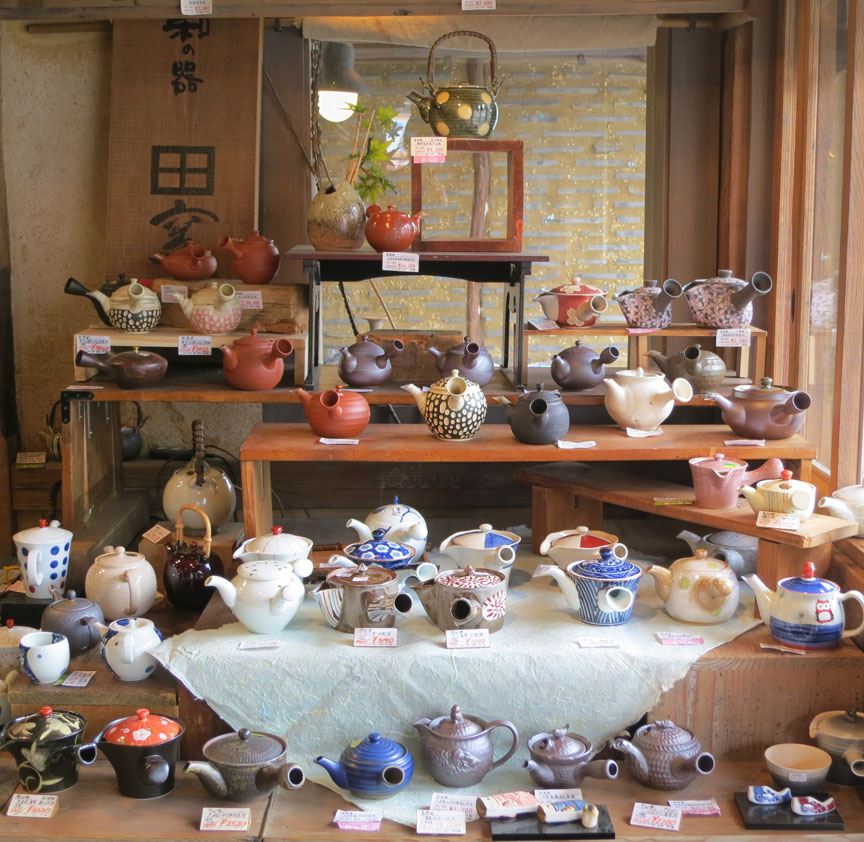
There are shops specializing in handmade ceramic dishes, serving plates, teapots and more. One good thing about buying in Kappabashi is that you can get any number of plates/glasses/cups you need instead of being confined to the sets of five they sell in regular stores.
Soup bowls, chopsticks, trays and serving dishes of every shape and color are sold at stores specializing in lacquerware

These are festival-size rice steamers. Stacks of them sit on kerosene stoves at festivals and serve up Costco-size portions of steamed rice.
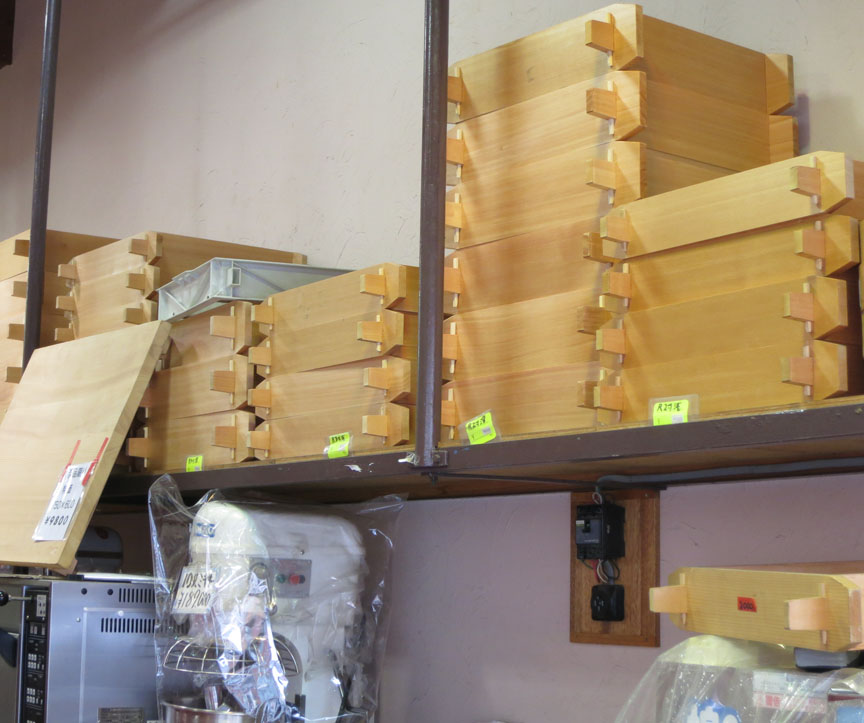
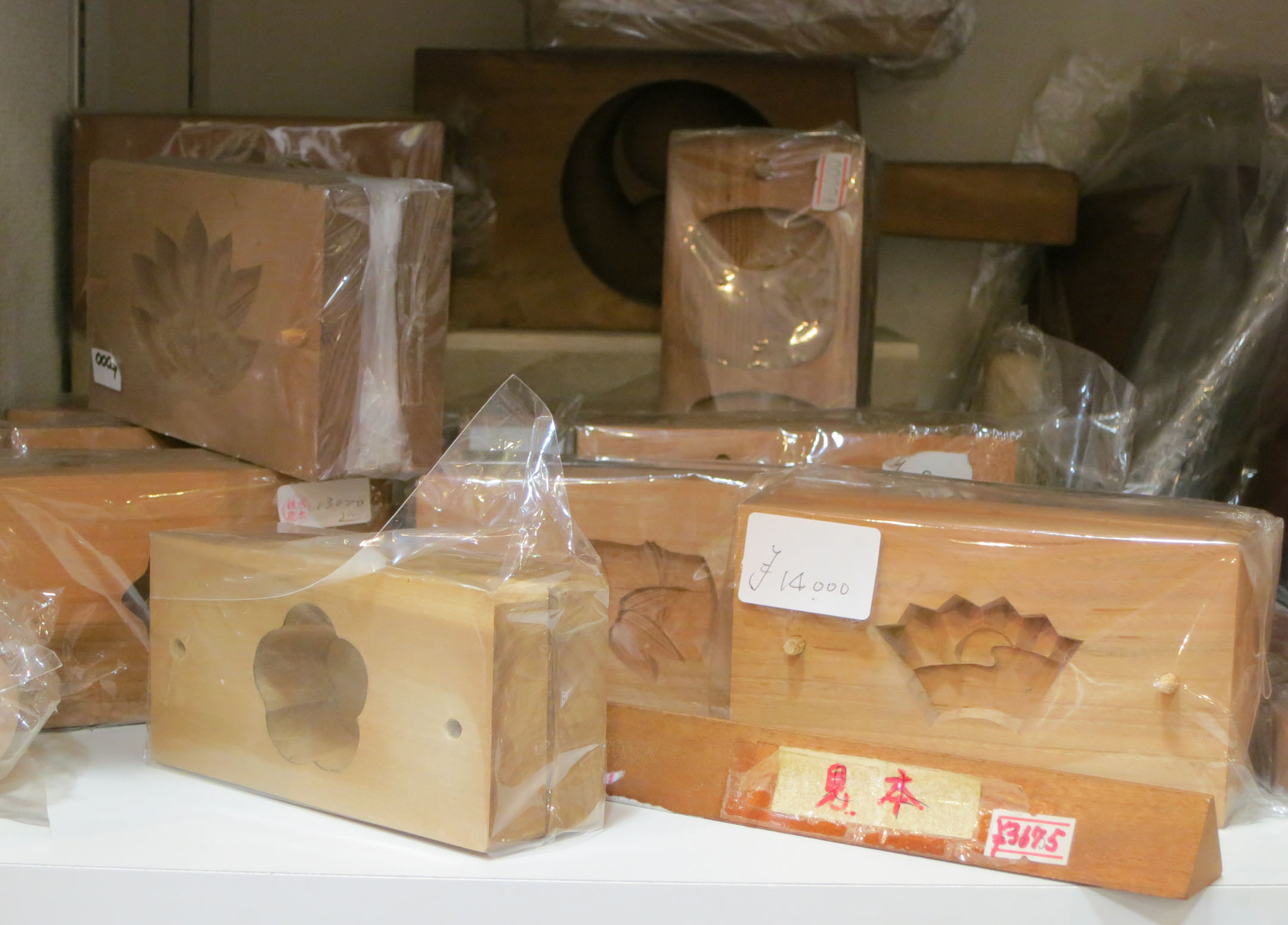
Wooden food molds, handcarved the old-fashioned way.
Noren stores sell dyed cloth door curtains and advertising banners, perfect for dorm room walls (you didn’t hear about the ones for draft beer from me…)

There’s a store that sells handmade brushes & brooms, as well as inventive animal-shaped mud scrapers

and if you’re in burning need of two kilos of curry powder, the restaurant supply grocery stores have you covered

Paper lanterns of all shapes, colors and sizes are sold at stores like this (although they are usually sold blank, and the calligraphy is traditionally done to order)

There’s even a store that sells everything you need to make your own buckwheat noodles (soba)

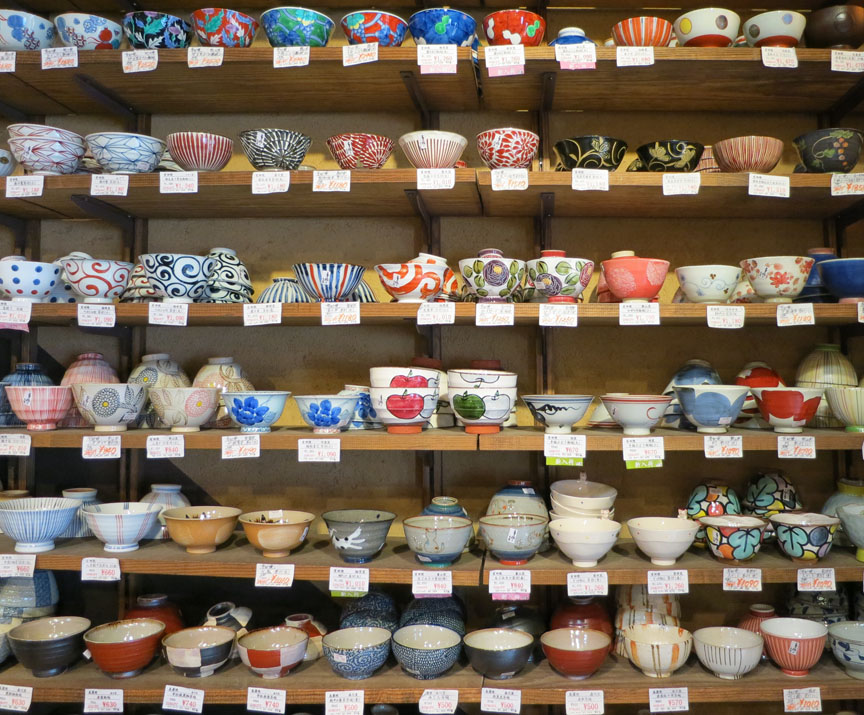
A thousand kinds of rice bowls
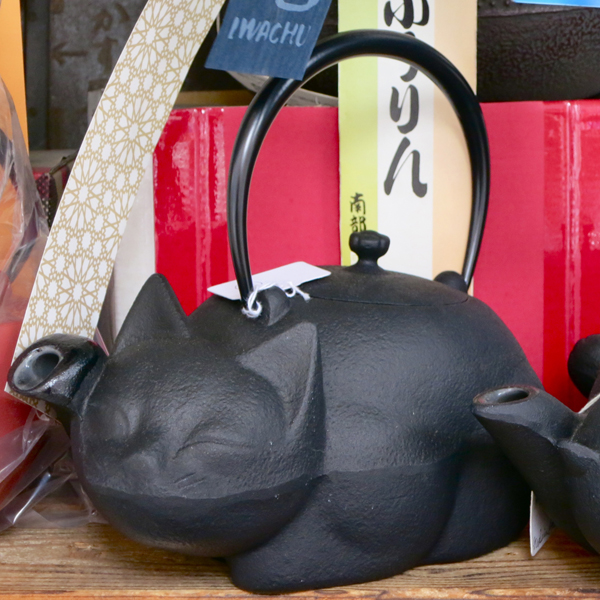
You can find iron teapots of all sizes, including these nyantasic models.
Kappabashi Street
Most stores open from 10:00 – 18:00
Some stores are closed on the weekends
•
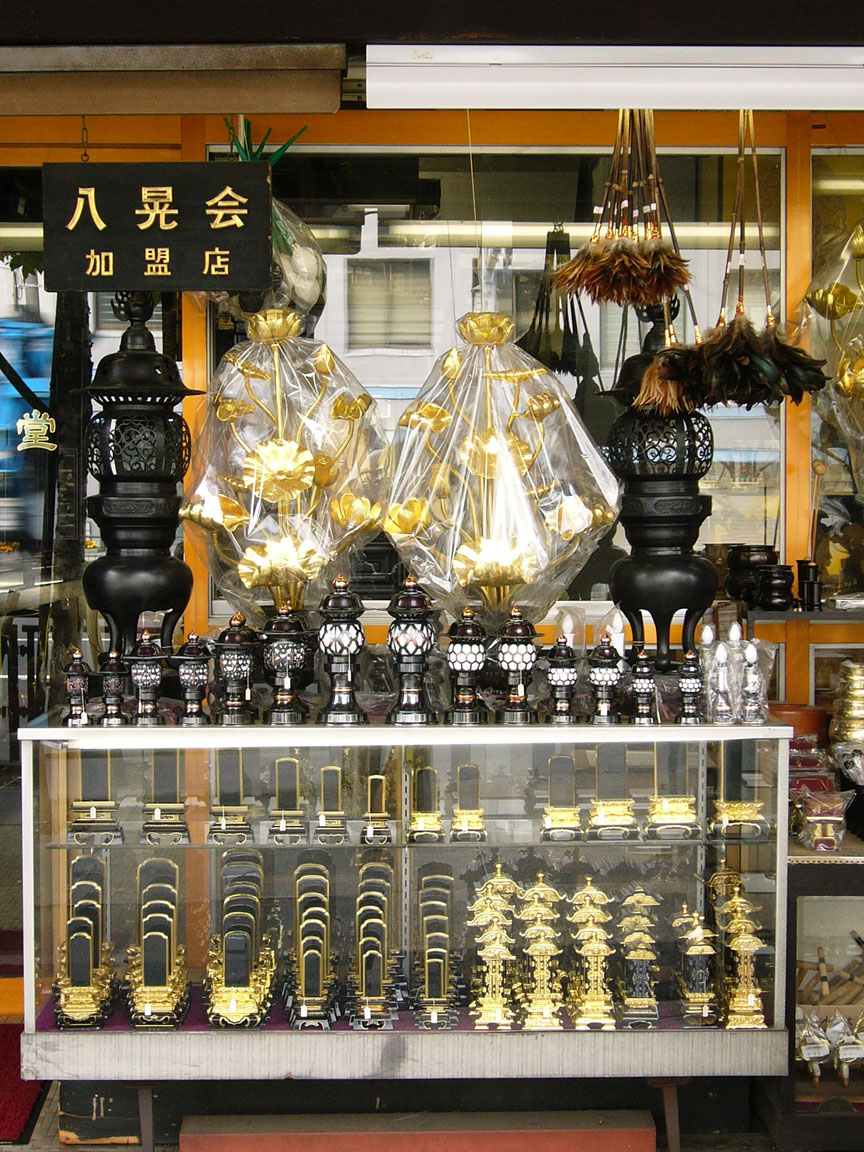
Bonus only-in-Japan experience: As we turn the corner to go back to Tawaramachi Station let’s cross over to the other side of the big street. We’ll pass a few funeral goods stores filled with wooden Shinto shrines, Buddhist home altars, gold temple chandeliers, Buddhist rosaries, incense, and religious statues.
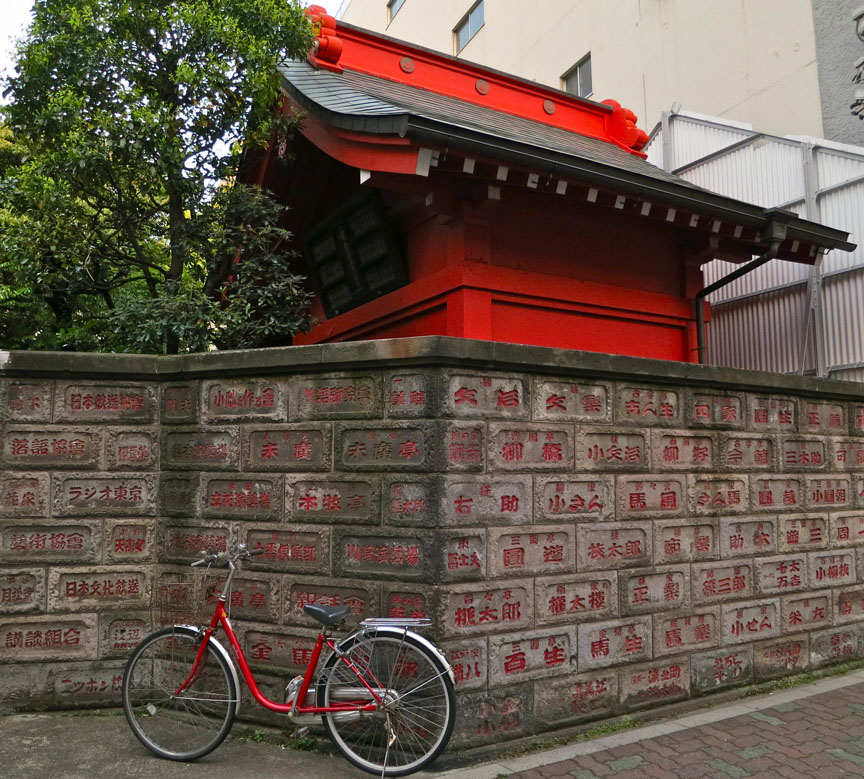
Right before we get to the station, let’s duck into the little street branching off to the right and stop in at the Rakugo Shrine! Rakugo is traditional Japanese comic storytelling, with a long history of wandering actors entertaining the townsfolk of yore. But during WWII, fifty-three of the most famous rakugo stories were entombed at this shrine forever, deemed too funny to be performed at a time of national crisis. The names carved in red on the wall outside are the stage names of famous rakugo performers from yesteryear.
•
And if you’re up for a little more walking, let’s keep going from Tawaramachi Station along the main street toward Ueno Station. We’ll find ourselves in another fascinating, specialized district: Inari-cho, the funeral goods and Shinto shrine shopping area. I know – who would want to see THAT? But take a peek:

This area is where they sell Buddhist home altars and the intricately-pieced wooden Shinto shrines you see at many traditional businesses. As you can see, it’s worth a look!
•
If you enjoyed this, subscribe!
Get all the latest Japan travel tips and tricks for free ヽ(*^ω^*)ノ
And here are the other places I take my friends when they come to town
•
 Jonelle Patrick writes about Japan