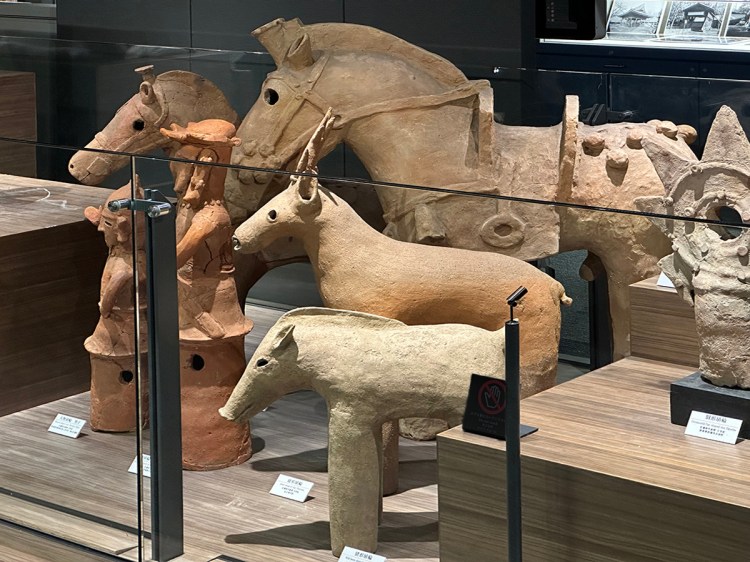
I can’t believe I didn’t discover this jewel of a history museum until now! Kokugakuin University was founded by the imperial family with the mission to study the origins of the Japanese people and their beliefs, and this museum is the premier place to see excellently displayed artifacts, from those dating back over 15,000 years (the dawn of Japanese cuteness culture!) to a modern glimpse into forbidden Shintō rites and rituals we’d never get to see otherwise. This museum shines a brilliant light on Japanese culture, all the way back to the Jōmon period.
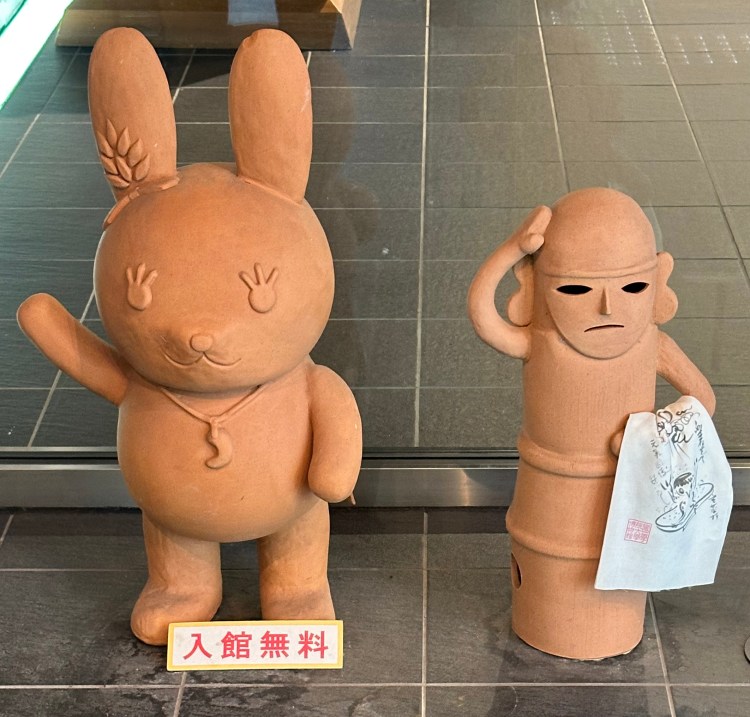
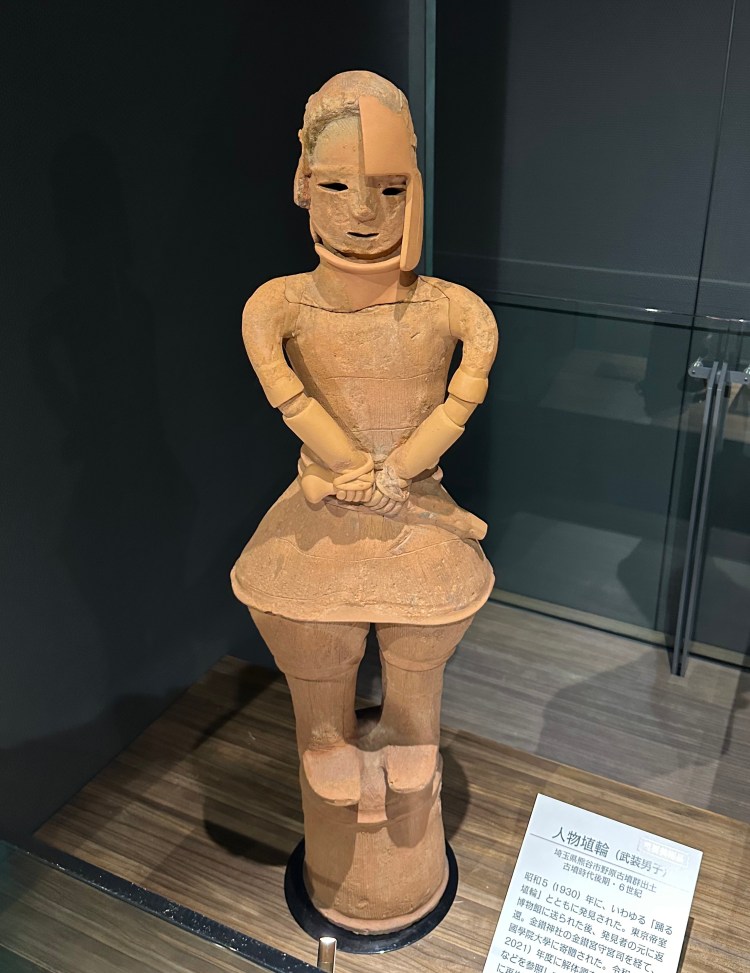
If you want to understand where today’s Japanese pop culture comes from, this is the place! The figure on the left is the museum’s modern mascot; the one on the right was designed seventeen centuries ago.
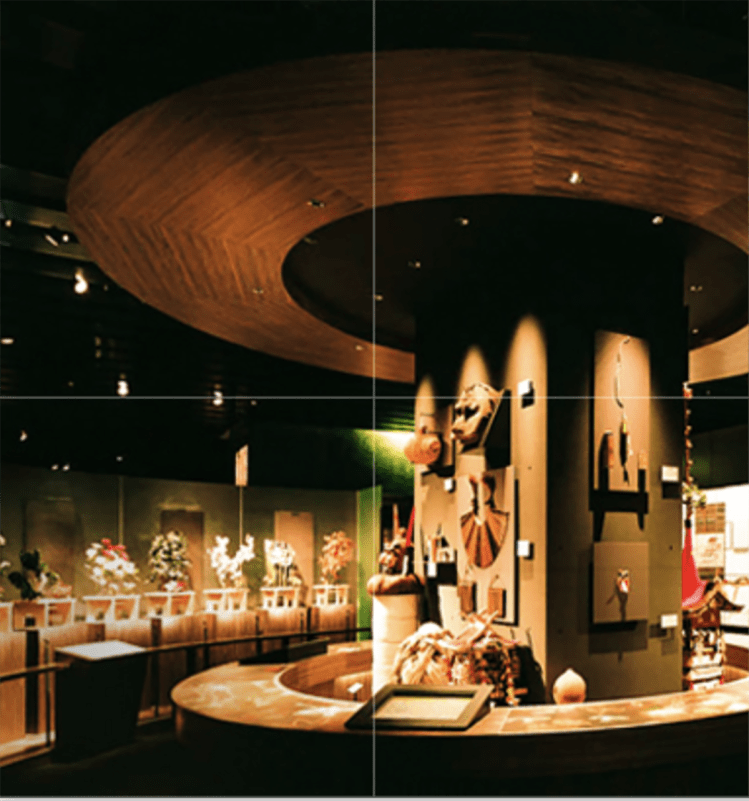
The university’s focus on archeology and the study of Shintoism has produced an extensive collection of artifacts, and the very best of these are displayed in the museum. Note: This is me gnashing my teeth because photography is forbidden in the wing with the Shinto ritual displays. Many of the artifacts are sacred objects, so it’s offensive to take photos of them. Once you see the quality of the exhibits in the rest of the museum, though, I hope you’ll be inspired to go see them for yourself! Here’s a crappy screenshot of that gallery from the museum’s website:
But the other galleries are well worth seeing too! The students and faculty have been beadily industrious for over a hundred years—instead of a few dusty shards of pottery, this museum is overflowing with gorgeous examples of genuinely ancient stuff, some dating back to 10,000 BCE.
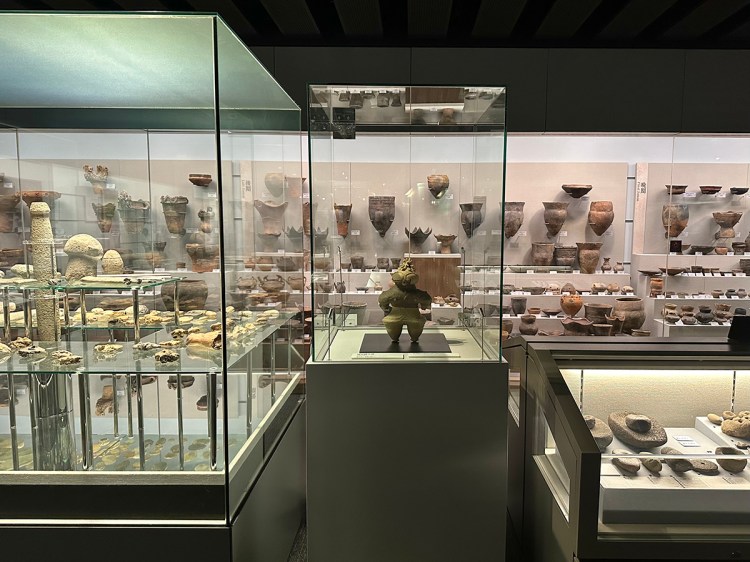
Sorry, had to zoom in on this bad boy! Hard to believe he was made over fifteen centuries ago, right?
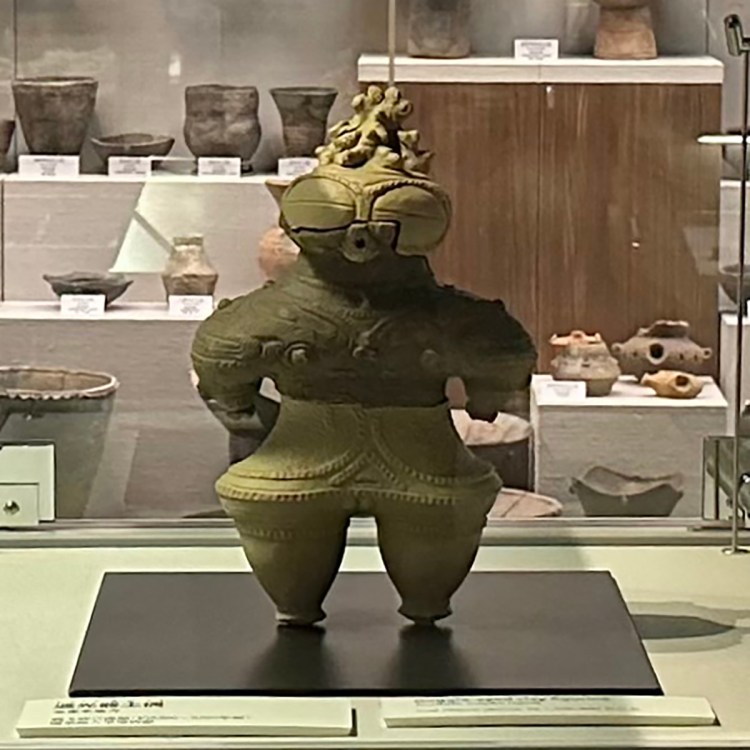
And this pot, which is about the same age as Stonehenge (around 3,000 BCE)
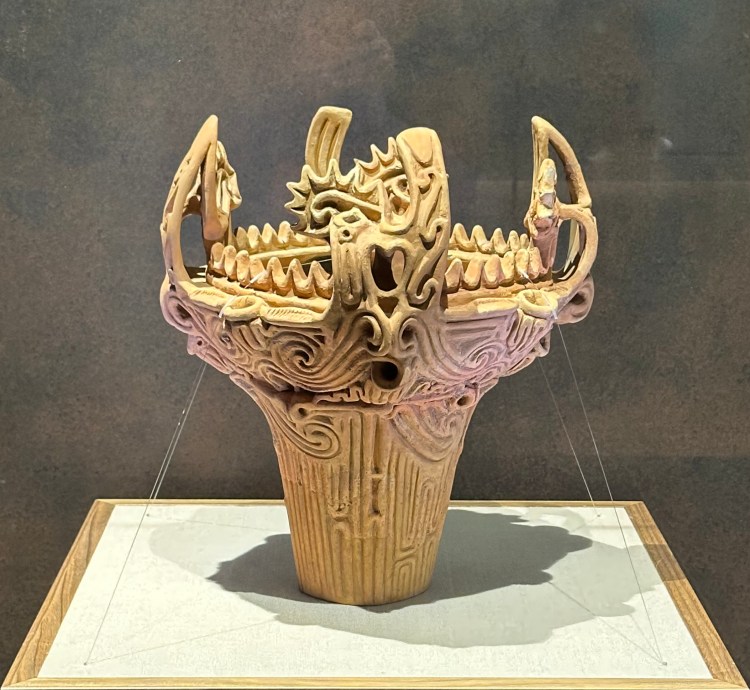
Take one look at these figures, and you can see where today’s manga and anime aesthetic came from.
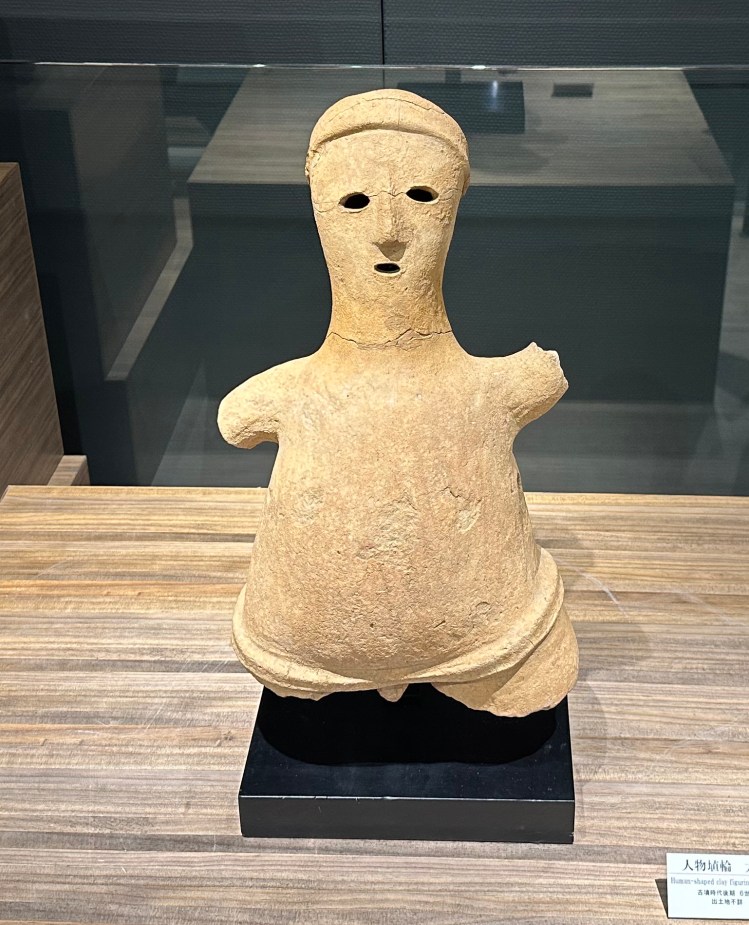
Even the military figures are kawaii!
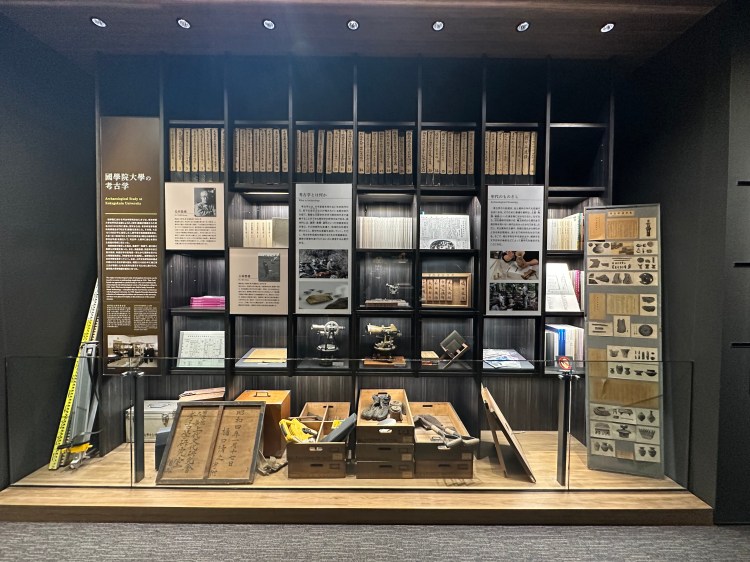
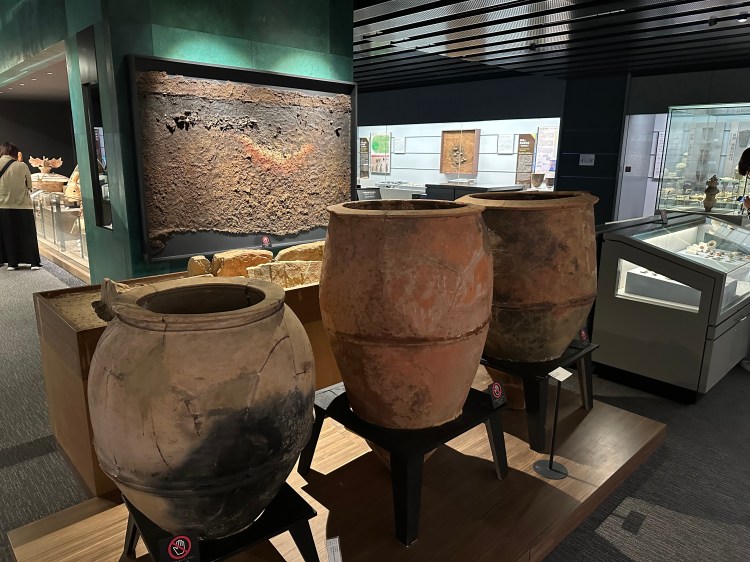
And they don’t just display the cleaned-up pots and such—they also explain how they were excavated (see that soil cross-section on the wall)…
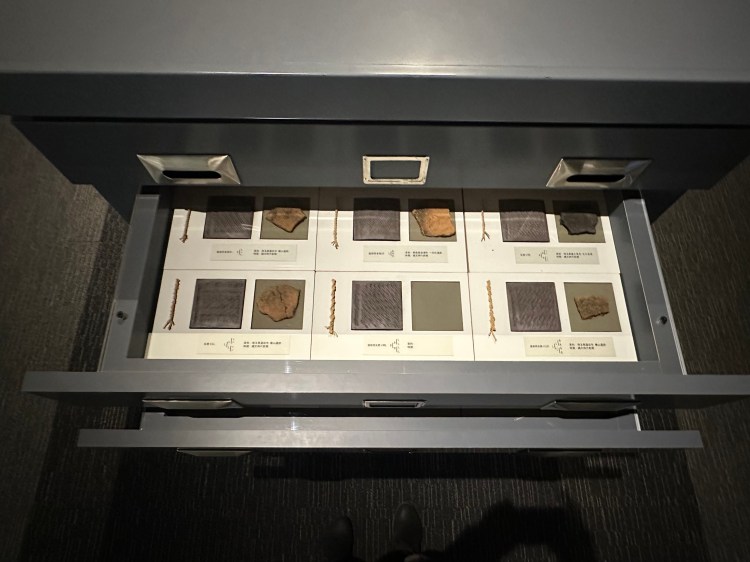
and there are super interesting exhibits about some of the technology used to make the items on display. This one, for example, shows various patterns of knotted cord that were rolled over the surface of clay pots to give them distinctive textures.
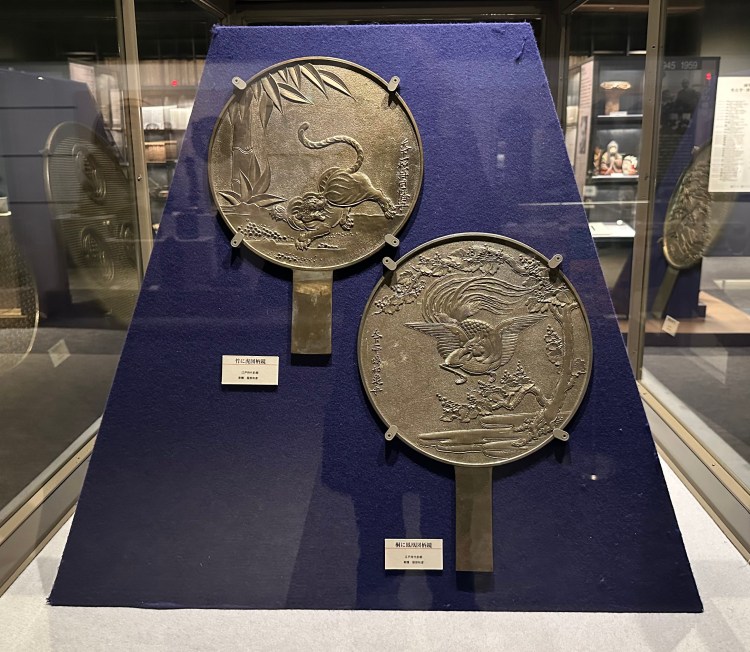
In addition to the extensive prehistoric collection, there are also beautiful examples of unique historical pieces from later periods, like these bronze mirrors made in the 1600s…
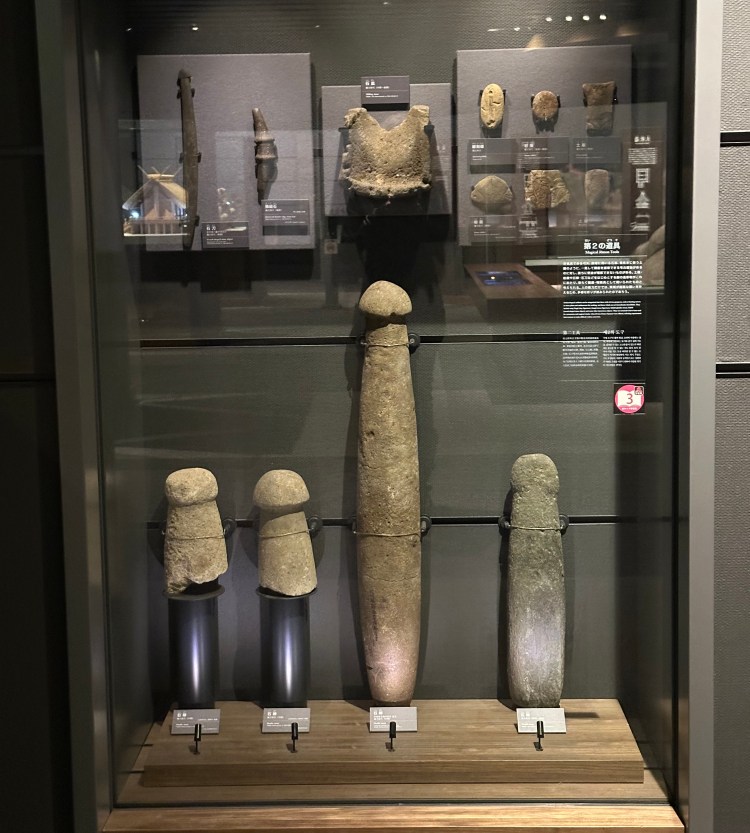
and no archeological collection would be complete without the obligatory display of stone penises.
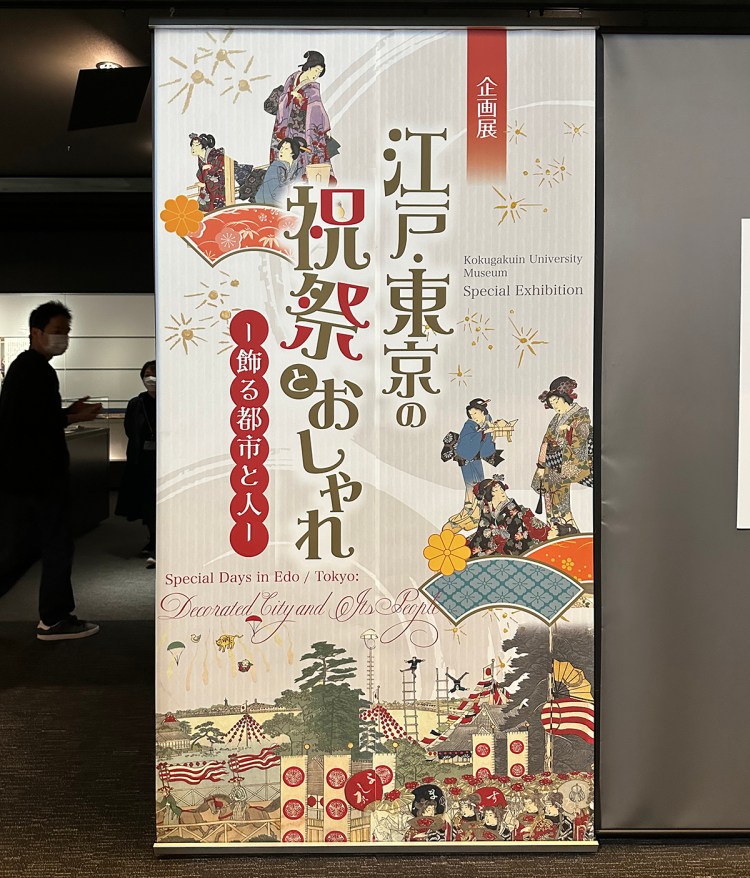
There’s also a gallery for special exhibits. The University’s long association with the Imperial family means it’s been gifted some choice items over the years, and various collections are rotated into this gallery with skillfully-themed curation. The exhibit I saw when I was there was Special Days in Tokyo: A Decorated City and Its People.
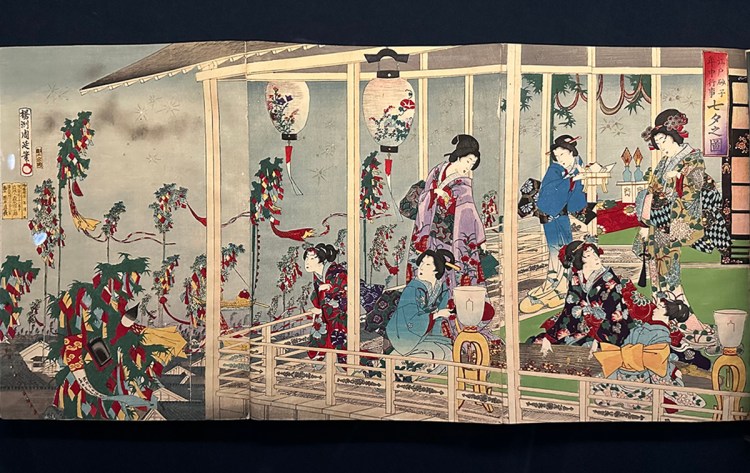
and it included some beautifully preserved ukiyo-e prints of people celebrating the major Japanese holidays.
•
Open: Every day except closed Mondays
check the calendar for other special closed days
Hours: 10:00 – 18:00
Admission: Free
Information about current and future exhibitions is on the
Kokugakuin Museum website
•
If you enjoyed this, subscribe!
Get all the latest Japan travel tips and tricks for free ヽ(*^ω^*)ノ
And here are the other places I take my friends when they come to town

•
Jonelle Patrick writes novels set in Japan, produces the monthly e-magazine Japanagram, and blogs at Only In Japan and The Tokyo Guide I Wish I’d Had
 Jonelle Patrick writes about Japan