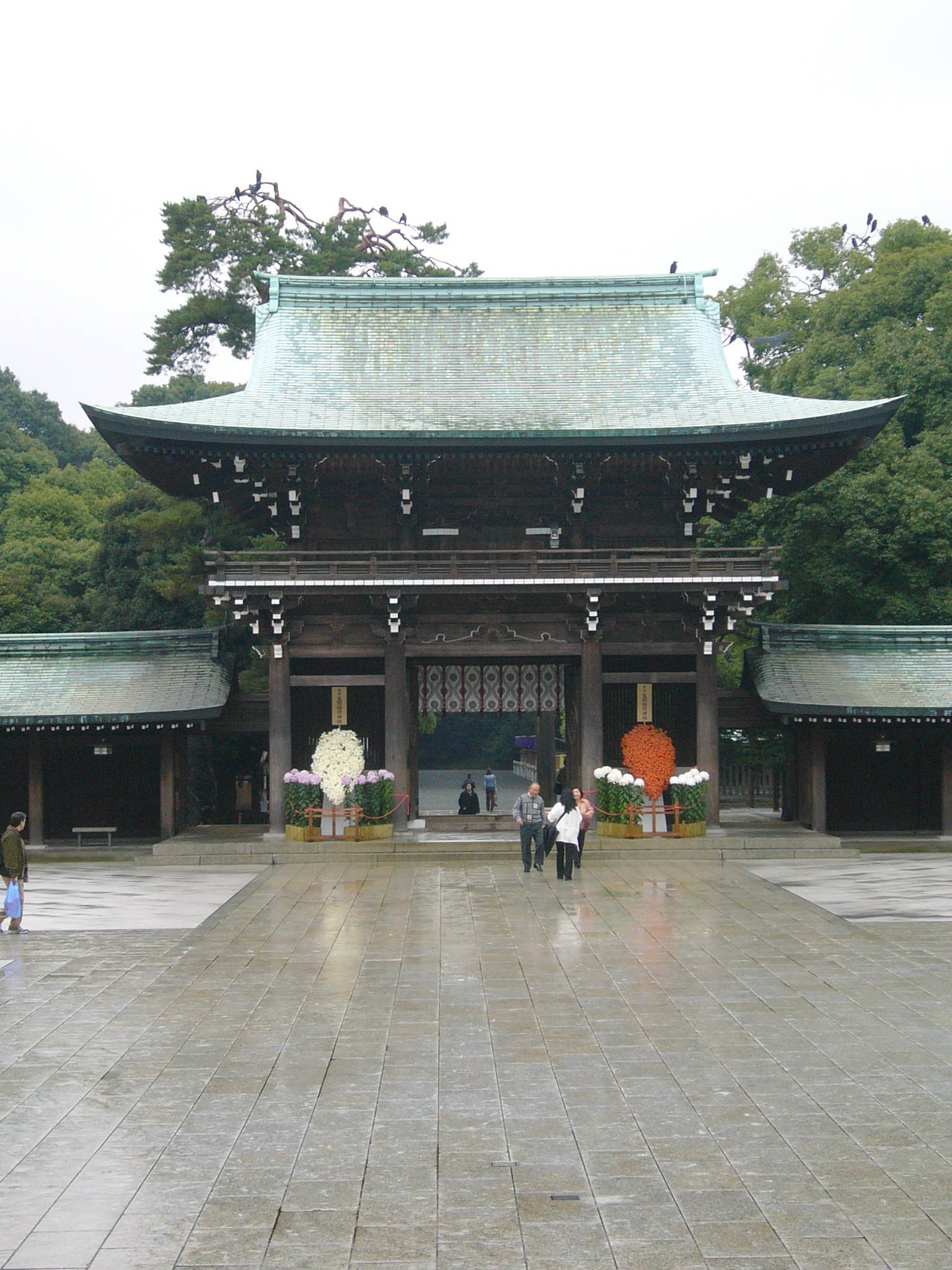
The Meiji Shrine is the most important shrine in Tokyo, a serene and sacred setting for the weddings, coming-of-age-ceremonies, and seasonal festivals that are worth seeing in January, April, June, September and November. The shrine’s Nai-en Garden is famous for iris in late May to early June.
The Meiji Shrine looks pretty much the same year-round—tall trees, stately buildings, impressive cedar torii gates—
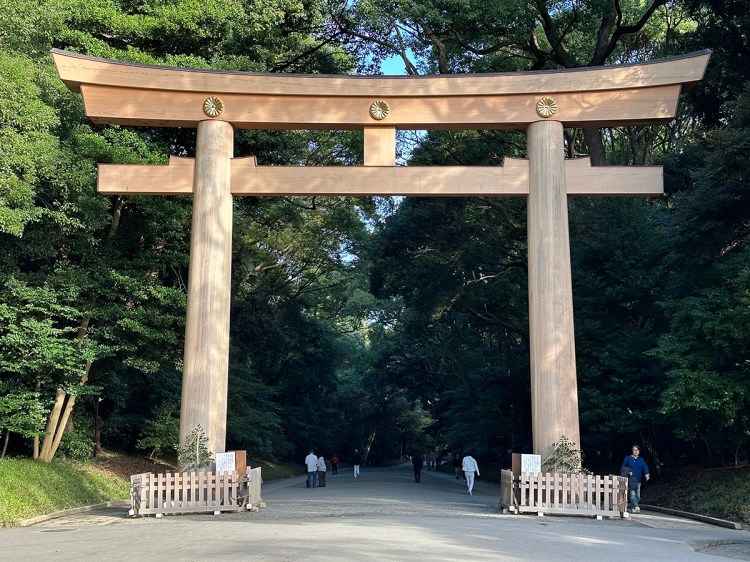
but there’s no better place to celebrate traditional Shinto holidays like New Year’s and catch a glimpse of ceremonies marking big life events like weddings, young adults coming-of-age day and the festival for children celebrating their third, fifth and seventh birthdays.
Saturdays & Sundays are the best time to catch a wedding procession at the Meiji Shrine (and the busiest wedding month is June)…

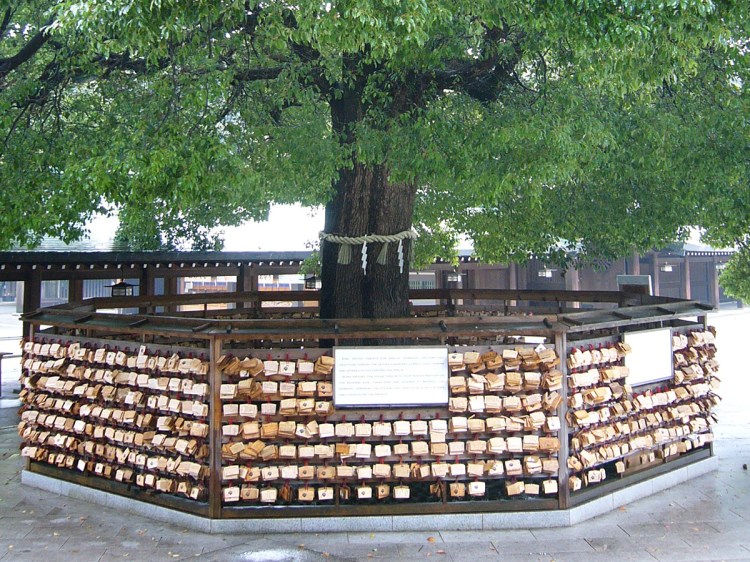
While we’re there, let’s pay our respects at the offering box, then stop at the shrine stand to buy a wooden ema prayer plaque and make a wish. The rice straw ropes called shimenawa are draped around anything that’s believed to be the home of one of the resident gods, like this venerable tree.
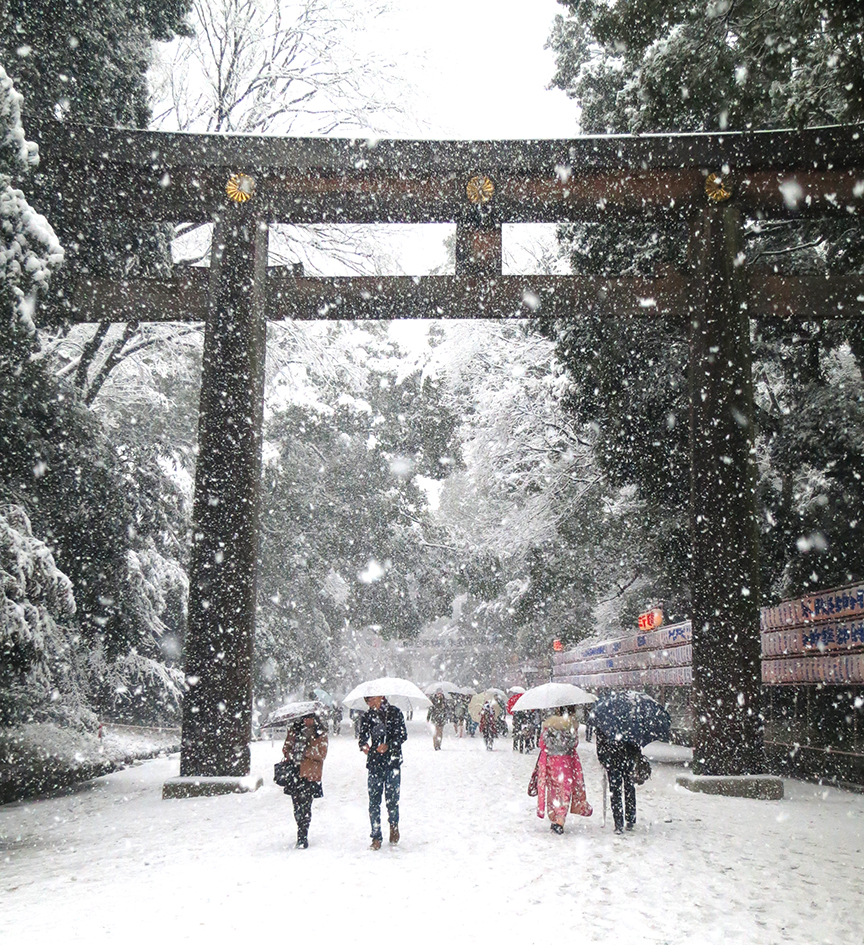
If you’re lucky enough to be in Tokyo when it snows, get thee immediately to this shrine see how gorgeous the ancient buildings and their grounds are, all shrouded in white.
But no matter the weather, you can start the new year right with a cup of warm sake ladled out by a shrine maiden…

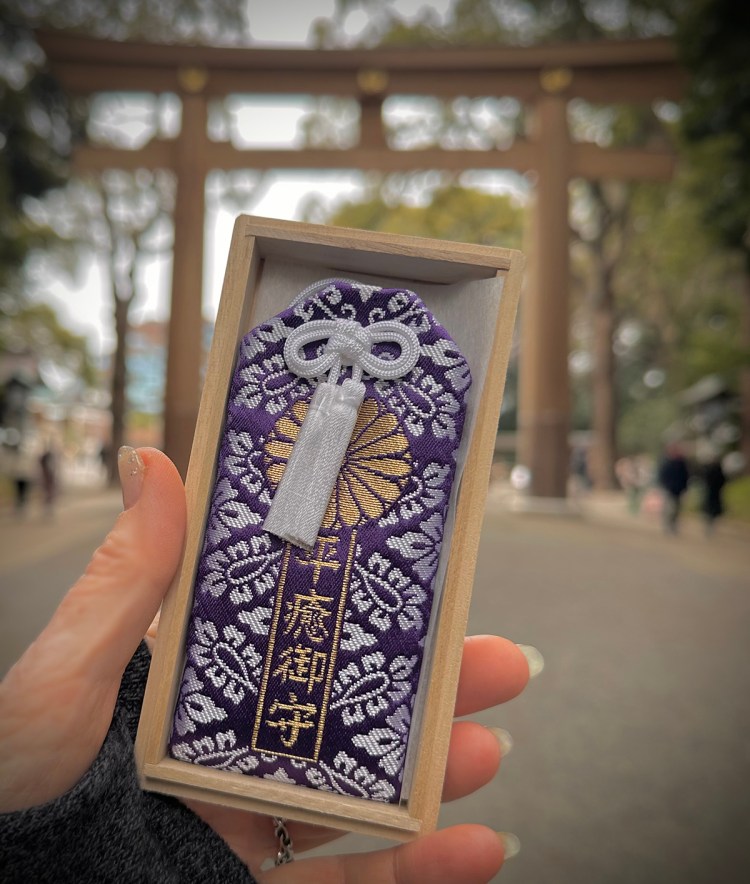
and stop to buy a healing souvenir for an ailing loved one back home.
On Coming of Age Day (second Monday in January), 20-year-old girls deck themselves out in the most flamboyant and expensive kimonos they will ever own…

and 20-year-old boys don priestly Shinto robes and hats.
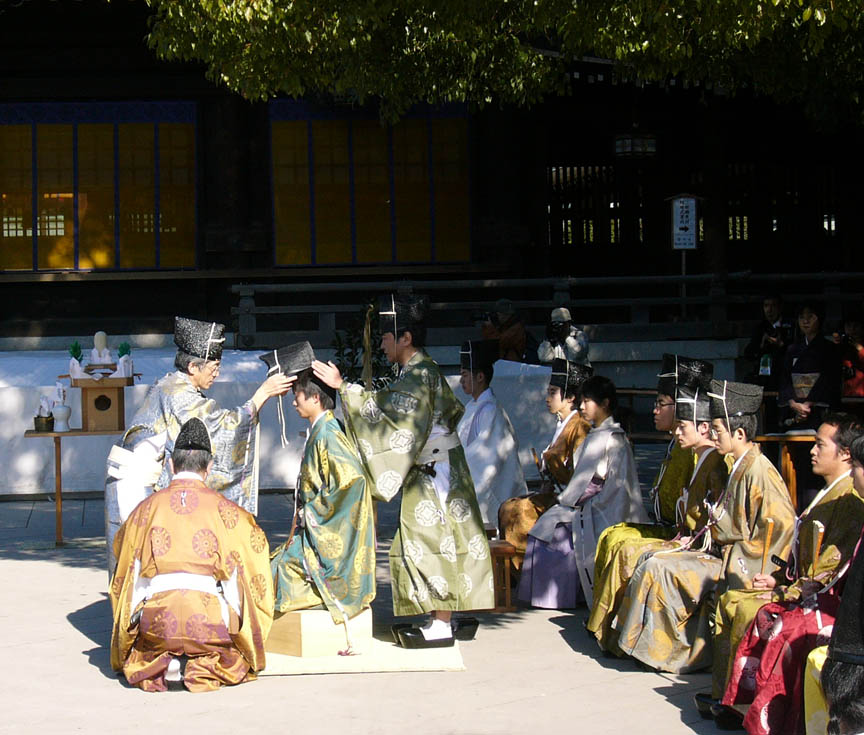
May and November is when the spring and fall festivals are celebrated in grand style at the Meiji Shrine, with demonstrations of many traditional arts. Stop by to see dance, puppetry and wrestling demonstrations, and check the schedule to make sure to catch the yabusame horseback archers displaying their prowess.

The Nai-en Garden has wonderful walking paths, a large pond, and a famous iris garden that blooms in June.

The entrance to the gardens is between the second giant torii gate and the shrine buildings. And if we’re super lucky, we might see a real live tanuki! Most people think they’re just characters from old legends, but here’s proof that the canids known as raccoon dogs actually exist.

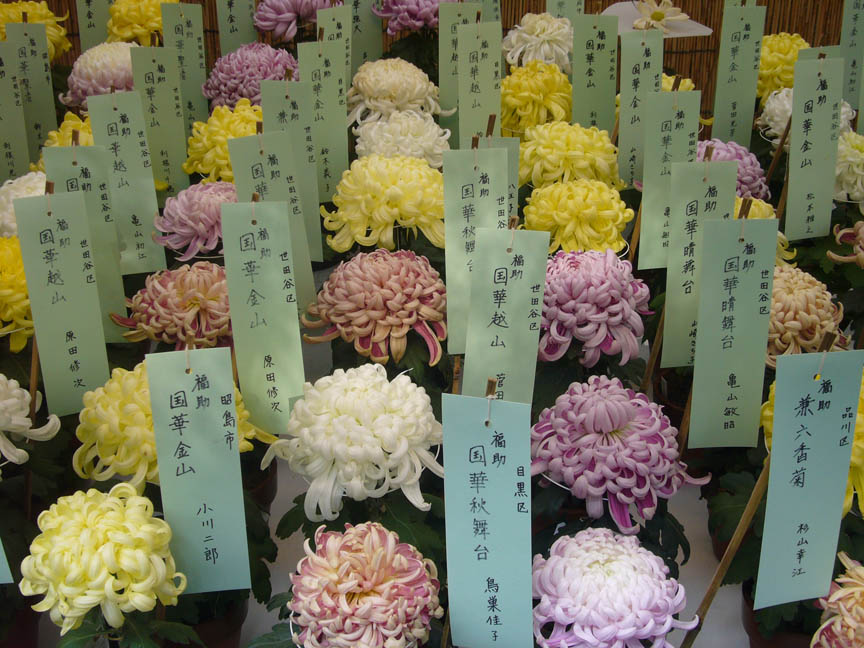
If you’re in Tokyo in November, don’t miss the big competitive chrysanthemum exhibits at the Meiji Shrine, featuring chrysanthemum bonsai and huge perfect specimens of famous varieties.
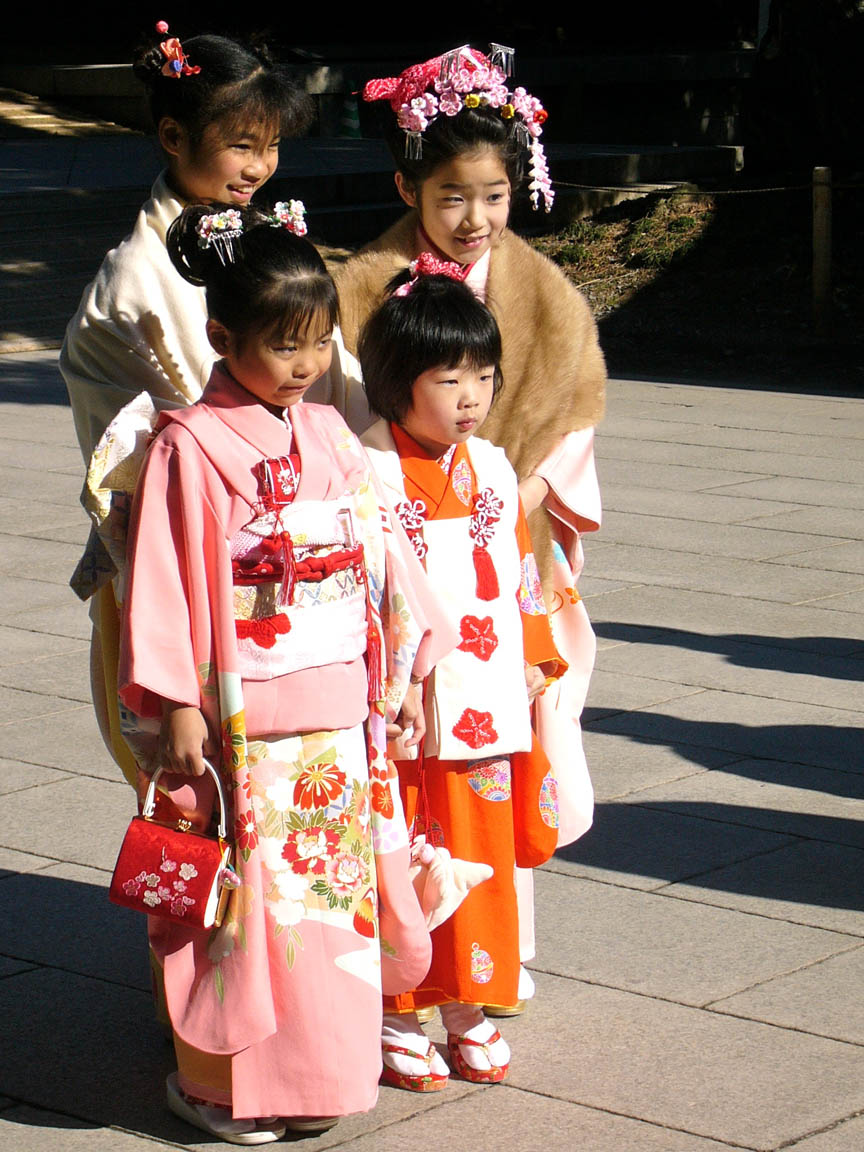
And from November 1-15, you also might spot families with young children flocking to the shrine for Shichi-Go-San pictures, all dressed in their finest kimonos.
Meiji Shrine (Meiji Jingu)
Hours: 9:00 – 16:00
Treasure House: 9:00 – 16:00, open weekends and holidays only
Shrine admission: Free
•
If you enjoyed this, subscribe!
Get all the latest Japan travel tips and tricks for free ヽ(*^ω^*)ノ
And here are the other places I take my friends when they come to town

•
Jonelle Patrick writes novels set in Japan, produces the monthly e-magazine Japanagram, and blogs at Only In Japan and The Tokyo Guide I Wish I’d Had
 Jonelle Patrick writes about Japan