Yanaka is one of the quirkiest (and undiscovered) Old Tokyo neighborhoods in town. Here, new generations of artisans from families that have plied their trades for centuries are finding fun and inventive ways to make everything old new again. Sometimes, with cats. Let’s walk around and I’ll show you all my favorite spots!
Click this button for a Google map of all the destinations
Here’s an overview of the route

Let’s start at Nezu Station!
You might be interested in visiting these first two shops before or after our program with Allan West—they sell the kind of brushes and pigments nihonga artists have been using for hundreds of years.
1
Kinkaido pigment and brush stores
Our first stop is at the two shops across the street from each other that sell the handmade brushes and eyepopping rainbow array of pigments used by traditional nihonga artists.
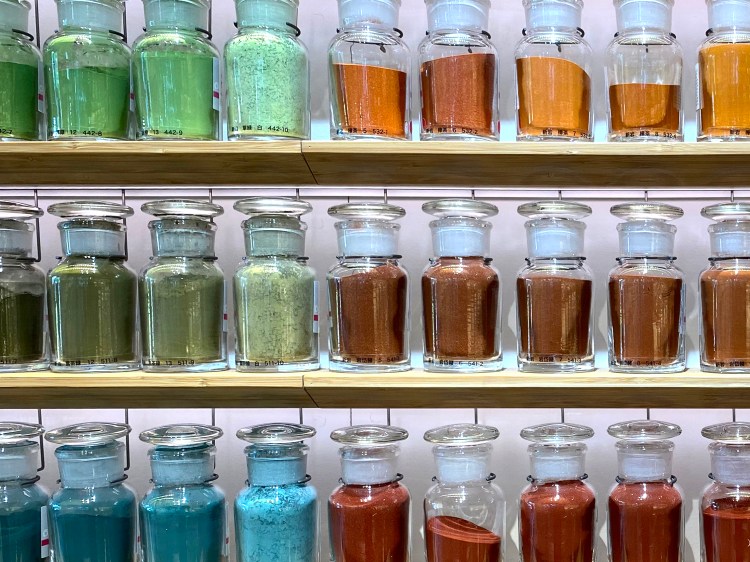
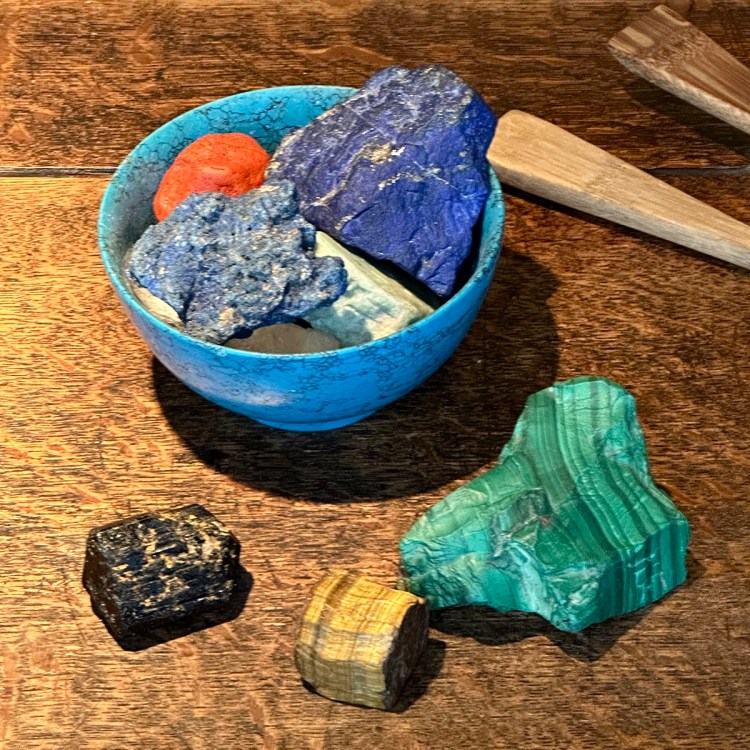
These powders are very precious because they’re actually ground from gemstones like these:
Next stop, Allan West’s studio, to see how a master uses them…
2
Art Sanctuary Allan West
Allan West is a renowned nihonga master whose paintings hang everywhere from mountain temples to five-star hotels. He welcomes visitors to his studio and gallery every afternoon from 13:30 – 16:00 (except on Thursdays) to learn about the thousand-year-old art of painting with powdered gemstones on gold and silver leaf.
If you enjoy the program and have friends who’d like to meet Allan and see his lovely paintings, you can bring them on any afternoon that’s not a Thursday. He’s a very nice man, and he would be delighted to see you again!
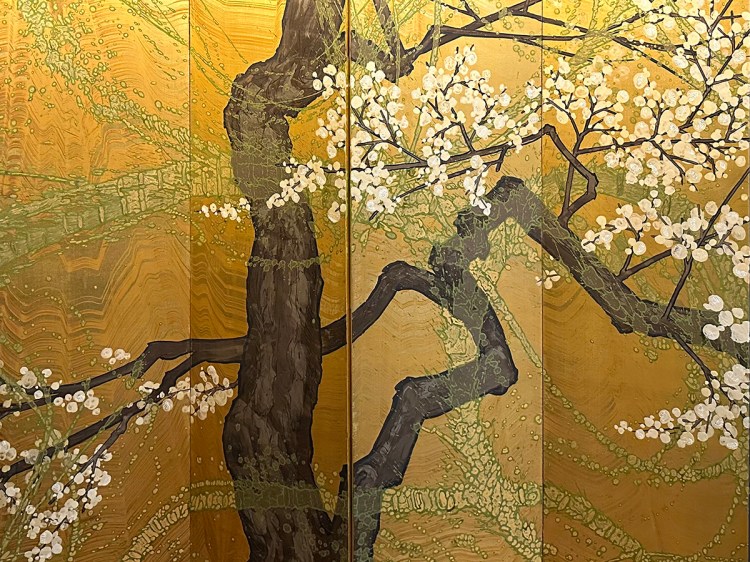
He’s often there himself to answer questions, and his studio is always worth a visit.
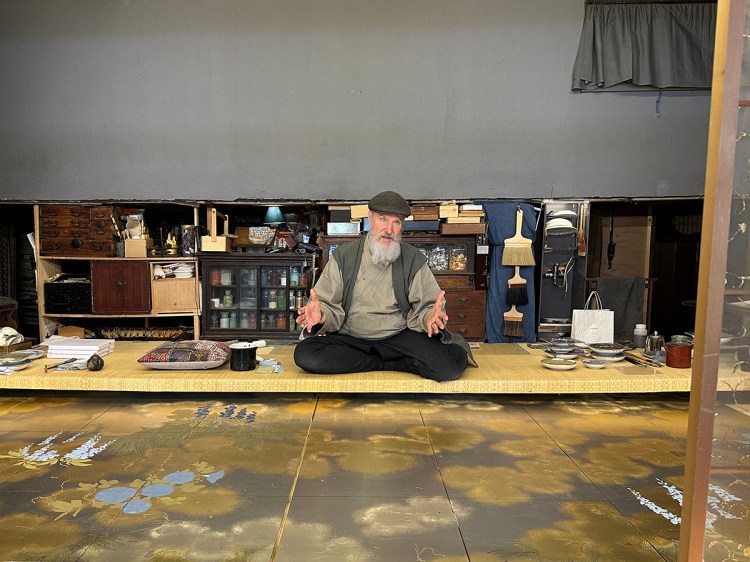
After soaking up the golden goodness, continue on that lane and follow the scenic route up around some of the neighborhood’s serene neighborhood temples until it dead ends in a main street. Turn downhill for our next stop, two cat-themed shops:
3
Yanakado
This shop specializes in the raised-paw cats called maneki neko, which are famous for beckoning good fortune into businesses. If there’s an entrepreneur on your gift list, you can’t go wrong tucking one of these into your suitcase.
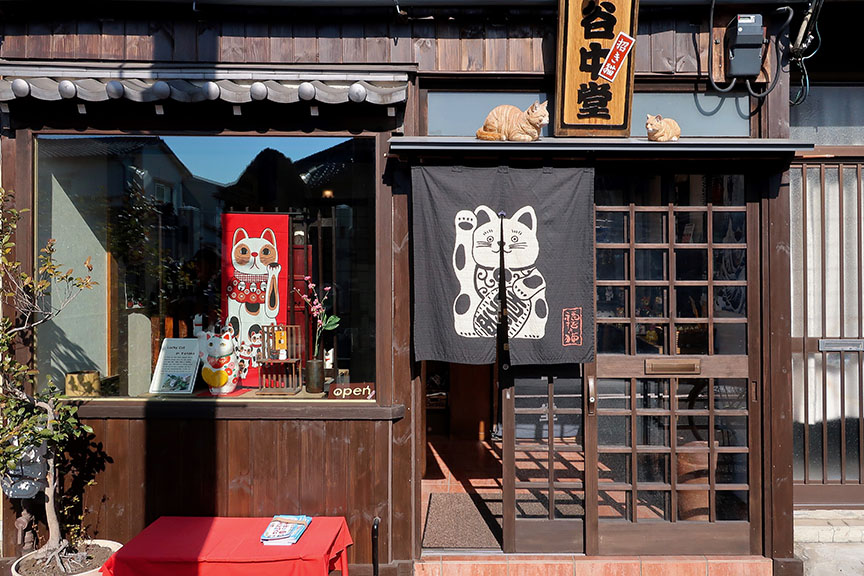
This shop is especially famous for custom sculptures painted to look exactly like your own cat (which take six months and require a good photo when placing the order)
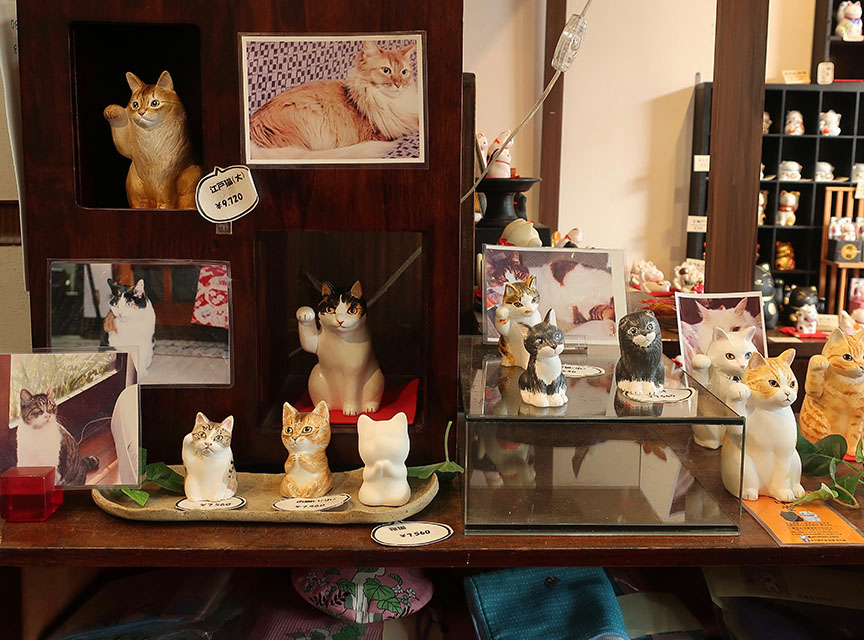
They don’t sell this big size anymore, but you can see them all over the neighborhood in the windows of businesses presided over by resident felines.

If you can’t bear to wait six months for your cat’s portrait, you try your hand at making one yourself at the cafe next door:
4
Cafe Nekoemon
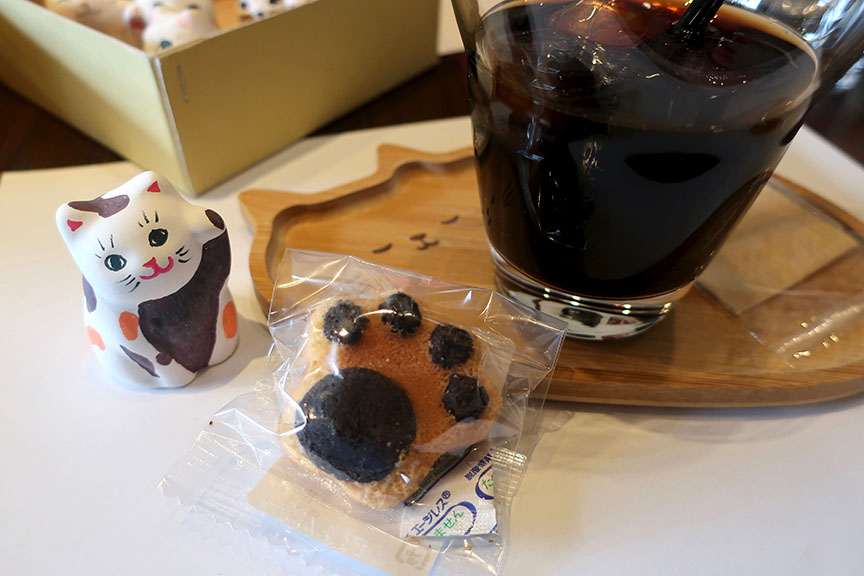
The set price includes the drink of your choice, a cat-themed dessert, and a blank maneki neko raised-paw cat figure to color
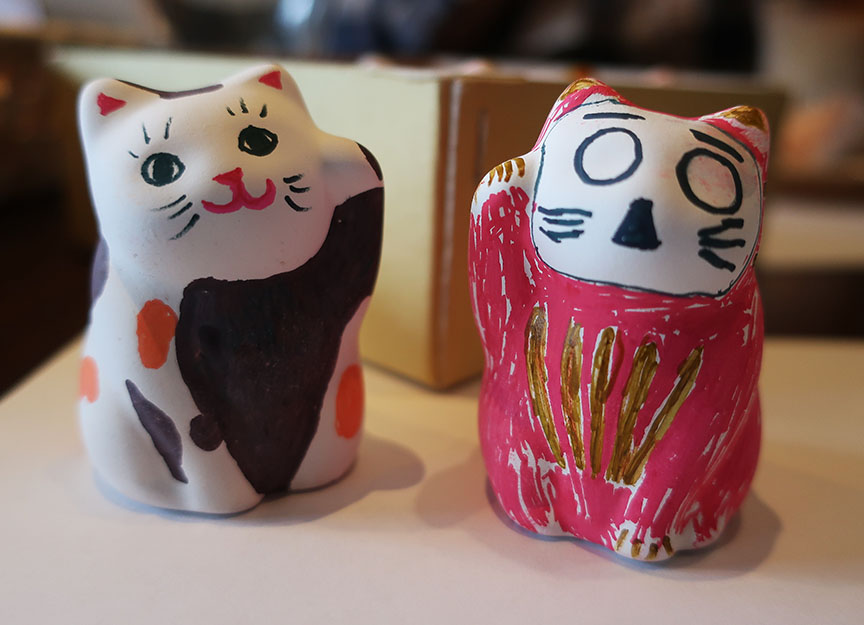
After fueling up on coffee & cake, head down the hill to:
5
Zensho-an Temple (home of the Ghost Museum)
Zensho-an, has a tall gold Kannon statue and magnificent peonies (in May). If you’re lucky enough to be visiting in August, you can stop in at the temple’s Ghost Museum (¥500). It’s only open in August because telling ghost stories is one of the traditional ways Japanese kept cool in summertime because they “send a chill up your spine.”
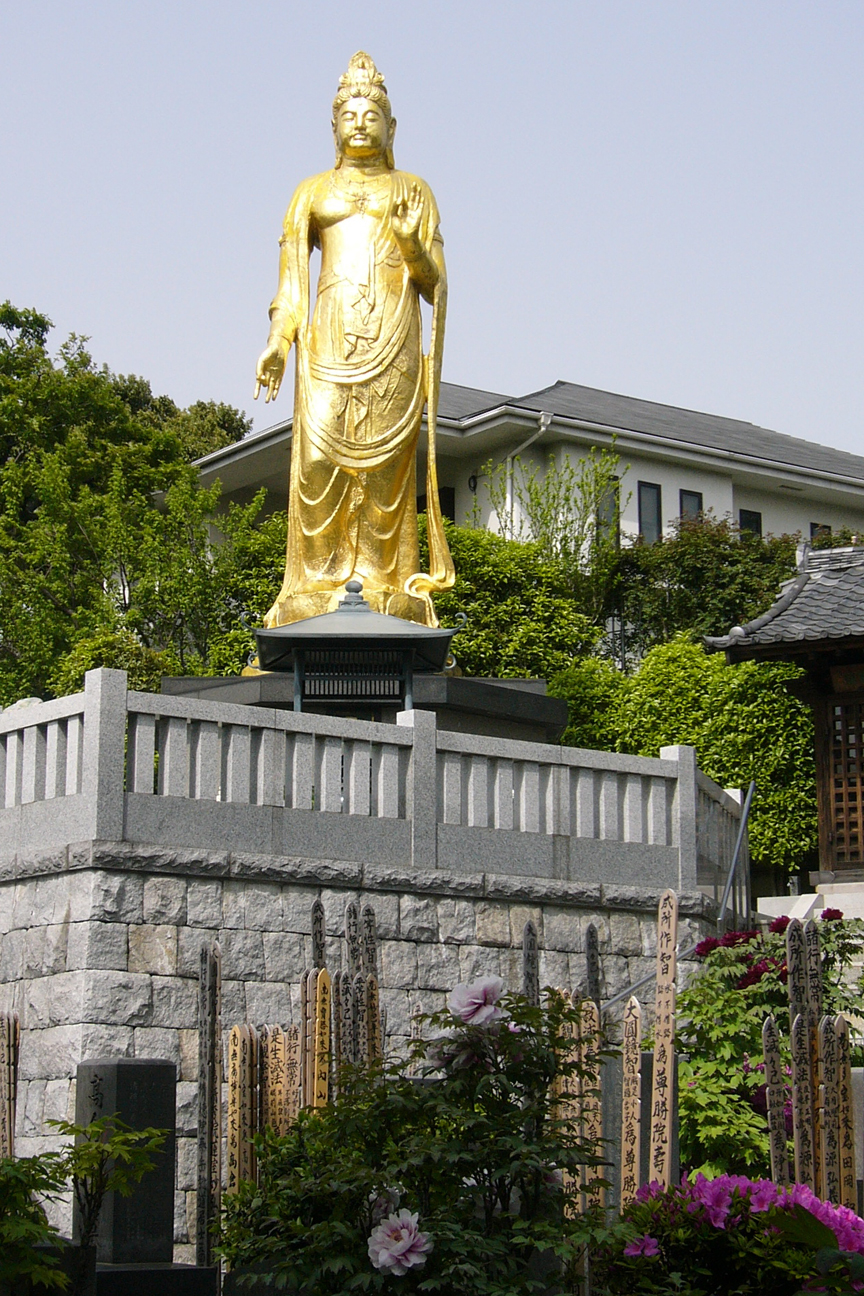
Next up is one of the quirkiest destinations in Yanaka:
6
Puppet Shokichi
This shop is where an eccentric artist displays his creations and puts on puppet shows every half hour. The shop is filled with puppets posed in poignant tableaus of traditional Japanese life…
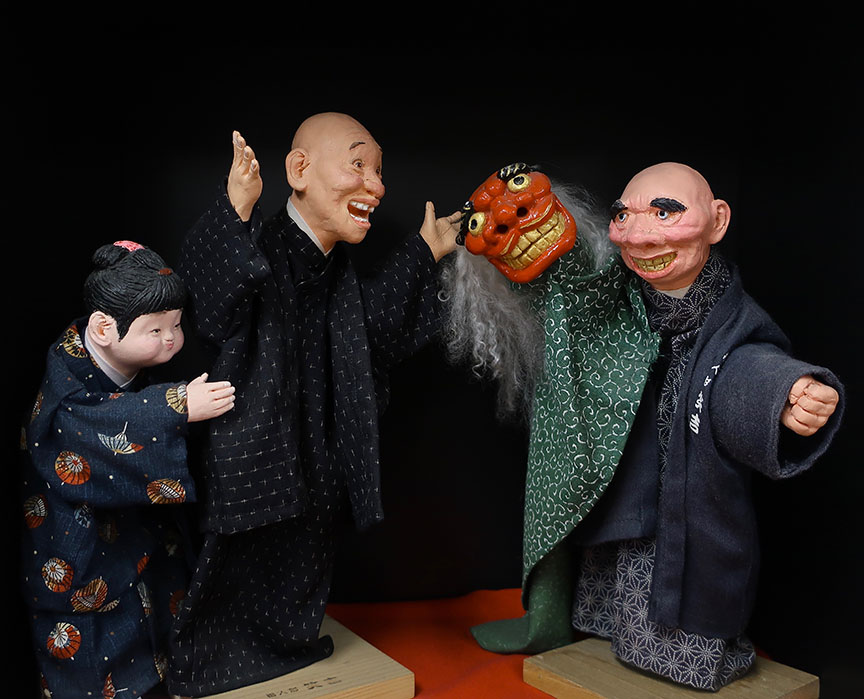
…and surprisingly recognizable puppet caricatures of celebrities.
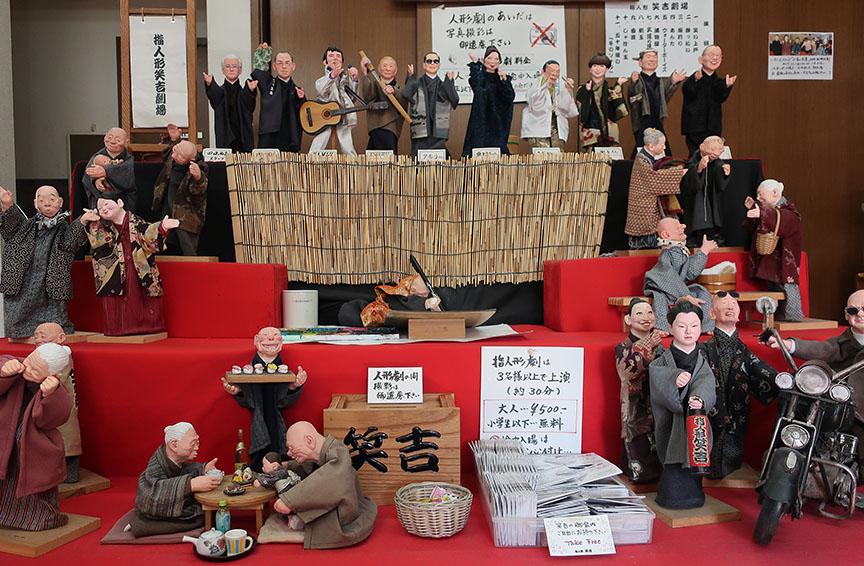
These surround the stage where the performances take place and you can get your portrait painted by a puppet! Just ask the proprietor if he has time for a portrait, pay him ¥1000, and take your seat in the front row…
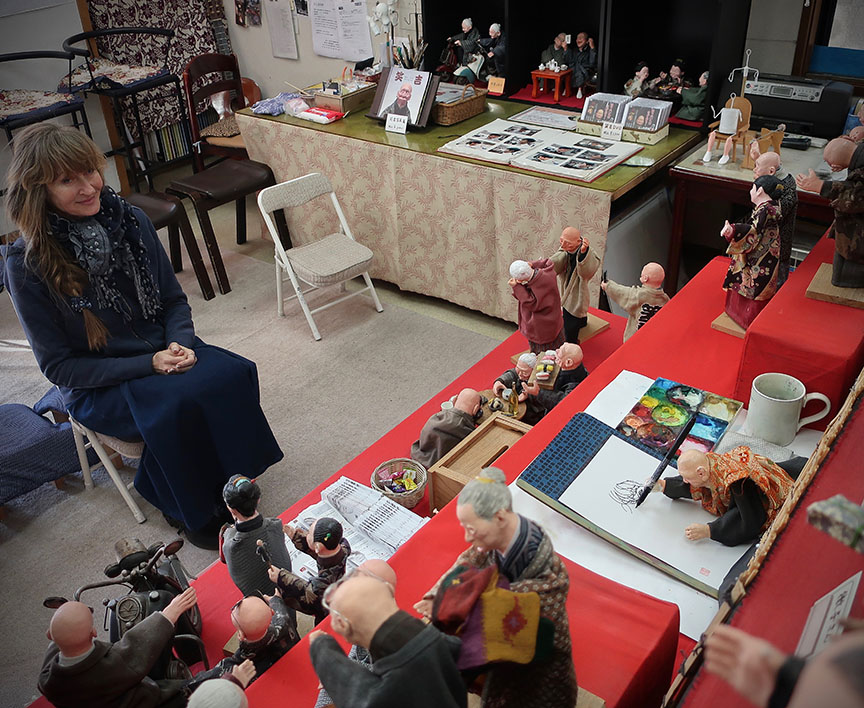
then THIS will happen
After your puppet experience, keep going down the street outside for a couple of blocks and you’ll see the entrance to:
7
Yanaka Ginza shopping street
This is one of the best traditional neighborhood shopping streets in Tokyo, lined with small shops selling delicious street food snacks (from skewered BBQ chicken to fresh oysters), household goods with adorable animal themes, vintage Japanese items, and other tempting stuff. But what makes it especially fun is that cats are everywhere.
These are the official mascots of the Yanaka Ginza shopping street. They’re a mash-up between the shi-shi lion dogs that flank the entrances to Japanese temples (see how one’s mouth is open and the other’s is closed?) and also the raised-paw maneki neko that beckon good fortune into businesses and shops.
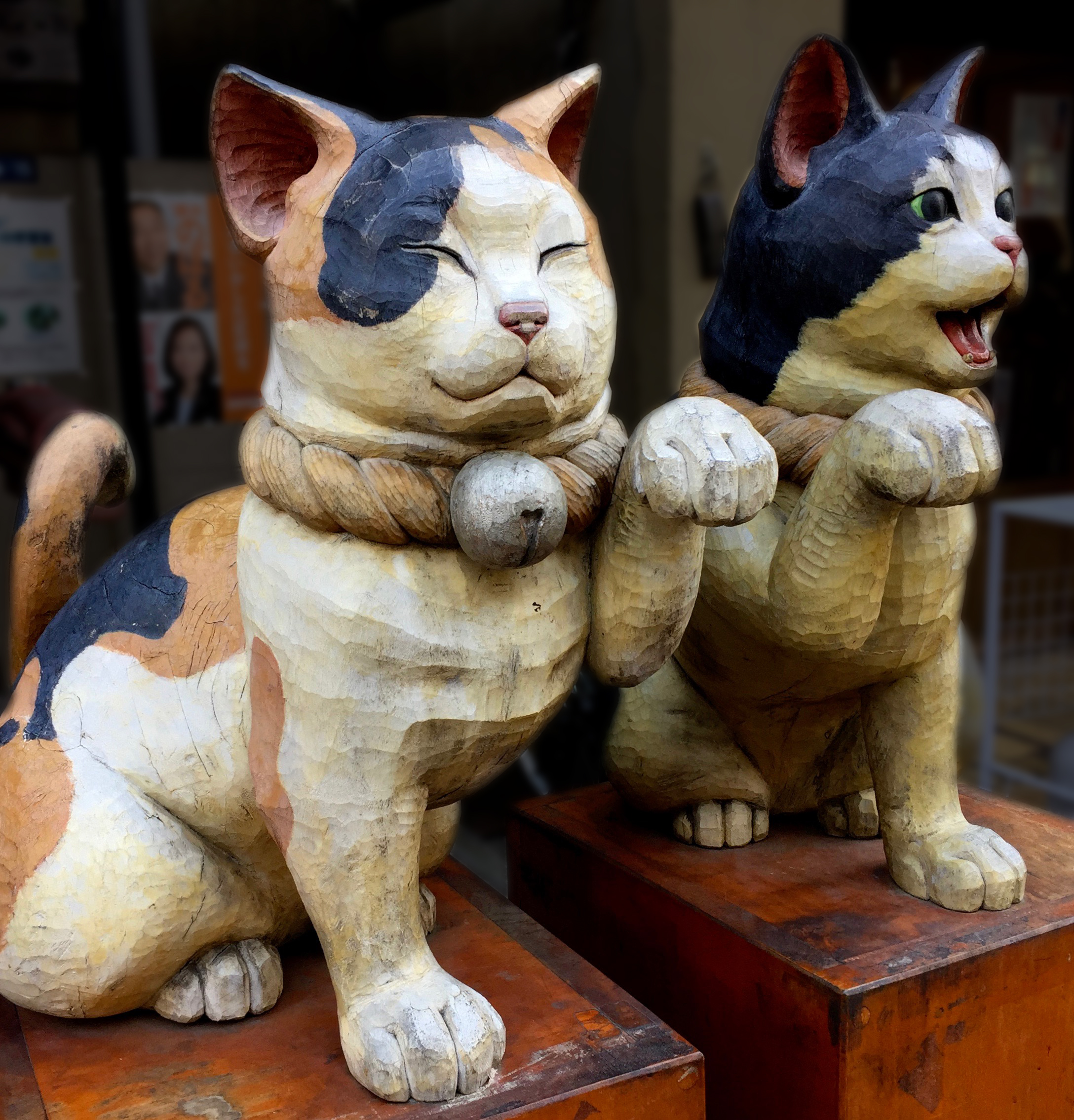
But they’re not the only cats in town. From the rooftops…
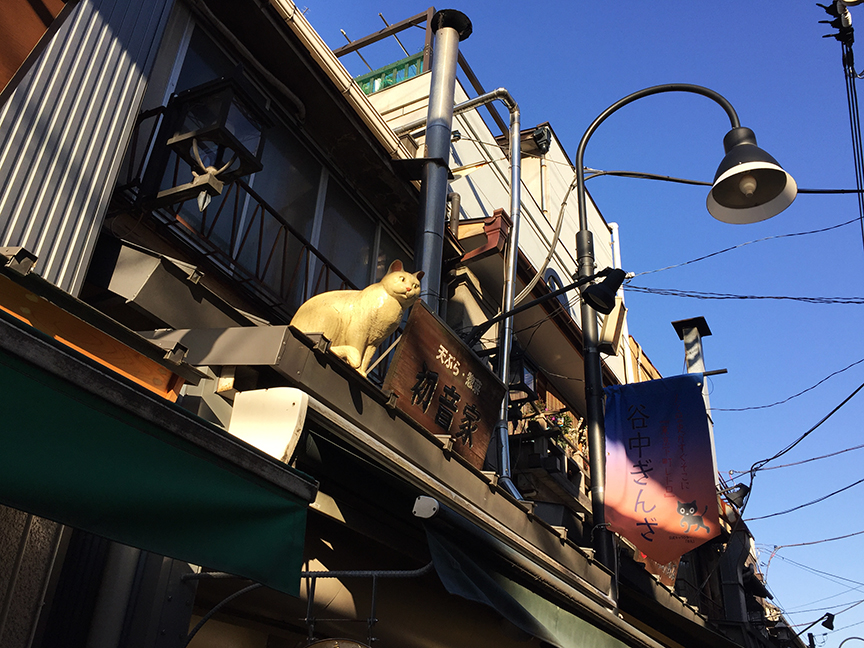
…to cat-themed snacks like these cat tail donuts, meowingtons are everywhere!
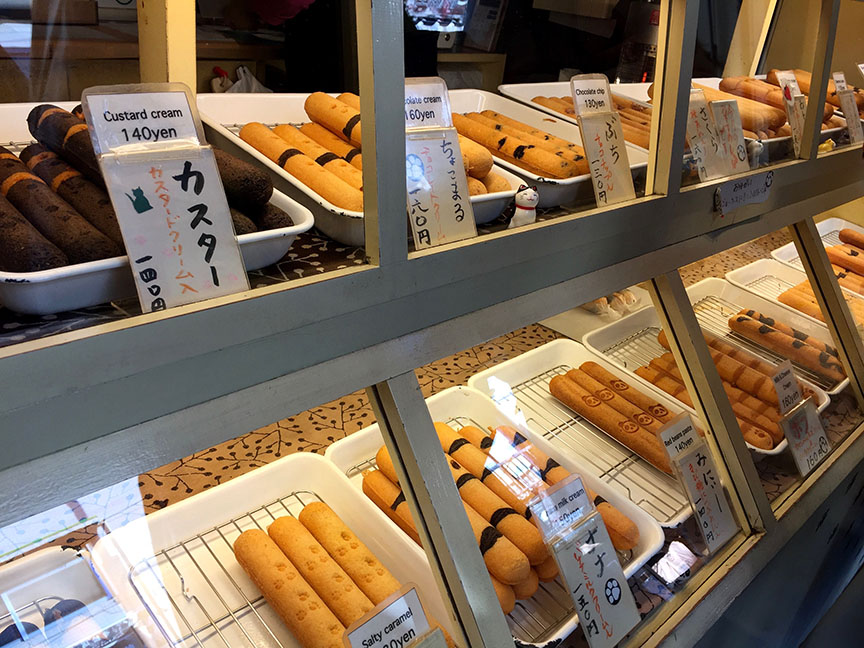
The shopping street ends in a broad set of steps. If you go up the steps and turn right at the end of the block, you can pop into the
8
Asakura Sculpture Museum
Fumio Asakura specialized in lifelike bronze figures—selections of his work are installed throughout he grounds, including on the roof, and they’re very nice—but what makes a visit to his studio and home most worthwhile are the house and garden itself.
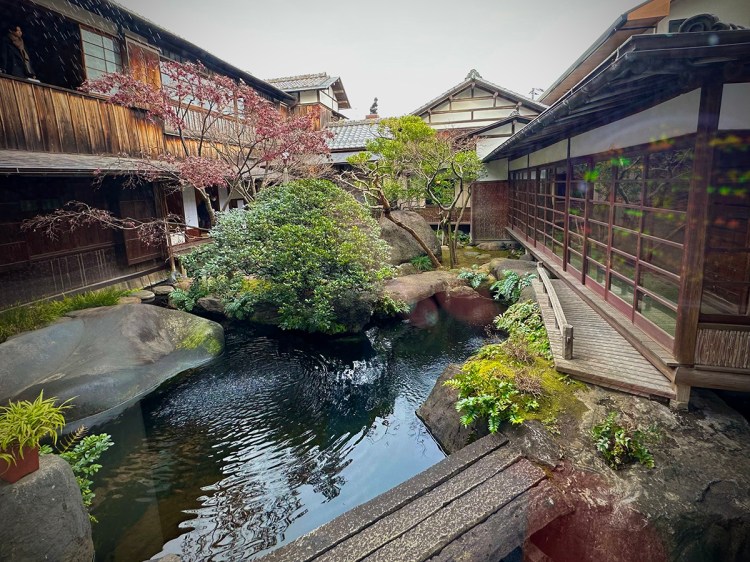
The details and craftsmanship in the rooms is absolutely exquisite, and the materials used are quite unusual. If you love Craftsman and Art Nouveau design, do not miss this very Japanese interpretation of those lovely aesthetics. (Photos are only permitted in two tiny locations, which is why this section doesn’t go on for a hundred examples!)
Open: Every day except closed Monday
Hours: 9:30 – 16:30 (last entry 16:00)
Admission: Adults ¥500, Students ¥250
Now keep going along the charming backstreet until you get back to the main street, then head downhill to
9
Isetatsu
Traditional paper that’s still handprinted from designs that date from the Edo Period
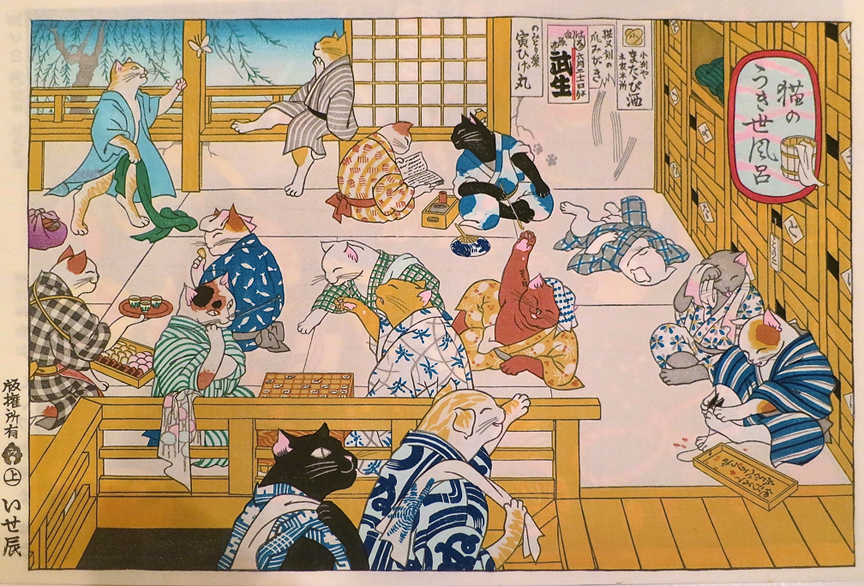
Chiyogami is woodblock printed paper (like the more familiar ukiyoe), and this store has been in business since the samurai era. Some designs feature all-over traditional Japanese patterns (used for wrapping or covering boxes and trays), others depict collections of Japanese things (from childrens’ toys to kabuki wigs) and others are amusing scenes, suitable for framing. This shop is so venerable, one of their prints is even in a painting by Van Gogh! Each one is meticulously printed in multiple colors, just like the famous artists’ woodblock prints, but at a fraction of the price.
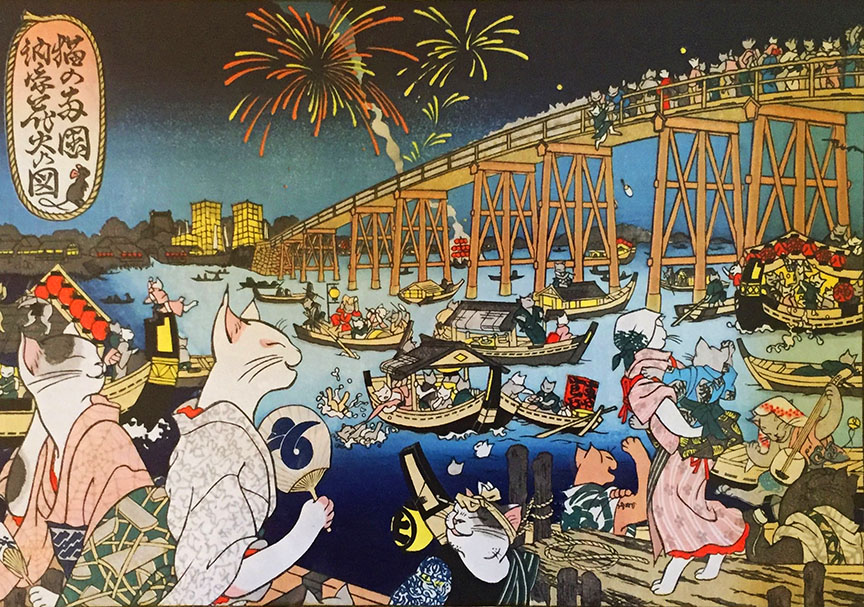
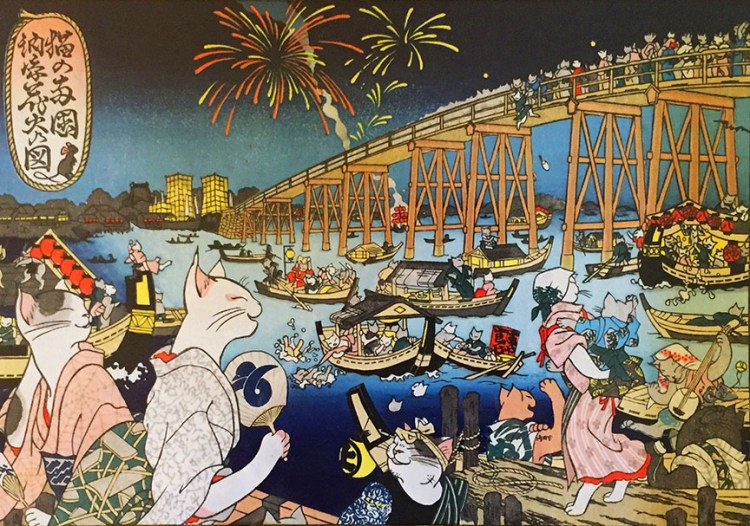
My favorite series stars these cats. I’ve got the one in the bathhouse, the cats throwing snowballs in the winter, cats learning calligraphy and cats enjoying the summer fireworks because YOU CAN’T HAVE TOO MANY
Isetatsu is near the entrance to Snake Street, famous for its wiggly meander that traces the path of a long-gone stream, formerly home to many indigo dyers. This is an optional detour (out and back) because there aren’t many shops on this street, but if you want to get your steps in, you’ll be rewarded by one of my favorites:
10
Kame-no-ko Tawashi
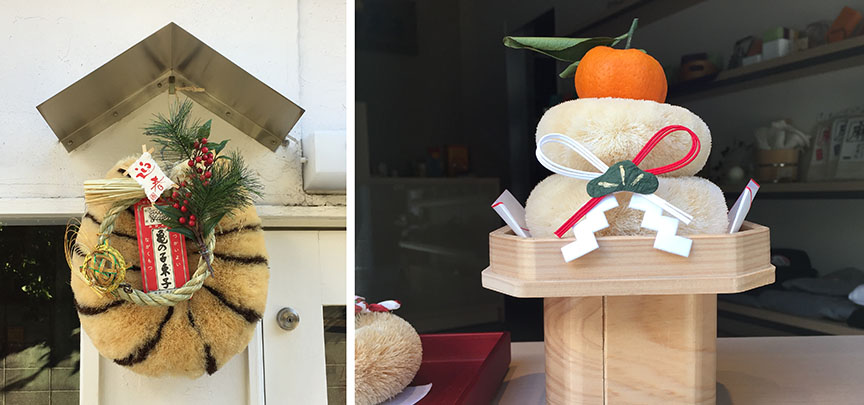
It’s a charming place that’s been selling handmade scrub brushes for generations. You may not realize how much you desire a scrub brush until you see the fun varieties on offer. I pretty much guarantee you’ll be going home with at least one!
Even their New Year’s decorations are made of scrub brushes.
Retrace your steps to the main street where Snake Street branched off, and on the downhill corner you’ll find my favorite guilty pleasure in Tokyo…
11
Mister Donut
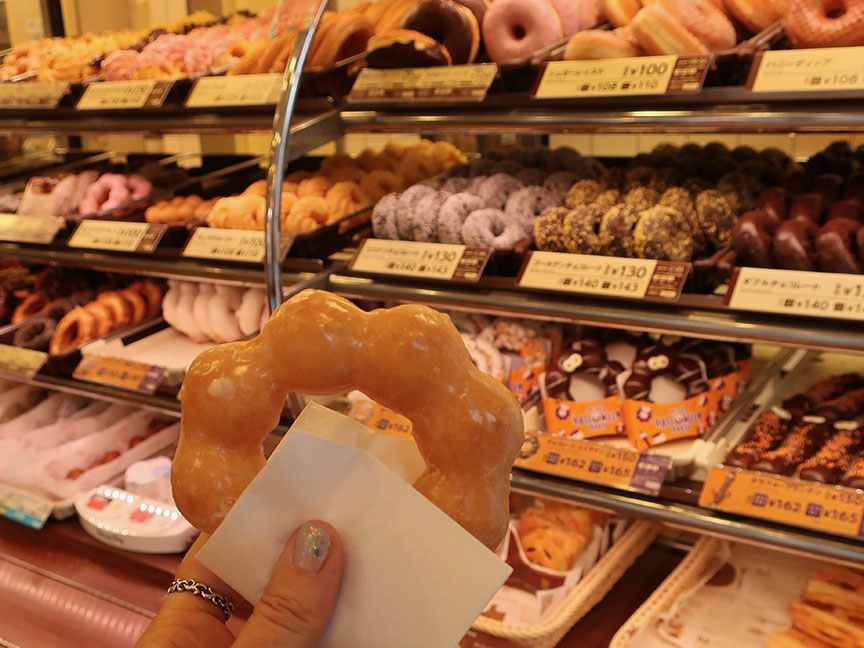
I can resist the temptation offered by all other donuts, but Mister Donut’s “Pon de Ringu” is pure, chewy, only-in-Japan goodness. If you haven’t tried one, I warn you: you won’t be able to eat just one
Our next little detour is across the intersection and a short walk up the street bordering Sendagi Station:
12
Amezaiku-ya (fantastic art lollipops)
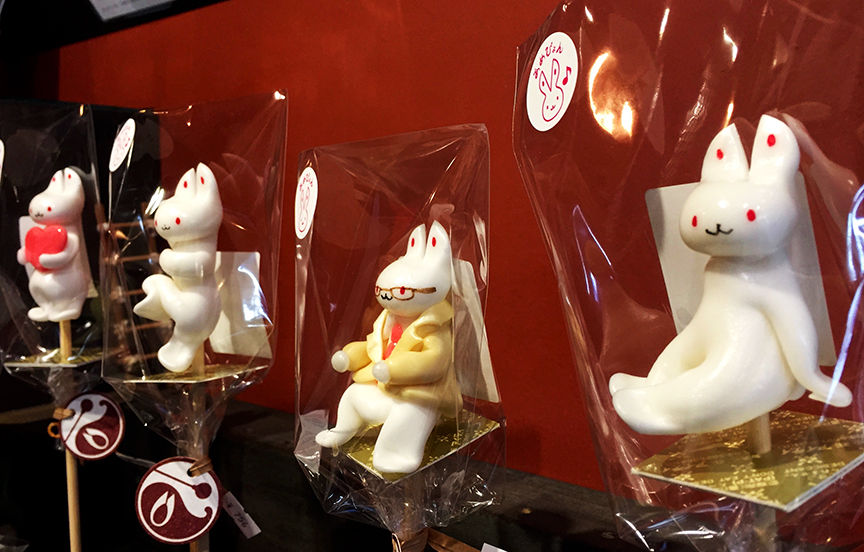
Lollipops made by skillful snipping and pulling of hot candy are a centuries-old art in Japan, and one of the best shops in Tokyo is a quick jog up the hill from Sendagi Station. This tiny shop is filled with everything from whimsical bunnies to adorable animals representing every zodiac year, but the best part is watching the artist at work, through the window at the far end. If you’d like to take photos or video of him at work, order a lollipop off the many choices on the menu, and he’ll make it for you as you watch.
Back to the corner, turn onto the main street and walk in the direction of Nezu Station, peering into the shops along the way. Many have been in business since the samurai era, before Japan opened to the West.
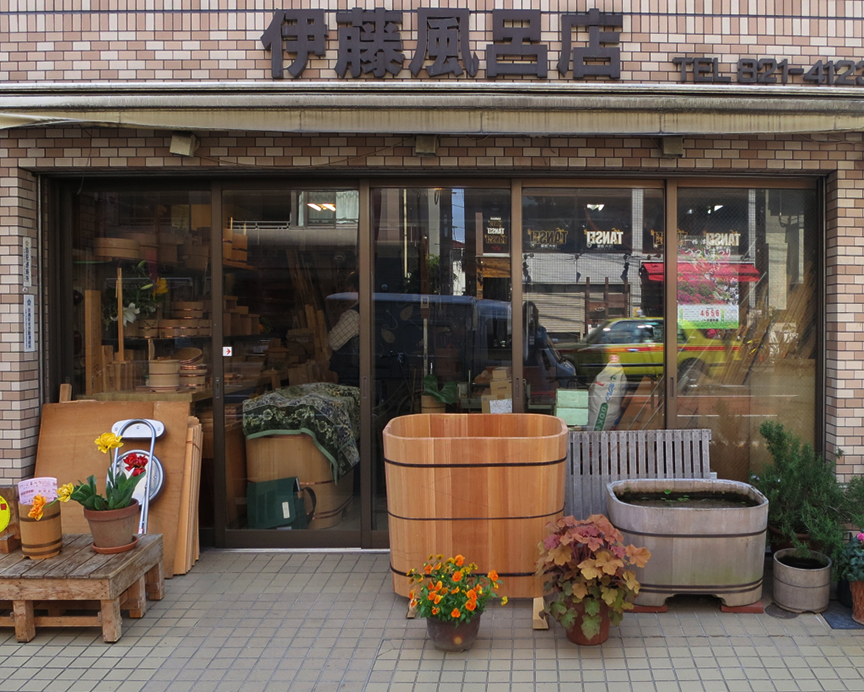
The owners of this store, for example, have been making wooden buckets since the 1500s, and have the Muromachi Era tools (still in use!) to prove it.
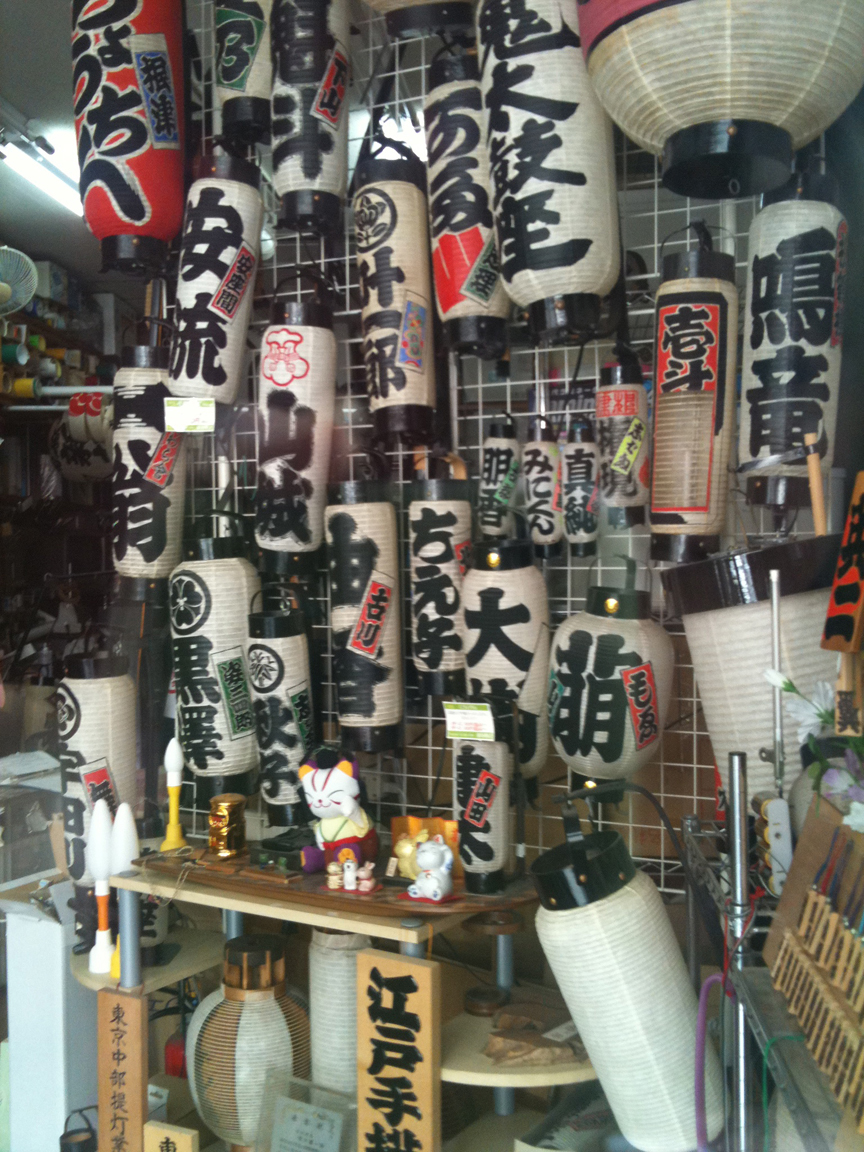
and this store sells festival lanterns, made to order with the sponsor’s name brushed on the front.
Finally, cap off your visit with my favorite shrine in Tokyo:
13
Nezu Shrine
It would be wrong to come to Yanaka and not stop in at the Nezu Shrine. Walk down the side street until you see the main entrance, marked by giant red lacquered torii gate
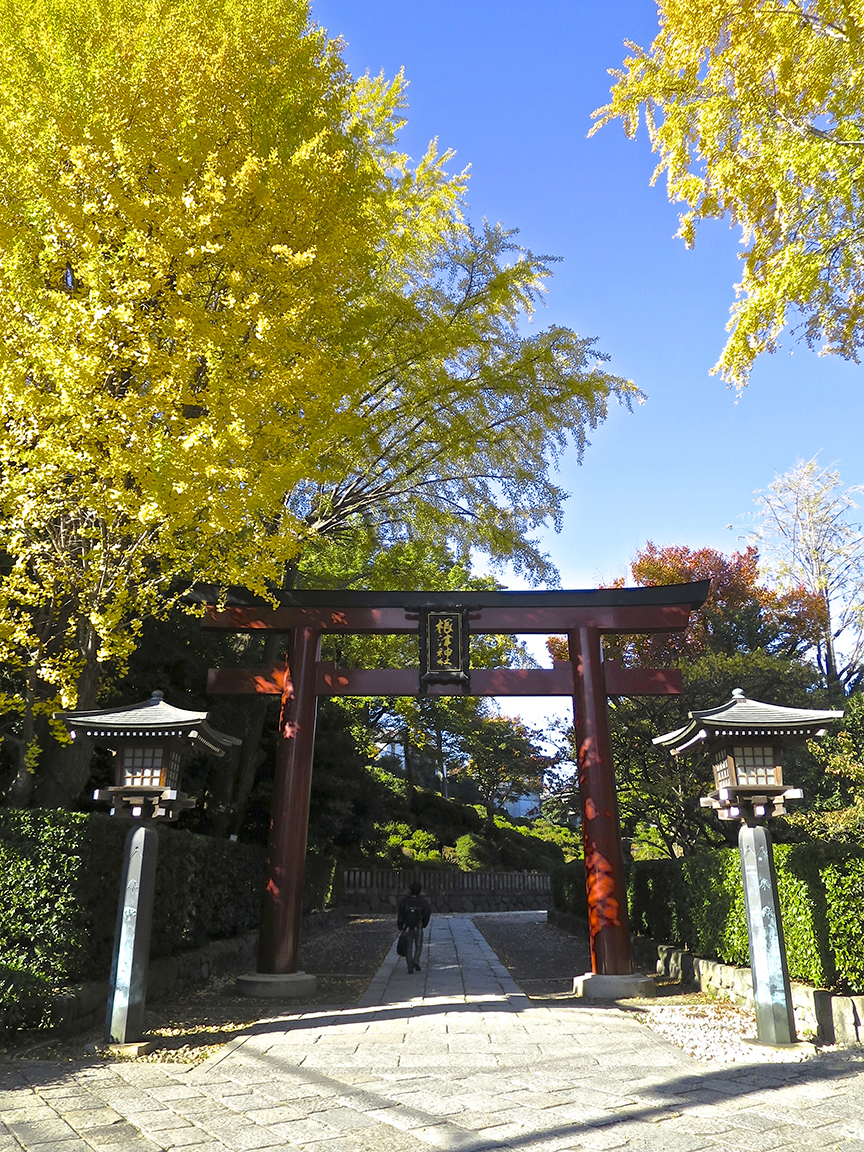
Recently restored, the main courtyard is a beautiful example of red and gold lacquerwork…

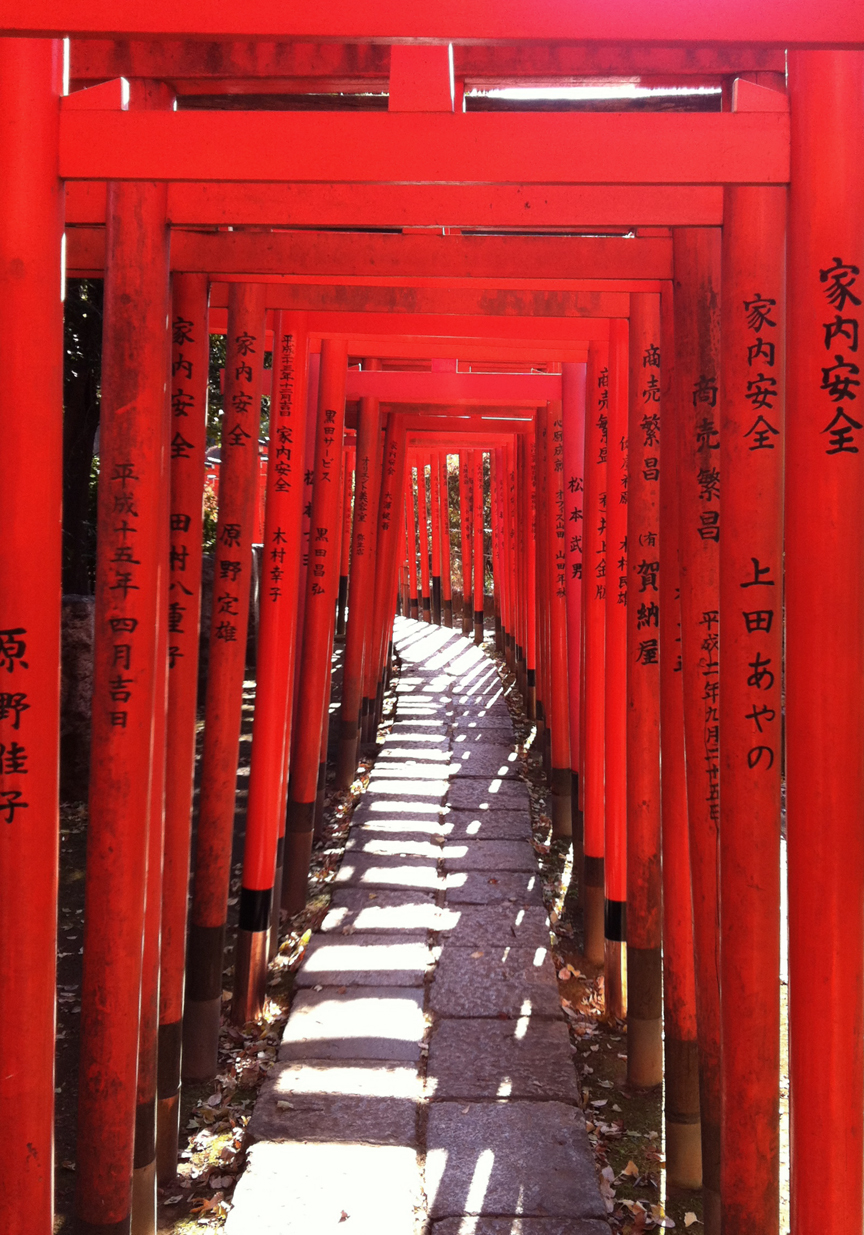
and walking through the long tunnel of orange torii gates is one of the great pleasures in life.
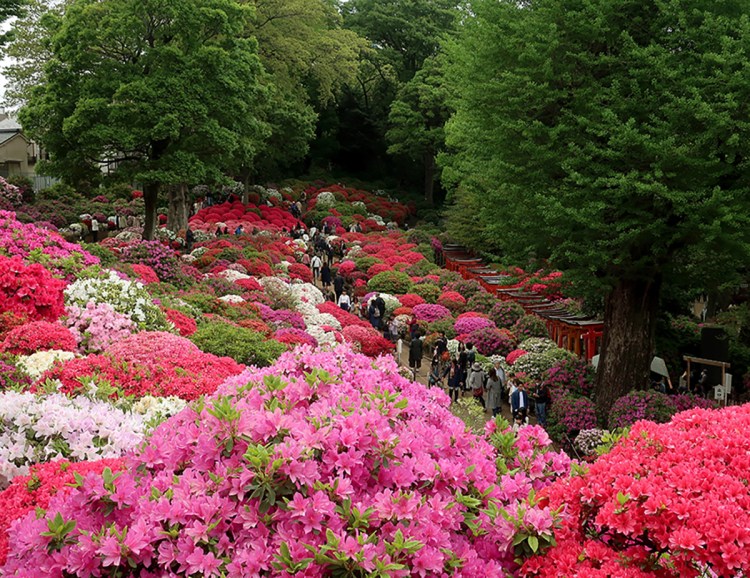
If you’re lucky enough to be visiting in April, you’ll get the kind of extra bonus that rewards travelers who are open to new experiences and wander around neighborhoods like Yanaka!
If you’d like ideas for other great places to walk around, here are my
And here are the other places I take my friends when they come to town
•
Get more Japanese goodness straight from the source!
Subscribe to my monthly Japanagram e-magazine・° ♪・☆ It’s free!


Japanese Home Cooking recipes • Beyond Tokyo travel destinations • Seasonal Secret shopping & events • The Thing I Learned Today • Why, Japan, Why? • Monthly book or J-swag giveaway
•
Jonelle Patrick writes novels set in Japan, produces the monthly e-magazine Japanagram, and blogs at Only In Japan and The Tokyo Guide I Wish I’d Had
•
Yanaka is one of the quirkiest (and undiscovered) Old Tokyo neighborhoods in town. Here, new generations of artisans from families that have plied their trades for centuries are finding fun and inventive ways to make everything old new again. Sometimes, with cats. Let’s walk around and I’ll show you all my favorite spots!
Click this button for a Google map of all the destinations
Here’s an overview of the route
Let’s start at Nezu Station!
You might be interested in visiting these first two shops before or after our program with Allan West—they sell the kind of brushes and pigments nihonga artists have been using for hundreds of years.
1
Kinkaido pigment and brush stores
Our first stop is at the two shops across the street from each other that sell the handmade brushes and eyepopping rainbow array of pigments used by traditional nihonga artists.
These powders are very precious because they’re actually ground from gemstones like these:
Next stop, Allan West’s studio, to see how a master uses them…
2
Art Sanctuary Allan West
Allan West is a renowned nihonga master whose paintings hang everywhere from mountain temples to five-star hotels. He welcomes visitors to his studio and gallery every afternoon from 13:30 – 16:00 (except on Thursdays) to learn about the thousand-year-old art of painting with powdered gemstones on gold and silver leaf.
If you enjoy the program and have friends who’d like to meet Allan and see his lovely paintings, you can bring them on any afternoon that’s not a Thursday. He’s a very nice man, and he would be delighted to see you again!
He’s often there himself to answer questions, and his studio is always worth a visit.
After soaking up the golden goodness, continue on that lane and follow the scenic route up around some of the neighborhood’s serene neighborhood temples until it dead ends in a main street. Turn downhill for our next stop, two cat-themed shops:
3
Yanakado
This shop specializes in the raised-paw cats called maneki neko, which are famous for beckoning good fortune into businesses. If there’s an entrepreneur on your gift list, you can’t go wrong tucking one of these into your suitcase.
This shop is especially famous for custom sculptures painted to look exactly like your own cat (which take six months and require a good photo when placing the order)
They don’t sell this big size anymore, but you can see them all over the neighborhood in the windows of businesses presided over by resident felines.
If you can’t bear to wait six months for your cat’s portrait, you try your hand at making one yourself at the cafe next door:
4
Cafe Nekoemon
The set price includes the drink of your choice, a cat-themed dessert, and a blank maneki neko raised-paw cat figure to color
After fueling up on coffee & cake, head down the hill to:
5
Zensho-an Temple (home of the Ghost Museum)
Zensho-an, has a tall gold Kannon statue and magnificent peonies (in May). If you’re lucky enough to be visiting in August, you can stop in at the temple’s Ghost Museum (¥500). It’s only open in August because telling ghost stories is one of the traditional ways Japanese kept cool in summertime because they “send a chill up your spine.”
Next up is one of the quirkiest destinations in Yanaka:
6
Puppet Shokichi
This shop is where an eccentric artist displays his creations and puts on puppet shows every half hour. The shop is filled with puppets posed in poignant tableaus of traditional Japanese life…
…and surprisingly recognizable puppet caricatures of celebrities.
These surround the stage where the performances take place and you can get your portrait painted by a puppet! Just ask the proprietor if he has time for a portrait, pay him ¥1000, and take your seat in the front row…
then THIS will happen
After your puppet experience, keep going down the street outside for a couple of blocks and you’ll see the entrance to:
7
Yanaka Ginza shopping street
This is one of the best traditional neighborhood shopping streets in Tokyo, lined with small shops selling delicious street food snacks (from skewered BBQ chicken to fresh oysters), household goods with adorable animal themes, vintage Japanese items, and other tempting stuff. But what makes it especially fun is that cats are everywhere.
These are the official mascots of the Yanaka Ginza shopping street. They’re a mash-up between the shi-shi lion dogs that flank the entrances to Japanese temples (see how one’s mouth is open and the other’s is closed?) and also the raised-paw maneki neko that beckon good fortune into businesses and shops.
But they’re not the only cats in town. From the rooftops…
…to cat-themed snacks like these cat tail donuts, meowingtons are everywhere!
The shopping street ends in a broad set of steps. If you go up the steps and turn right at the end of the block, you can pop into the
8
Asakura Sculpture Museum
Fumio Asakura specialized in lifelike bronze figures—selections of his work are installed throughout he grounds, including on the roof, and they’re very nice—but what makes a visit to his studio and home most worthwhile are the house and garden itself.
The details and craftsmanship in the rooms is absolutely exquisite, and the materials used are quite unusual. If you love Craftsman and Art Nouveau design, do not miss this very Japanese interpretation of those lovely aesthetics. (Photos are only permitted in two tiny locations, which is why this section doesn’t go on for a hundred examples!)
8
Isetatsu
Traditional paper that’s still handprinted from designs that date from the Edo Period
Chiyogami is woodblock printed paper (like the more familiar ukiyoe), and this store has been in business since the samurai era. Some designs feature all-over traditional Japanese patterns (used for wrapping or covering boxes and trays), others depict collections of Japanese things (from childrens’ toys to kabuki wigs) and others are amusing scenes, suitable for framing. This shop is so venerable, one of their prints is even in a painting by Van Gogh! Each one is meticulously printed in multiple colors, just like the famous artists’ woodblock prints, but at a fraction of the price.
My favorite series stars these cats. I’ve got the one in the bathhouse, the cats throwing snowballs in the winter, cats learning calligraphy and cats enjoying the summer fireworks because YOU CAN’T HAVE TOO MANY
Isetatsu is near the entrance to Snake Street, famous for its wiggly meander that traces the path of a long-gone stream, formerly home to many indigo dyers. This is an optional detour (out and back) because there aren’t many shops on this street, but if you want to get your steps in, you’ll be rewarded by one of my favorites:
9
Kame-no-ko Tawashi
It’s a charming place that’s been selling handmade scrub brushes for generations. You may not realize how much you desire a scrub brush until you see the fun varieties on offer. I pretty much guarantee you’ll be going home with at least one!
Even their New Year’s decorations are made of scrub brushes.
Retrace your steps to the main street where Snake Street branched off, and on the downhill corner you’ll find my favorite guilty pleasure in Tokyo…
10
Mister Donut
I can resist the temptation offered by all other donuts, but Mister Donut’s “Pon de Ringu” is pure, chewy, only-in-Japan goodness. If you haven’t tried one, I warn you: you won’t be able to eat just one
Our next little detour is across the intersection and a short walk up the street bordering Sendagi Station:
11
Amezaiku-ya (fantastic art lollipops)
Lollipops made by skillful snipping and pulling of hot candy are a centuries-old art in Japan, and one of the best shops in Tokyo is a quick jog up the hill from Sendagi Station. This tiny shop is filled with everything from whimsical bunnies to adorable animals representing every zodiac year, but the best part is watching the artist at work, through the window at the far end. If you’d like to take photos or video of him at work, order a lollipop off the many choices on the menu, and he’ll make it for you as you watch.
Back to the corner, turn onto the main street and walk in the direction of Nezu Station, peering into the shops along the way. Many have been in business since the samurai era, before Japan opened to the West.
The owners of this store, for example, have been making wooden buckets since the 1500s, and have the Muromachi Era tools (still in use!) to prove it.
and this store sells festival lanterns, made to order with the sponsor’s name brushed on the front.
Finally, cap off your visit with my favorite shrine in Tokyo:
12
Nezu Shrine
It would be wrong to come to Yanaka and not stop in at the Nezu Shrine. Walk down the side street until you see the main entrance, marked by giant red lacquered torii gate
Recently restored, the main courtyard is a beautiful example of red and gold lacquerwork…
and walking through the long tunnel of orange torii gates is one of the great pleasures in life.
If you’re lucky enough to be visiting in April, you’ll get the kind of extra bonus that rewards travelers are open to new experiences and wander around neighborhoods like Yanaka!
If you’d like ideas for other great places to walk around, here are my
And here are the other places I take my friends when they come to town
•
Get more Japanese goodness straight from the source!
Subscribe to my monthly Japanagram e-magazine・° ♪・☆ It’s free!
Japanese Home Cooking recipes • Beyond Tokyo travel destinations • Seasonal Secret shopping & events • The Thing I Learned Today • Why, Japan, Why? • Monthly book or J-swag giveaway
•
Jonelle Patrick writes novels set in Japan, produces the monthly e-magazine Japanagram, and blogs at Only In Japan and The Tokyo Guide I Wish I’d Had
•
 Jonelle Patrick writes about Japan