
This rambling park in Tachikawa has something for everyone: in addition to the seasonal flower extravaganzas and the huge Japanese garden with an excellent bonsai collection, there are several a bouncy mountains, boats, barbeques, multiple playgrounds, & kilometers upon kilometers of bike paths (with bike rentals, of course).
Before we get to the amazing seasonal flower displays, check out the meticulously reconstructed thatch-roofed farmhouses called Komorebi Village…

all kitted out with traditional furnishings.

The docents run workshops on traditional handcrafts, and are so knowledgable about Edo Period life they’re a reliable source for book research!

And the playgrounds at Showa Kinen are total kid magnets! Parents be forewarned—it’s hard to get them to leave. They are filled with delightful equipment like climbing webs and bouncy mountains…

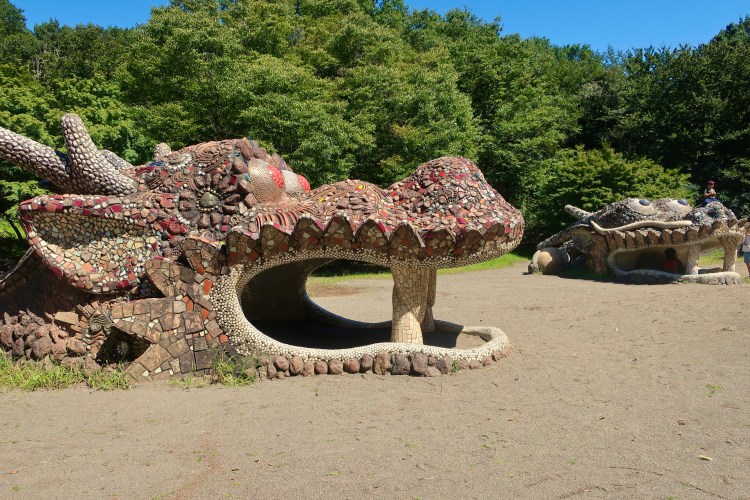
or fanciful slides, like these charming dragons. In the summer, some of the playgrounds become splash parks, with interactive fountains for kids to play in.
The park is so vast, a cute little train runs around to help you get from one side to the other, stopping at all the major attractions along the way.

But the main reason to trek out to Tachikawa is for the flowers! When it comes to cherry blossom season in
April
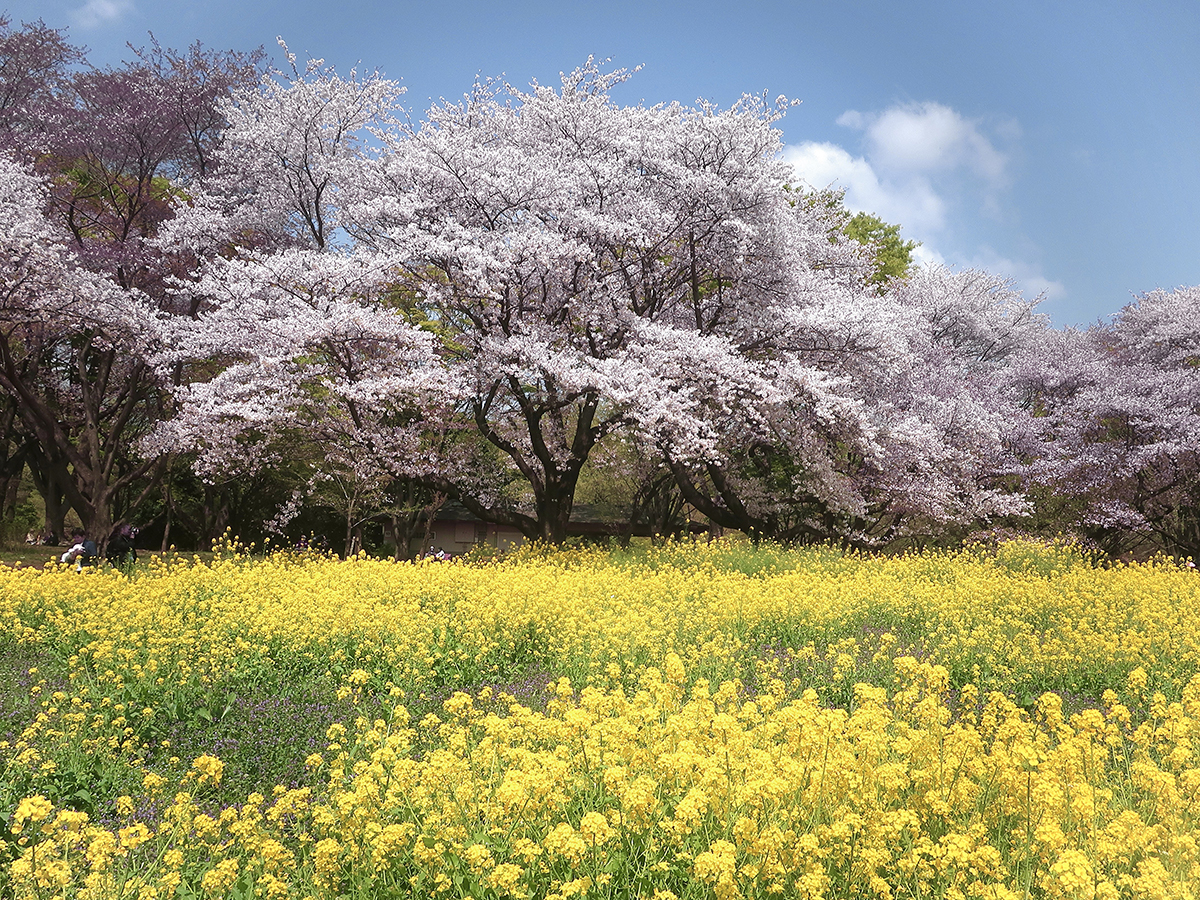
Showa Kinen Park doesn’t mess around. The trees are HUGE, and in full bloom by early April, about a week later than central Tokyo.

They cast dappled shade on rolling picnic lawns…

and pose for spectacular floral photos.
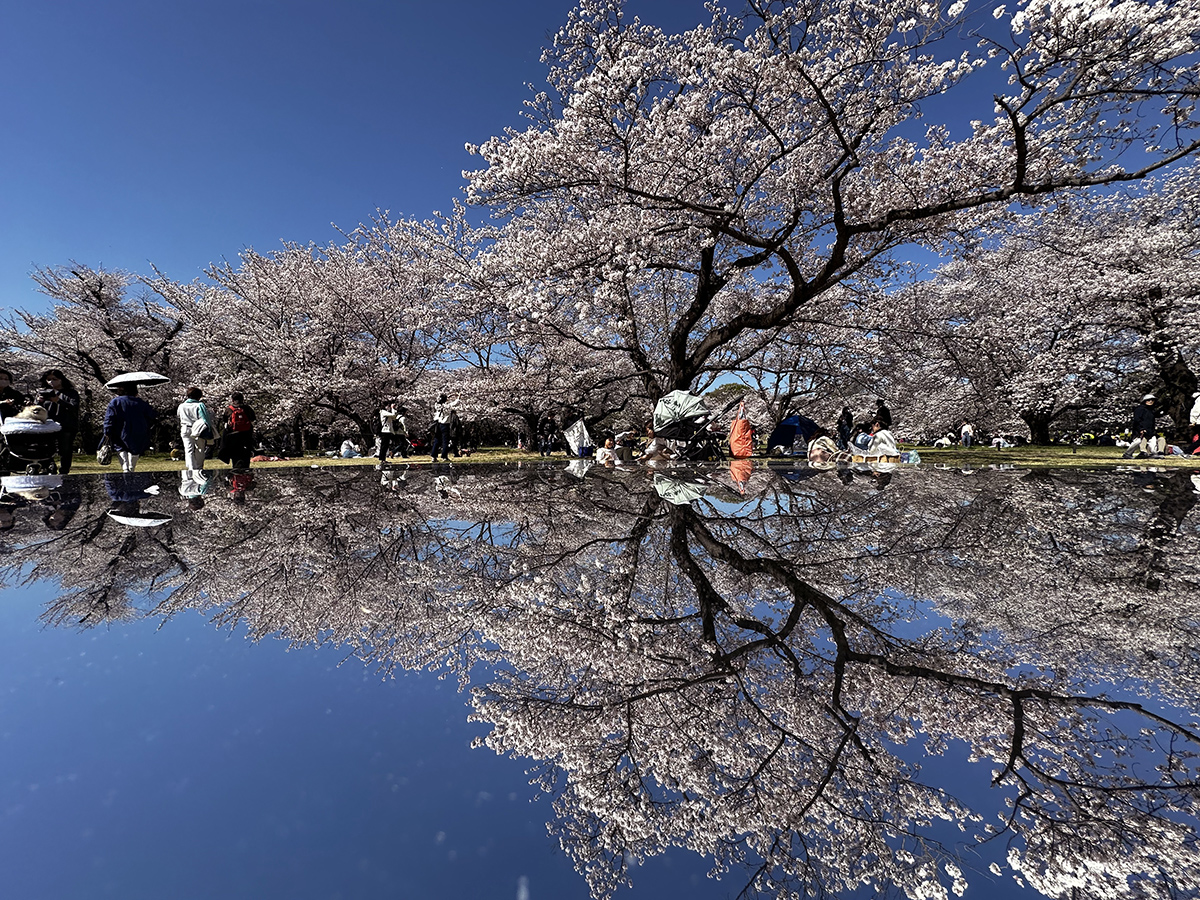
Some days the staff even puts out a few fun props like these big mirrors so you can snap real-life photos that your friends won’t believe are real!
Then it’s time to move over, Amsterdam, because there is also an amazing tulip display. The tulips bloom for the entire month of April, with new blooms opening as old one fade. If you’re in Tokyo in April, you’ll Major Regrets if you don’t go see this!

As you can see, this park is a known destination for grand displays of seasonal color, and in the month of
May
as soon as the tulips are past their prime, they plant a field of poppies.
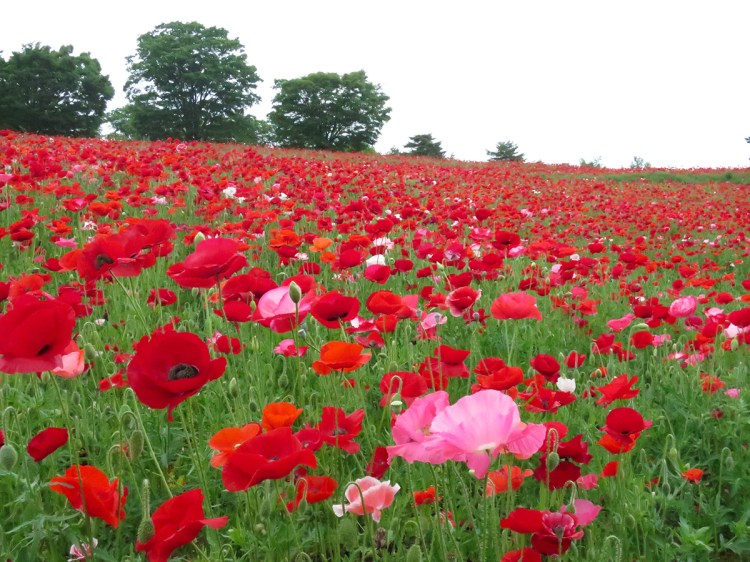
In alternate years, they plant Baby Blue Eyes (nemophila) in that field instead. Check the park’s website for which one it’ll be while you’re in Tokyo.
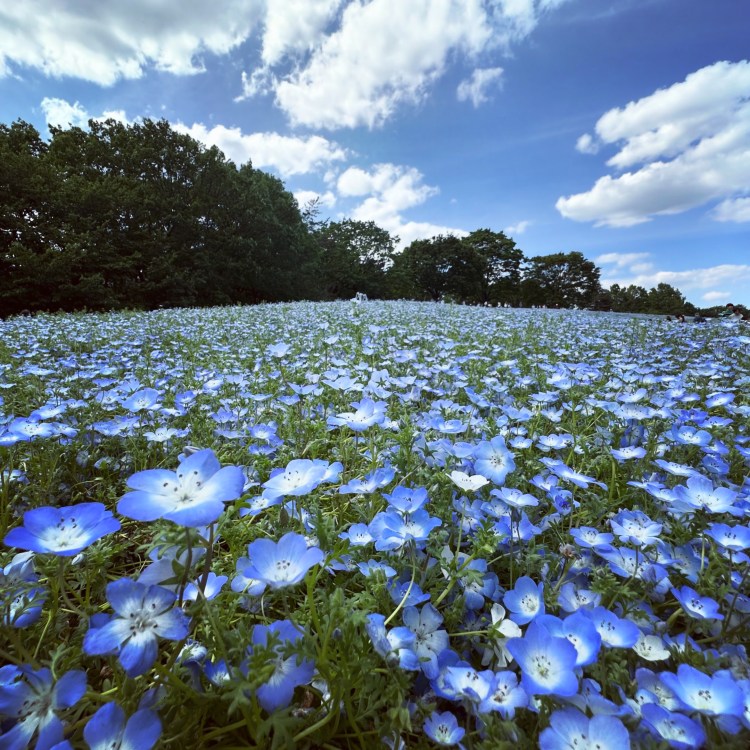
Summertime joys like rowboats, splashparks and BBQs take over in the summertime, then in
September
many fields of cosmos take over the park. The purple ones are in the far field, by Komorebi Village…
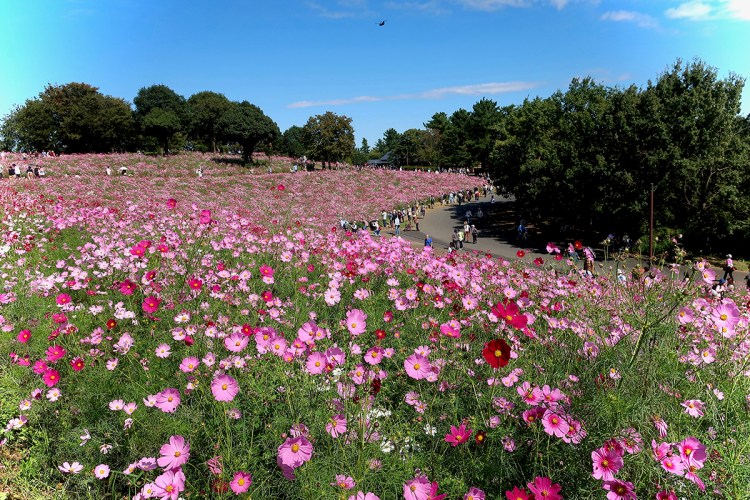
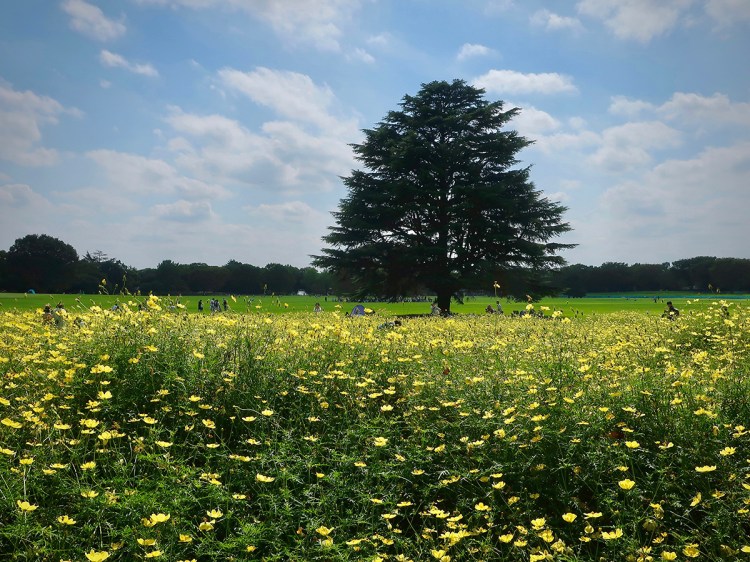
and the yellow ones border the big central lawn.
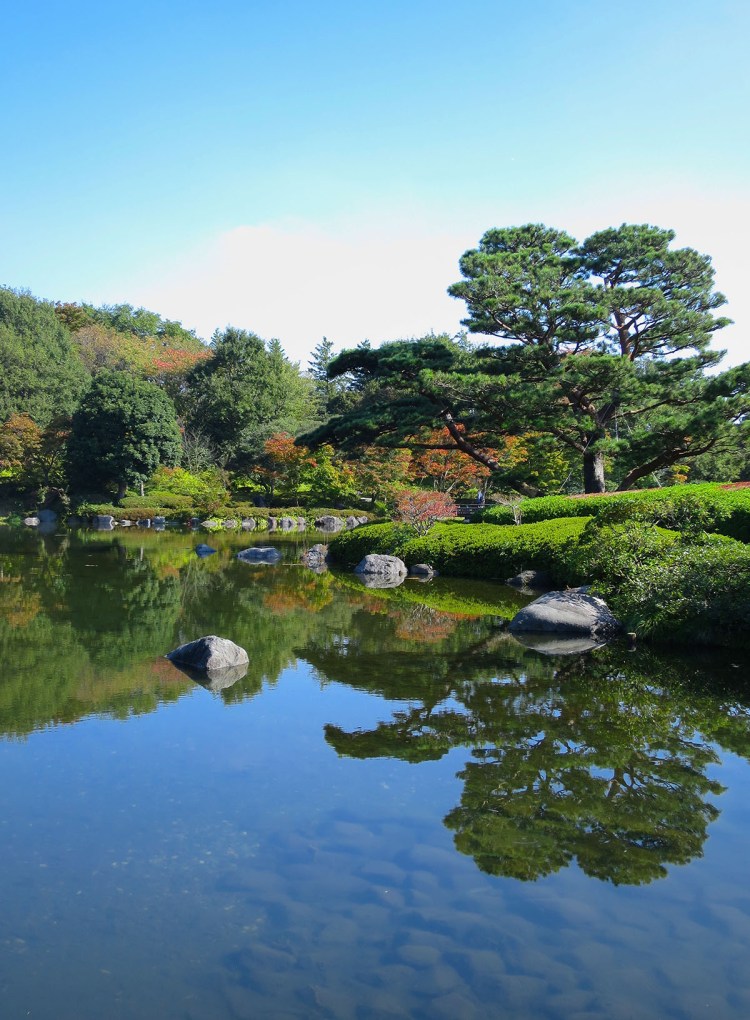
This park also has a walled Japanese garden, which is beautiful year-round, centered around a large pond, with magnificent trees…
and a fine long bridge built of Japanese cedar

As you can imagine, Showa Kinen Park is one of the very best places in Tokyo to see autumn leaves, and they change here earlier than the rest of Tokyo, some trees as early as late September.
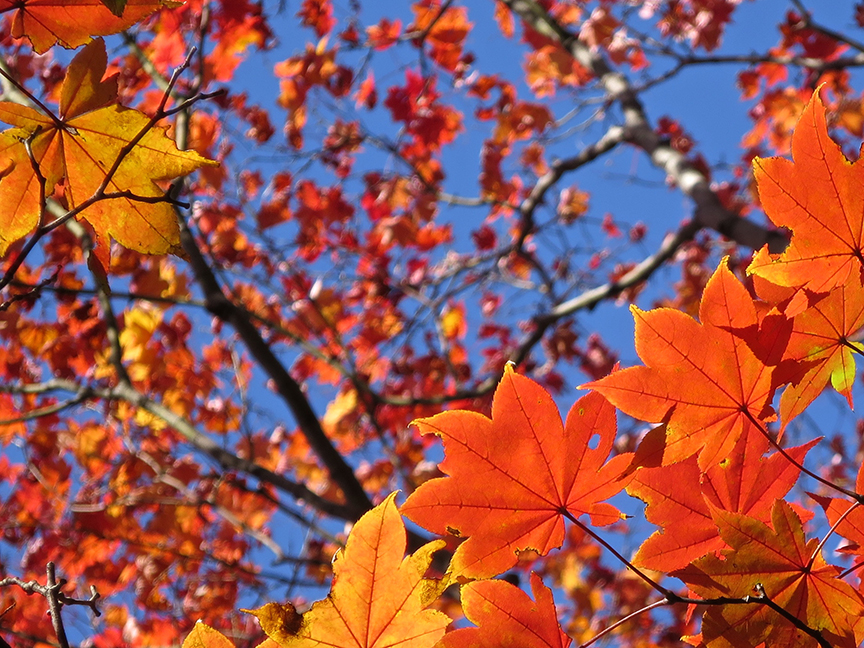
The autumn leaves begin to turn in earnest in
October
with both the red maples and the golden ginkgos putting on a show…
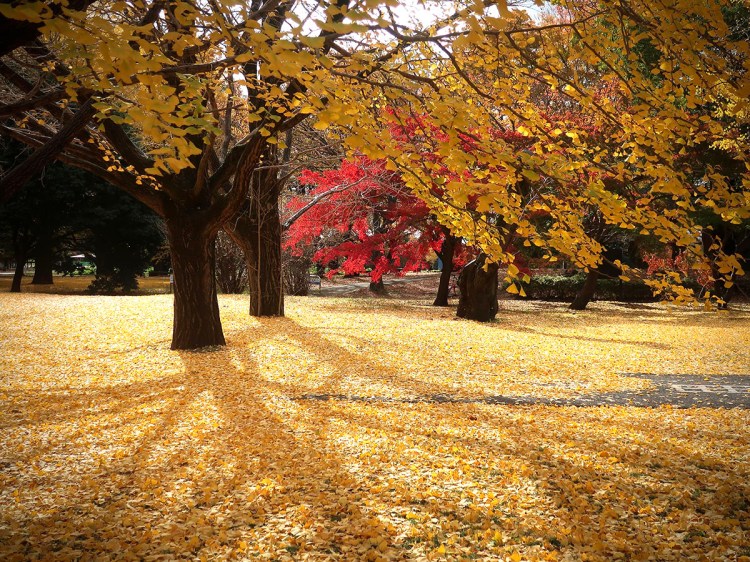
The Japanese garden starts to turn in…
November
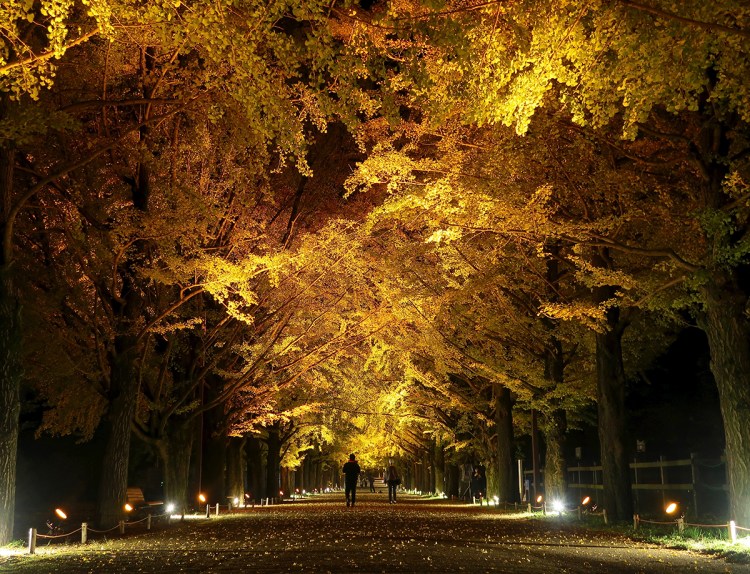
as well as the formal ginkgo promenade leading up to the fountain

Parts of Showa Kinen Park are lit up for special evening hours during leaf season. You can catch beautiful reflections in the Japanese garden’s pond…
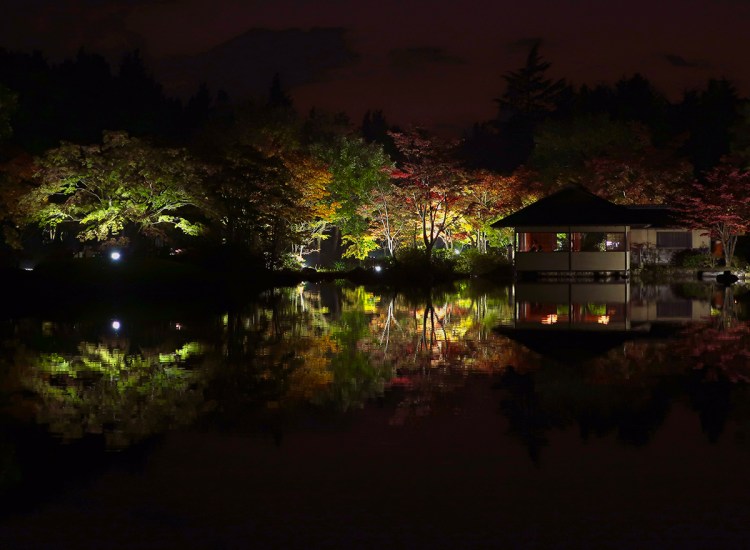
as well as strolling through other spectacular autumnal parts of the park.
A walled courtyard near the pond displays ancient specimens of bonsai, in many varieties.

This park is worth visiting in every season, at every time of day, in any weather, and it always has something for everybody.

Showa Kinen Park
Hours: 9:30 – 17:00
Open: Every day except closed the 4th Monday of every month
Admission: Adults: ¥450, Children (6-15) Free, Seniors (65+): ¥210
Detailed info in English about boat and bike rental, the frisbee golf course, and other activities is on the park’s website
•
If you enjoyed this, subscribe!
Get all the latest Japan travel tips and tricks for free ヽ(*^ω^*)ノ
And here are the other places I take my friends when they come to town

•
Jonelle Patrick writes novels set in Japan, produces the monthly e-magazine Japanagram, and blogs at Only In Japan and The Tokyo Guide I Wish I’d Had
 Jonelle Patrick writes about Japan