
My friend the amazing tour guide recently told me that getting his guests into the top sushi restaurant in Tokyo is no longer his biggest challenge—it’s breaking the news that cherry blossoms aren’t really that pink and their #1 must-see destination doesn’t exist.
The thing is, everyone goes online to figure out what they want to see in Japan, but AI and influencers are not your friend when it comes to travel advice. It makes sense when you think about it—they’re rewarded by serving up Japanese eye candy and making it jump out more than the other things you could click on, even if it’s not 100% true.
But let’s say you didn’t just fall off the turnip truck, and when you see an amazeballs photo of a place, you do a search to find out the name of that beautiful pagoda near Mt. Fuji during cherry blossom season, because you’d really like to see it.
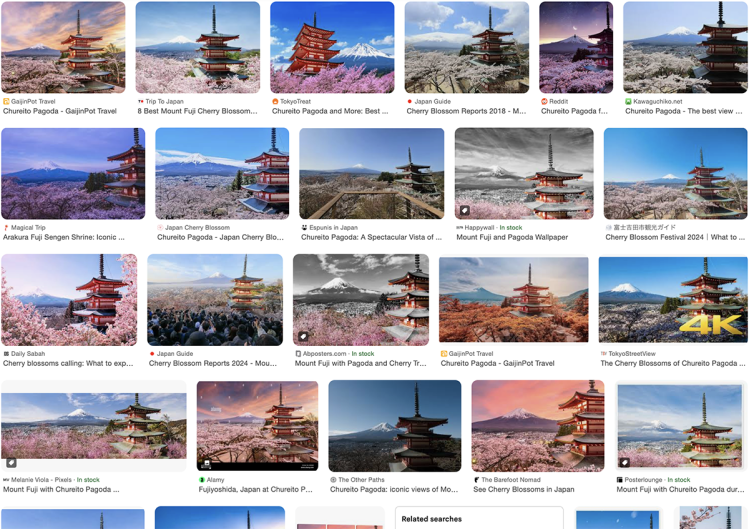
Ah! It must be the Chureito Pagoda! Which is, in fact, a lovely and very real place with a killer view of Mt. Fuji. And it is surrounded by cherry trees, but here’s what it actually looks like during The Pinkness:

It does not look like this, with extra-fluffy neon pink blossoms.

It does not look like this, with a fancier pagoda substituted for the real thing.
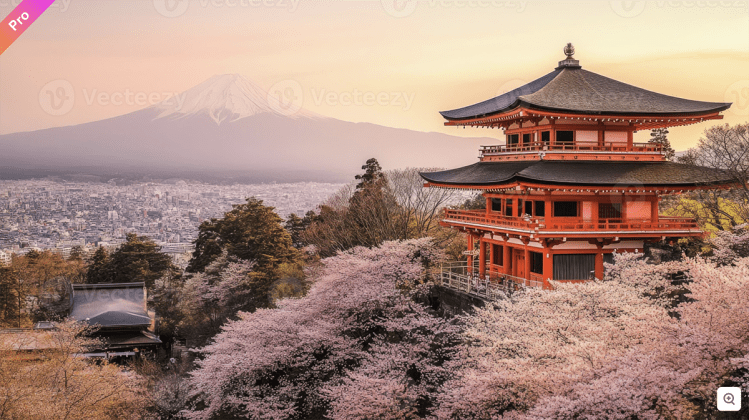
It doesn’t have mutant clouds of branches rushing in from another dimension to frame the view.

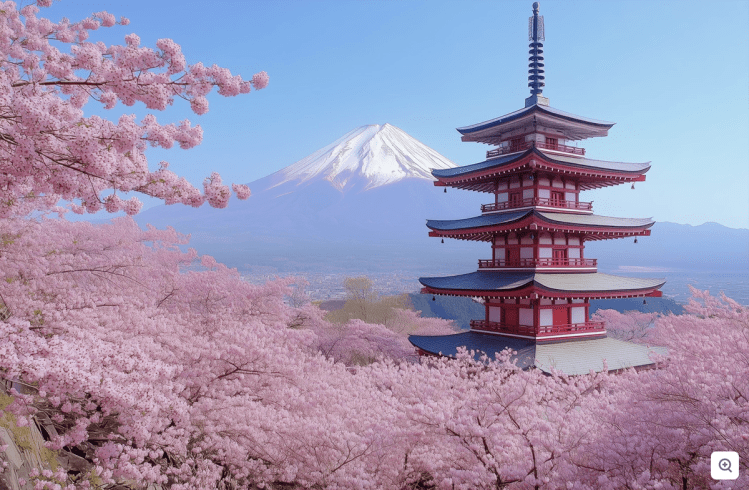
And it certainly doesn’t look like this, where both the cherry blossoms and the number of floors in the pagoda have multiplied with abandon (and—nitpick alert!—they’re not even the right kind of cherry blossoms—these clustered blooms are yaezakura that bloom later in the season and do not grow near the Chireito Pagoda).
But here’s the problem with Japan: there are gorgeous places all over the bloomin’ country, and people really do take amazing pictures of them.
So, how can you tell if something is real or not?
This one almost fooled me.
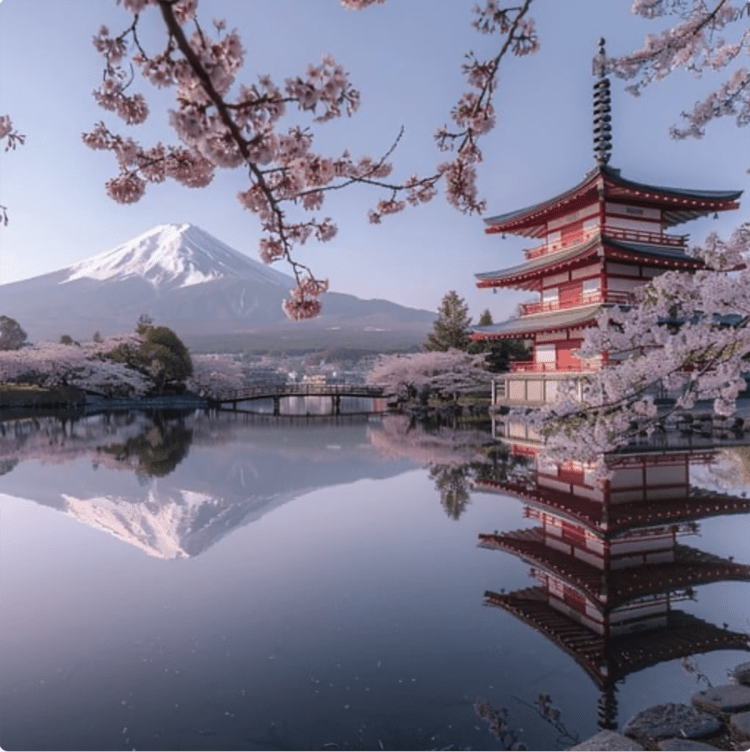
Everything in it looks like a real photo, not an illustration. The colors are believable. There are parts that are a little flawed: the town in the background, the bits of cherry blossom branches coming in from the left and the stone walkway in the bottom right corner, that make it seem like the photographer couldn’t quite twist into a position to crop them out.
Here’s how I figured out out it doesn’t exist:
1: Are there other shots of this amazing place online?
Click on Google lens (from the Google search page)…
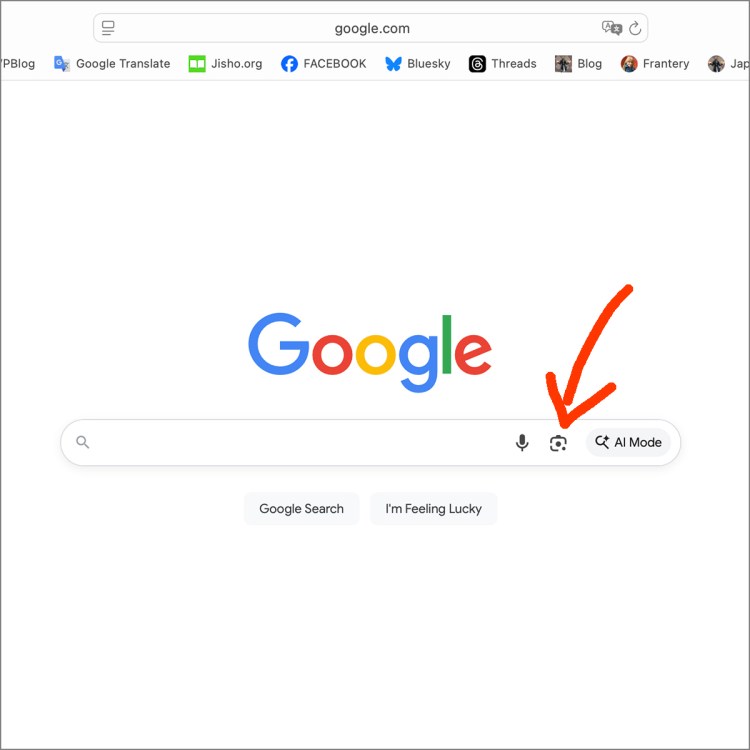
then drag and drop the photo (or a screenshot of the photo) into the box. Every beautiful sight in Japan has been photographed hundreds (if not thousands) of times by amateurs and pros alike, and there ought to be quite a few online. If the results don’t turn up anything that looks like the scene you’re dying to visit, chances are it was cobbled together from other photos and doesn’t exist. Hmm…
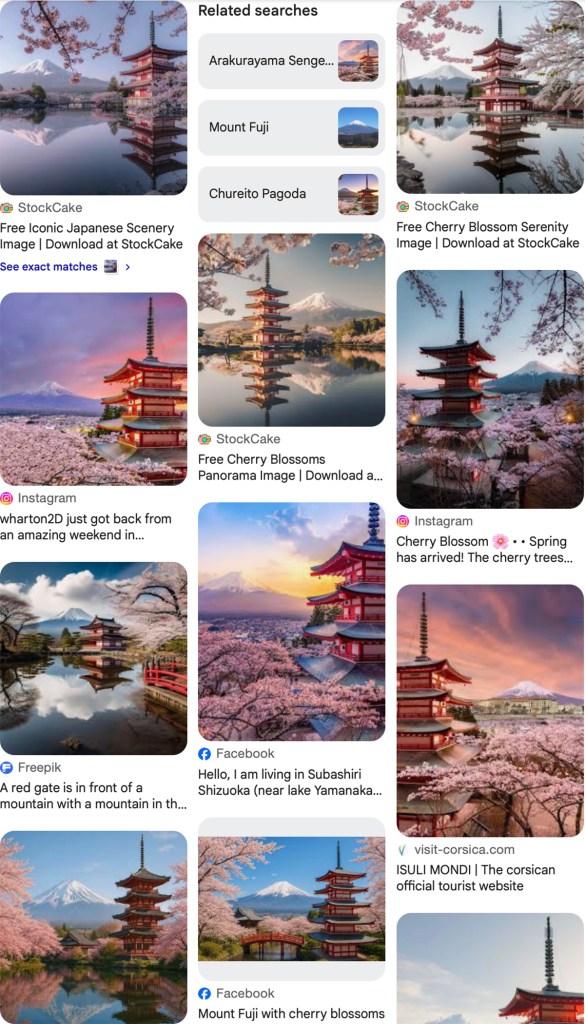
…there aren’t any pictures of that pagoda on that lake taken from the same point of view (suspicious), but there are a couple that look like they might have been taken at the same place. Let’s keep investigating.
2: Click on your image and visit the page it’s from.
Sometimes it’s from a stock photo source, and they tell you right up front it’s AI.
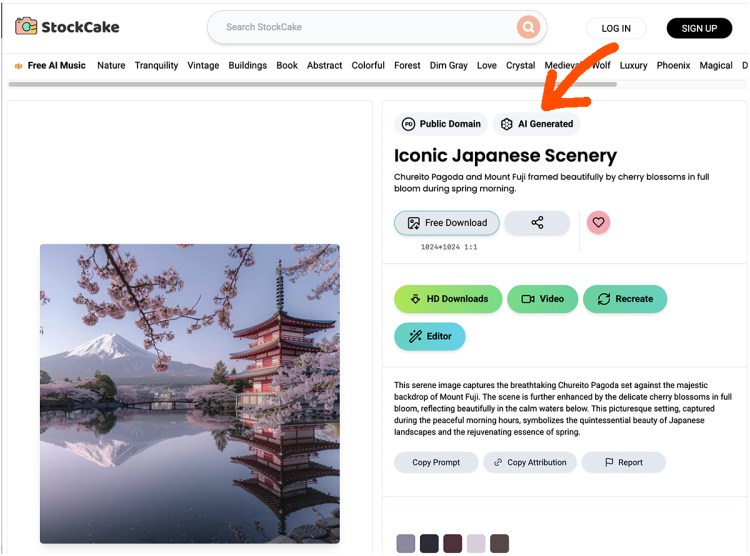
But what if it’s not? What if it’s from a social media account that doesn’t admit it’s fake clickbait?
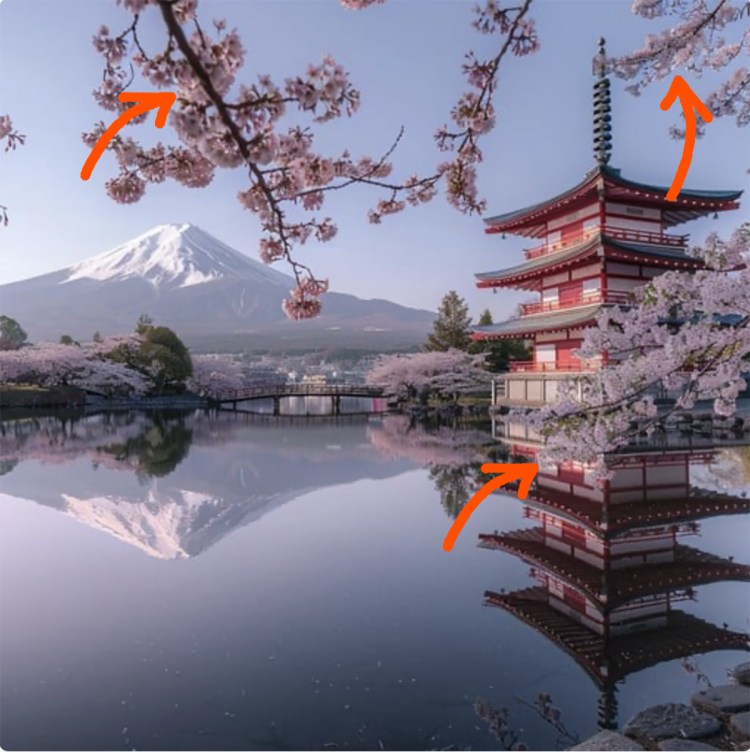
3: Look closer to see if there are signs of cut and paste
Even the best Photoshoppers get tired of hunting down every little pixel of original background and deleting it before pasting the image. See those little white bits among the cherry blossoms that ought to be sky colored? That’s a dead giveaway that they weren’t part of the original photo.
4: If it looks too luscious to be real, it’s probably not
Here’s a (real) photo I took of the Imperial Palace moat at the peak of cherry blossom season one year. If I saw this online, I’d be putting it on my list! And when I went there, I’d be thrilled to see it for myself. Unless, of course…

I was expecting this.
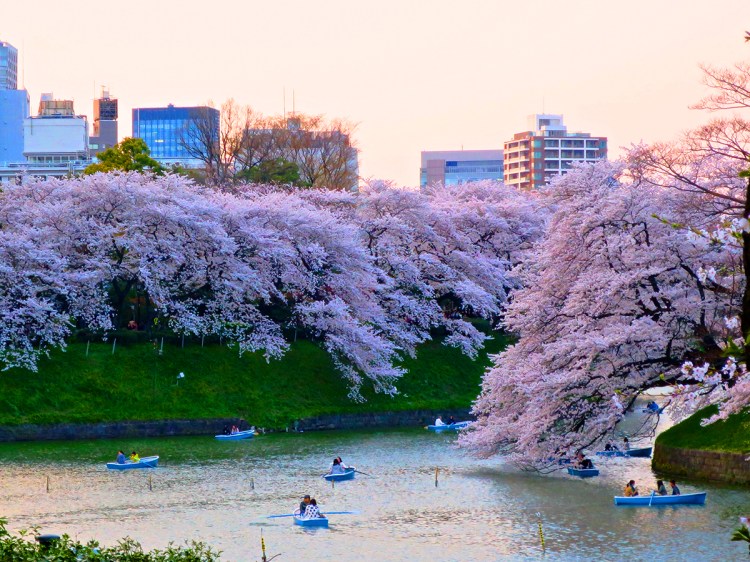
It’s the same photo, but with the intensity cranked up to eleven in Photoshop. How can you tell? It’s not just the cherry blossoms that look like they belong in a candy shop. If the green leaves or peoples’ faces are an unnatural color, chances are the photo has been altered.
The other (more subtle) trick is to amp up just one color—in this case, the red. But this is easy to spot too. The photo manipulator is counting on your being so focused on the pink trees, you don’t notice the colors of the water, the reflections on the water and the stones of the moat wall, which are all suspiciously more red than they ought to be.

5: The best thing you can do? Save yourself time and disappointment by avoiding sketchy sources
Make sure your travel info sources are trustworthy by asking whether they have something to gain by making a place look better than it really is. If they’ve got ads on their site, they’re making money off your eyeballs, and the more clicks they get, the more money rolls in.
Ad-free sites like The Tokyo Guide I Wish I’d Had exist because I live in hope that people who love Japan might also like the occasional Japanese mystery when I’ve got a new one out. Sites like MactionPlanet and Unseen Japan are there to highlight their tour services, not specific destinations. Sites like Japan Guide limit their ads to a few non-intrusive ones from sponsors. The only ad-based Japan travel source I can recommend without reservation is my friend Helen’s Japalanese—she’s a journalist who sticks to the facts (whether it’s giving you ferry advice or posting photos of cherry blossoms) and winkles out things to see and details about getting there that are both fun and dependable (especially when it comes to all things Disney).
If you use sources like these instead of AI, you won’t be disappointed when you finally cast your eyes on the incredible places you’ll see when you take that trip of a lifetime!
•
If you enjoyed this, subscribe!
Get all the latest Japan travel tips and tricks for free ヽ(*^ω^*)ノ
And here are the other places I take my friends when they come to town
•
Jonelle Patrick writes novels set in Japan, produces the monthly e-magazine Japanagram, and blogs at Only In Japan and The Tokyo Guide I Wish I’d Had
 Jonelle Patrick writes about Japan
Good advice .But young people are so tuned into the net that they think anything that gives information must be wrong?>? A good way also to check is to go to the Consulate or Embassy if one is near or write to them .They will give good information .Ive done this often before I travelled .
Wow, you are a master traveler! I would never think of going to the consulate/embassy, but for sure they’d know all the best stuff because they have to show people around on demand when dignitaries arrive! Great idea.