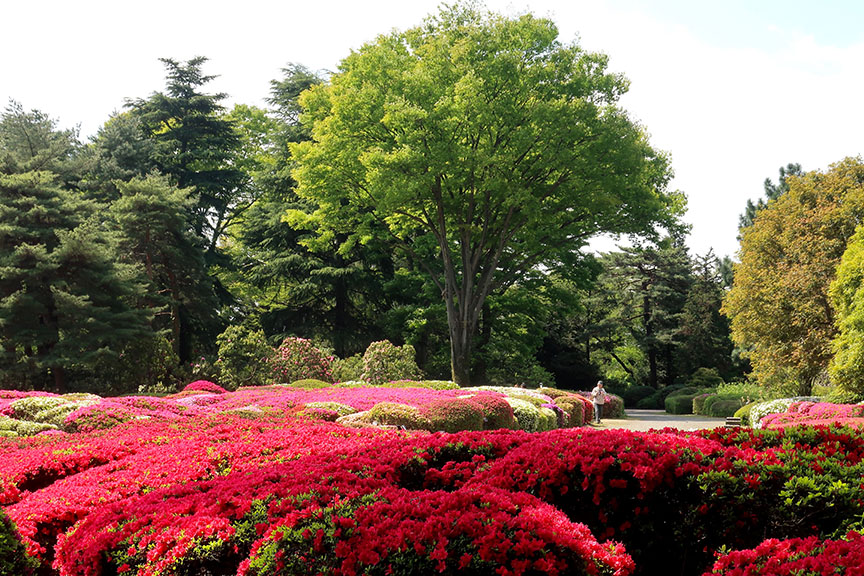
This garden isn’t just beautifully designed for strolling, its flower displays in every season rival the cherry blossoms for sheer WOW. It’s most famous for the plum grove that begins to bloom in February, the cherry blossoms in March, its incredible display of azaleas in April, its wisteria in late April to early May, and its rose garden all summer long.
I came for the azaleas, then ran back again every month, because this garden’s flower displays are seriously impressive, year round. Many botanical gardens sacrifice landscape design to cram in the variety of plants that satisfy seekers of specimens, but this one does both, and does it so well that it’s a pleasure to explore every corner, whatever your passion. Plus, you can do it for hours! This place is vast, with paths and lawns that are never crowded, and no matter how many times I go, I never fail to find a new corner that surprises and delights.
February
The plum garden is a lovely stroll through acres of rare varieties in February to early March…
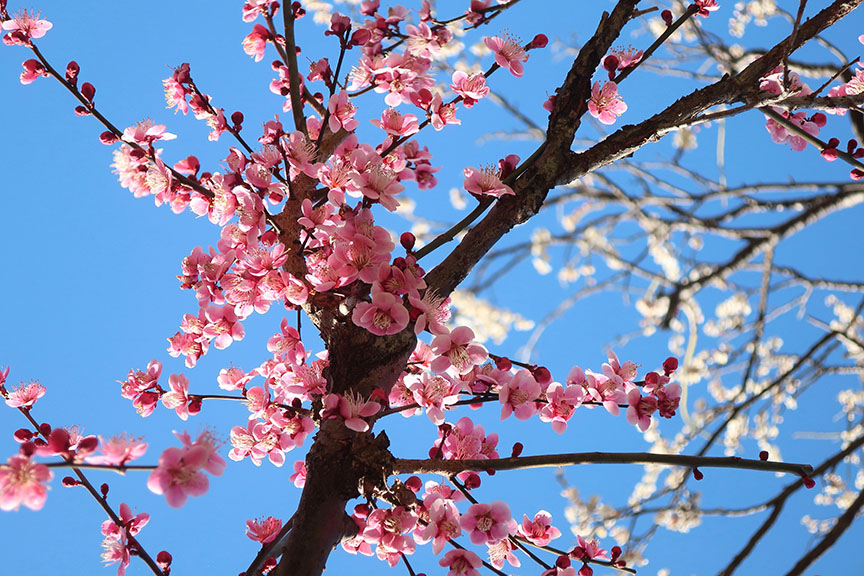
…including this beauty, which is especially shapely for a plum tree, after being trained trained for decades.
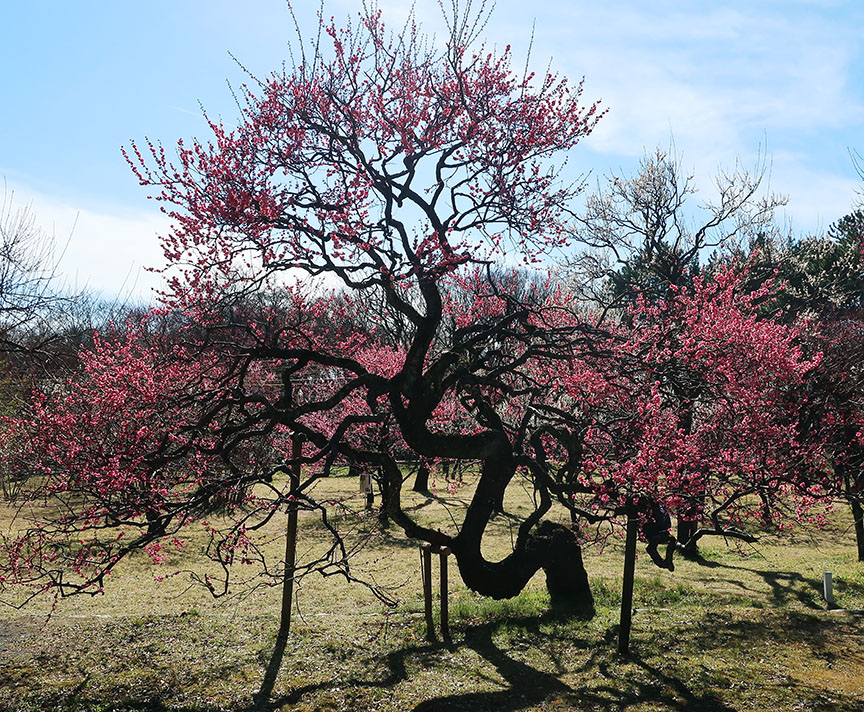
March
The plums give way to the early-blooming weeping cherries in late March and put on the kind of show that hanami worshippers can usually only dream of. If you get there at 9:30 when the gates open, it’s as empty as this!
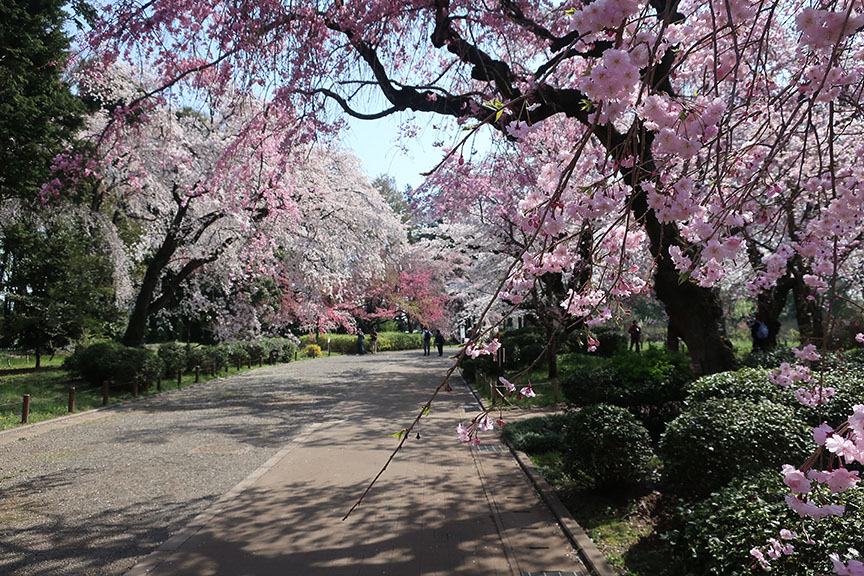
As the regular cherry blossom varieties begin to open in late March to early April, Jindai’s enormous specimens are still blooming strong, despite having passed their three-hundredth birthdays.
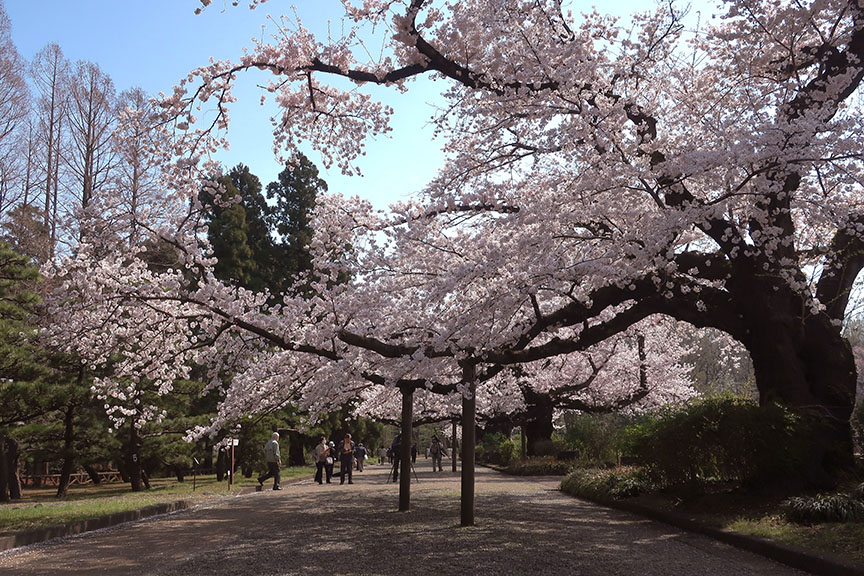
If you’re wondering how big “enormous” might be, check out the photographer looking up at this beauty.
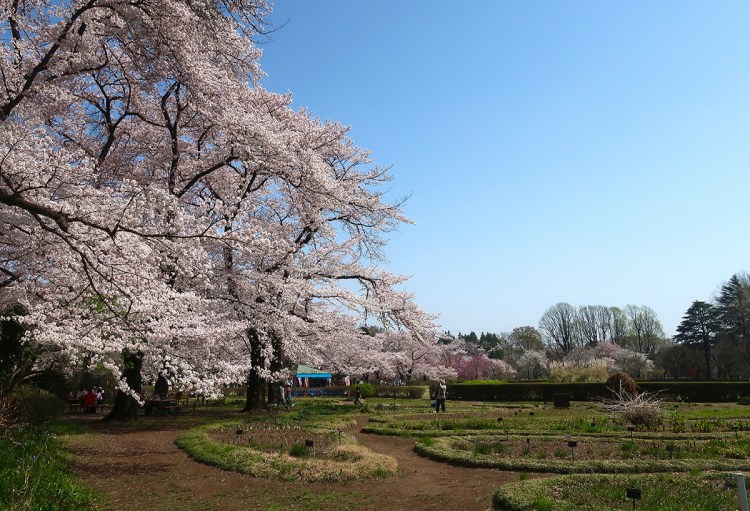
April
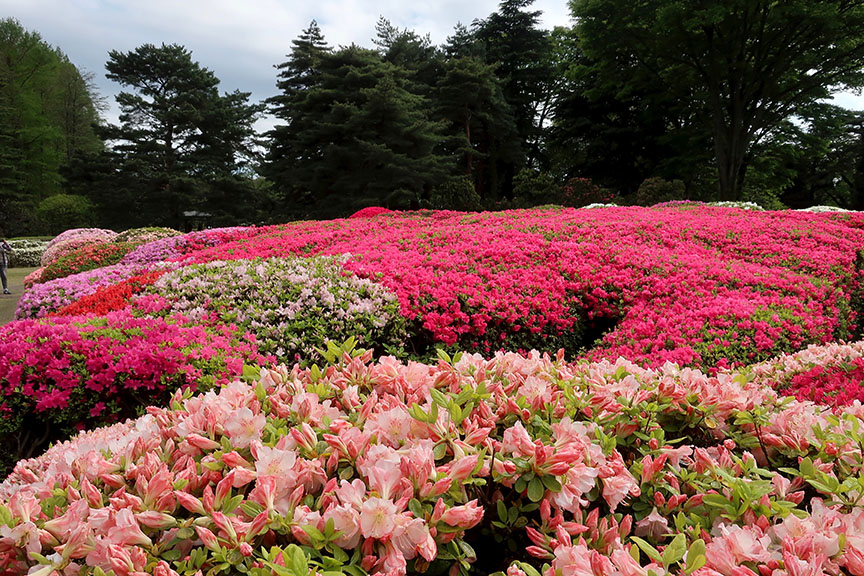
Once the cherry blossoms finish, it’s time for azaleas to take the stage. These are what drew me to this garden in the first place—I used to measure azaleas by the standard of the azaleas at the Imperial Palace’s Ni-No-Maru garden, but these are not only far more varied…
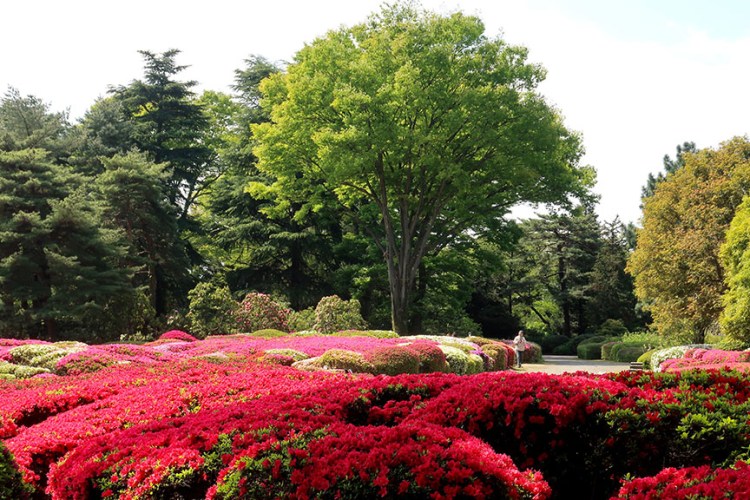
they stand chest-high!
From late April to early May, the small, but choice, peony garden’s stunning varieties burst into bloom…
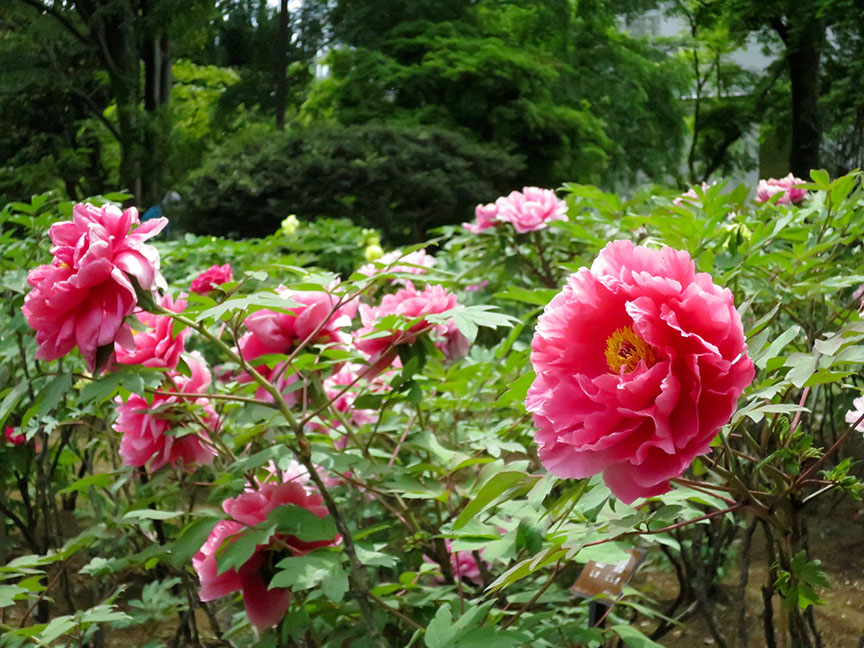
…just as the wisteria is coming into flower nearby.
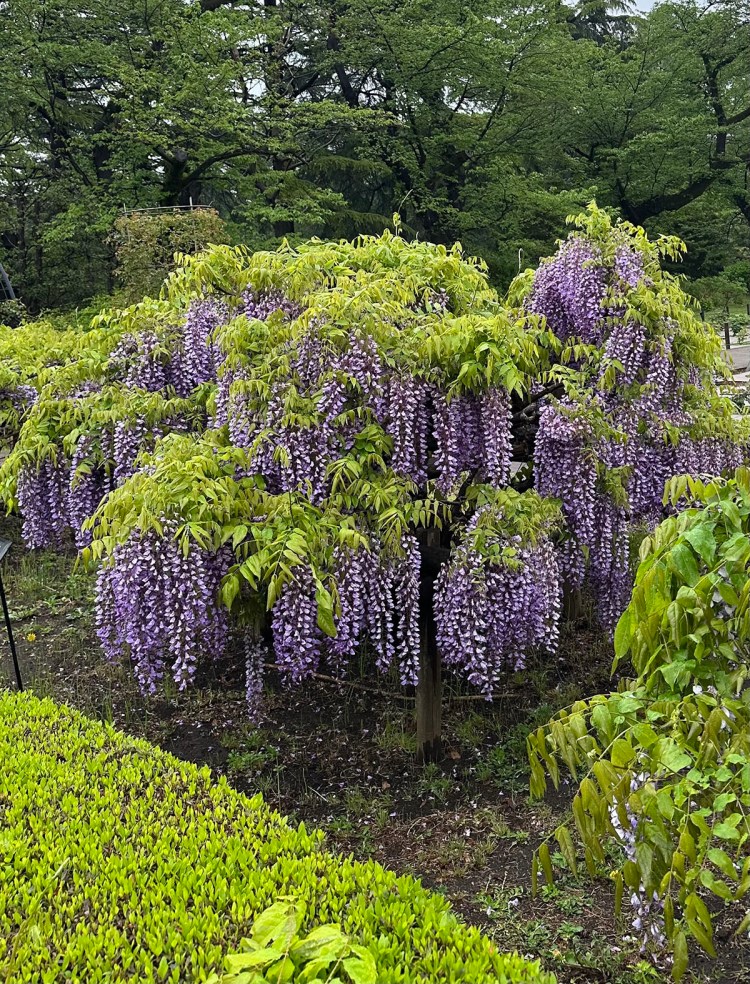
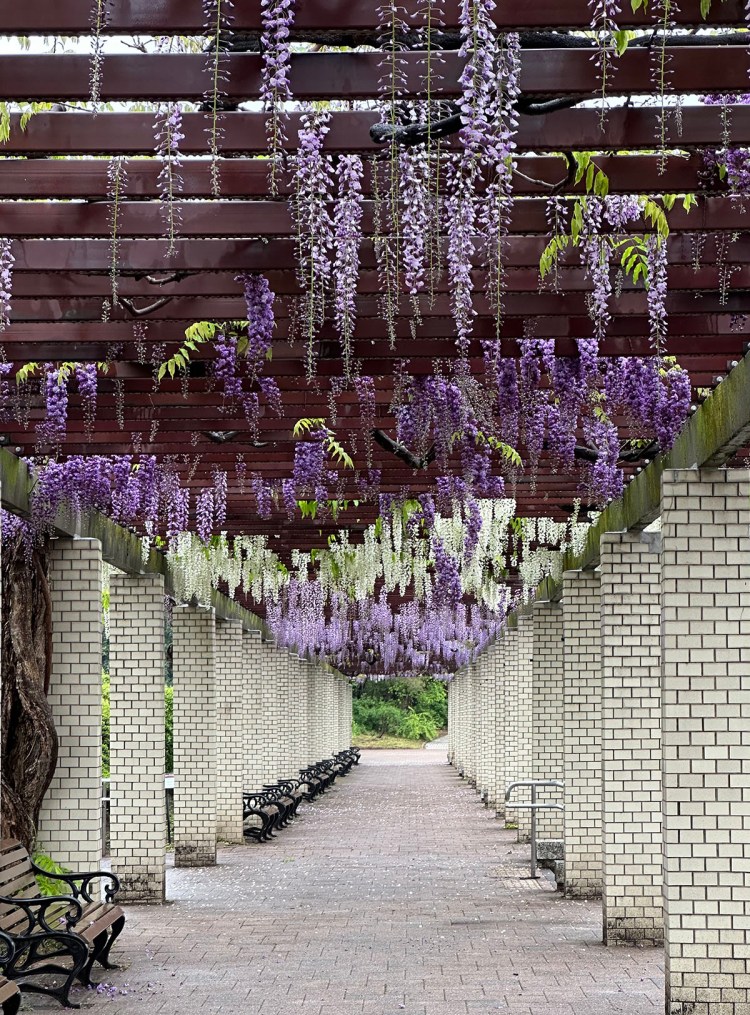
I’ve never seen such a variety of prolifically blooming wisteria outside of the Ashikaga Flower Park!
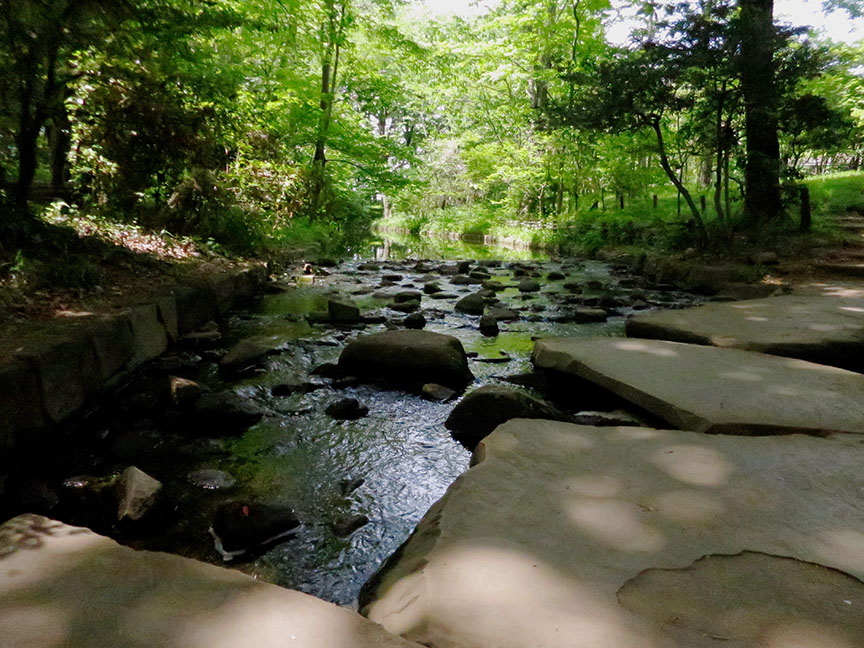
Jindai is especially nice to stroll through on the hottest days of summer, because the forest stream that meanders through the middle of the garden is a refreshing walk, with steppingstone bridges criss-crossing it along the way.
Or you can escape the elements by wandering into the vast greenhouse, which houses a tropical plant stroll, a cactus garden, and rooms full of blooming orchids and begonias.
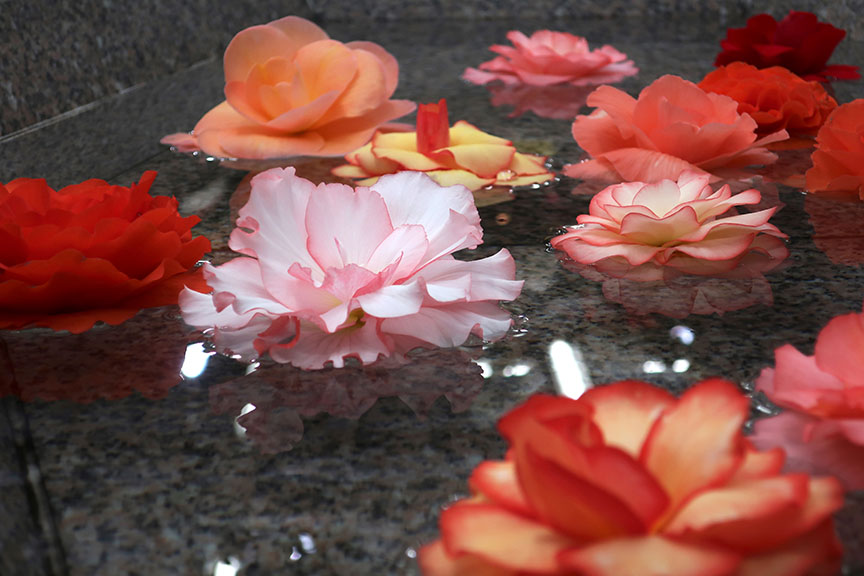
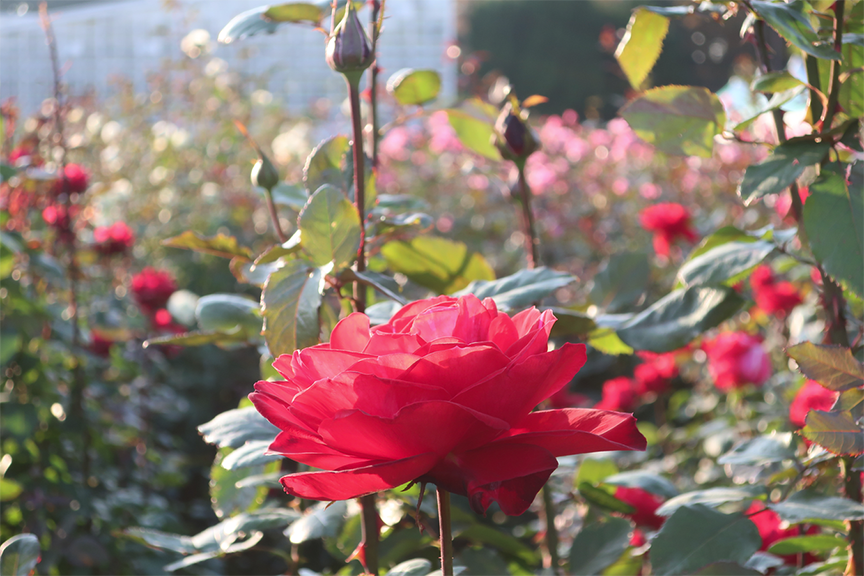
The rose garden is famous, attracting many visitors between May through August.
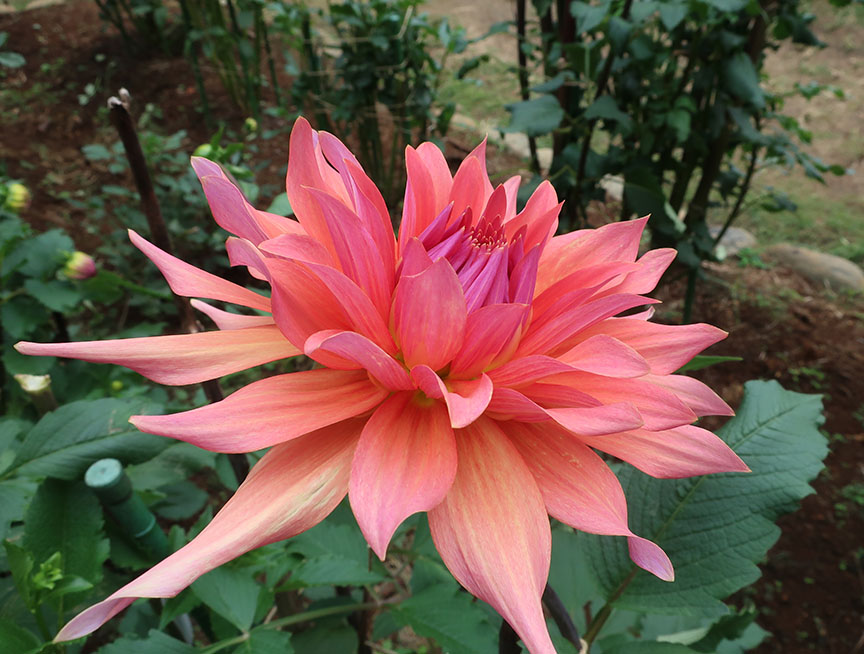
As summer slides into fall (Sept-Oct), the dahlia garden dishes up some eye candy, getting us ready for…
autumn leaves. The sugi trees are the first to go in mid-October…
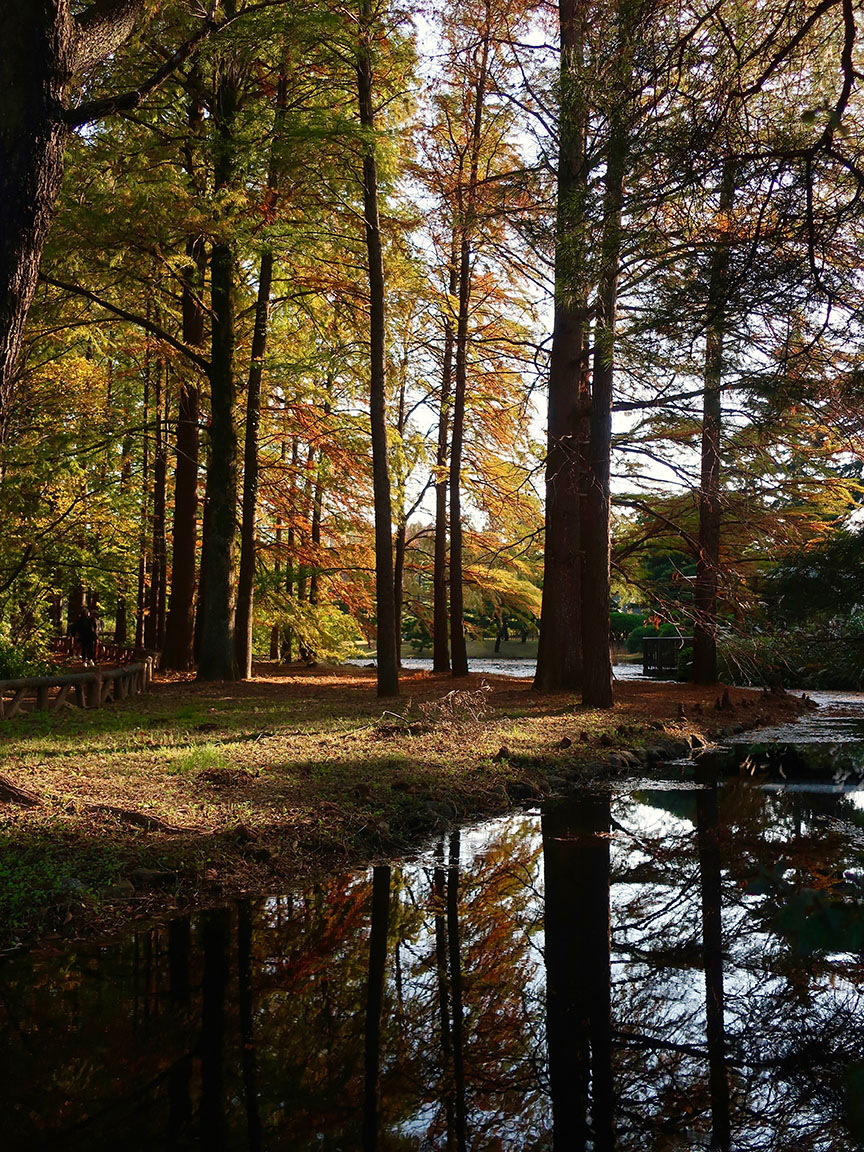
followed by the Japanese maple grove in November…
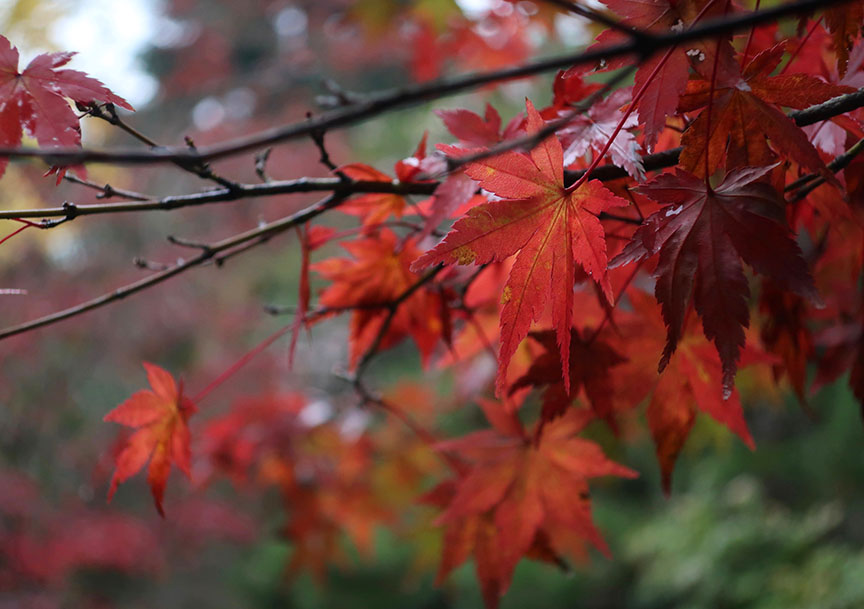
November
November is also the month that the autumn chrysanthemum competition dishes up amazing examples of bonsai chrysanthemums.
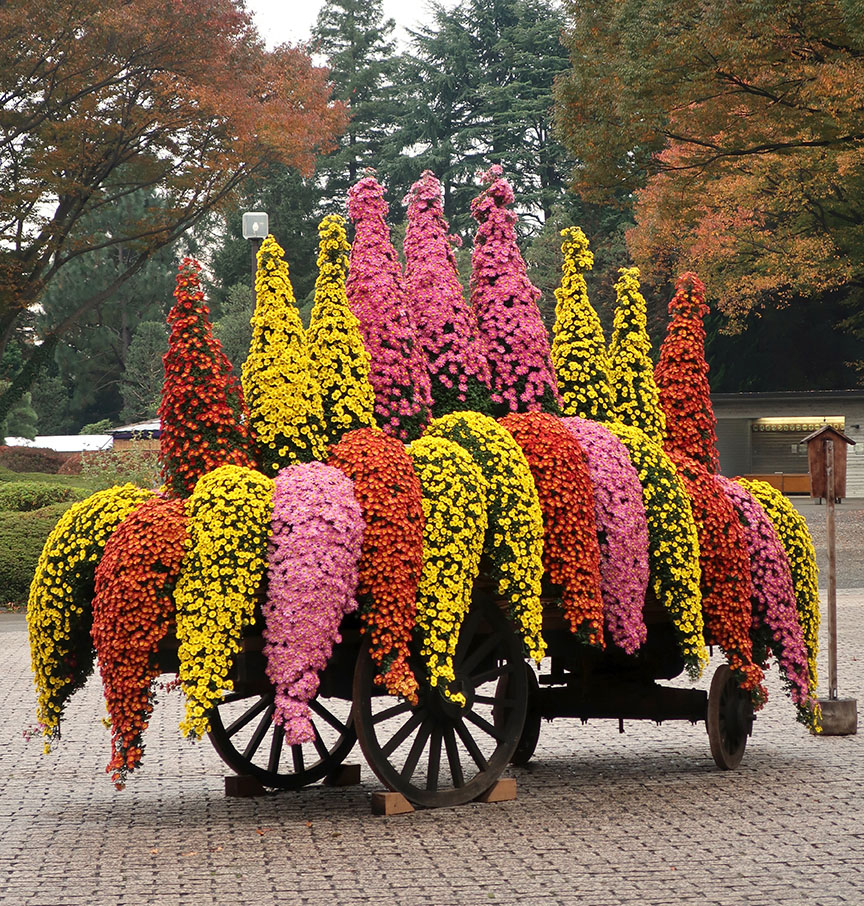
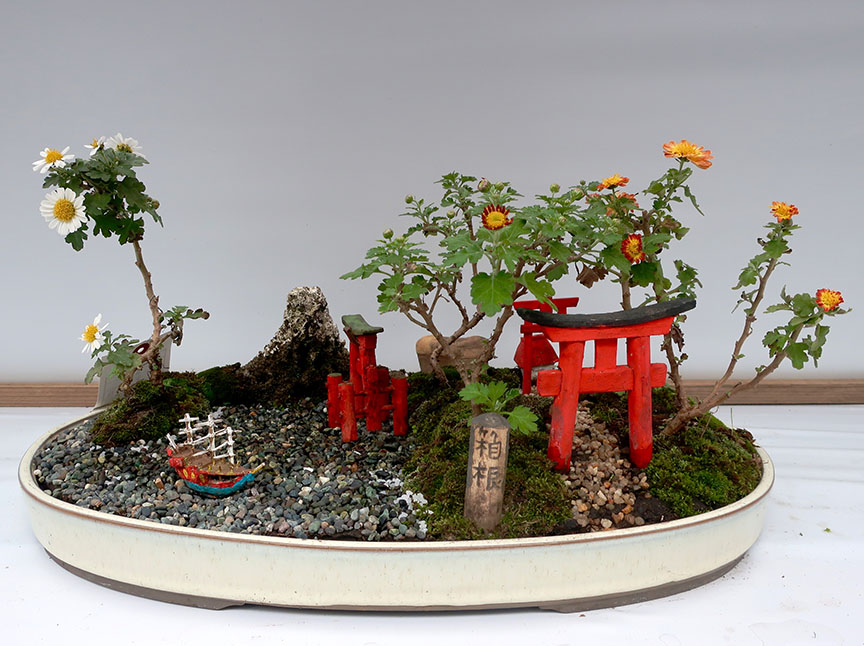
There’s even a category for miniature landscapes…
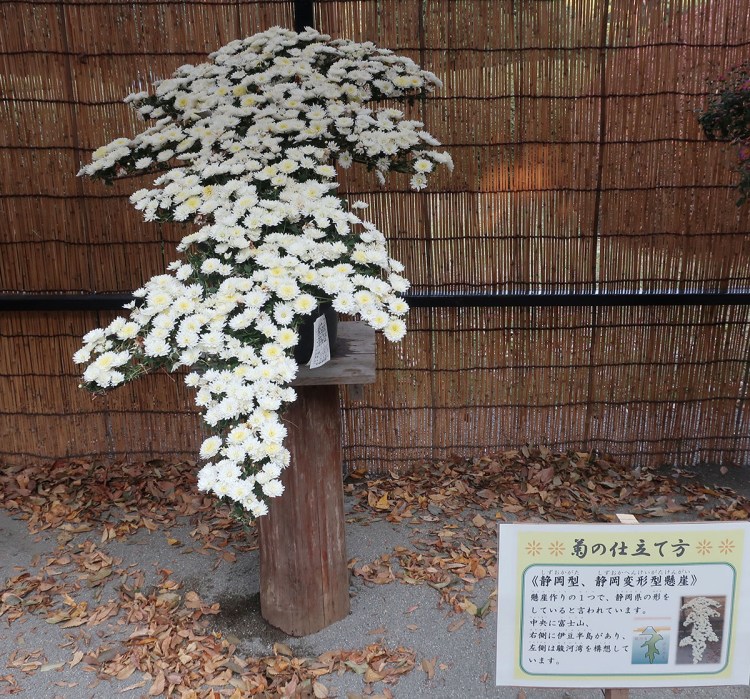
in addition to waterfalls of blooms shaped like Shizuoka Prefecture (go figure!), tiered confections clambering artfully over rocks, and the usual varieties of absolutely perfect pom-poms and spider mums.
This jewel of a garden is outside of central Tokyo, but it’s well worth the trip. If you take an express train (Keio Line) from Shinjuku Station, it takes about twenty minutes to get to Chofu Station, then it’s a ten minute bus ride to the main entrance (take the 4 or the 6 Odakyu bus from outside the North Exit) or an easy thirty minute walk. I guarantee, you won’t be disappointed!
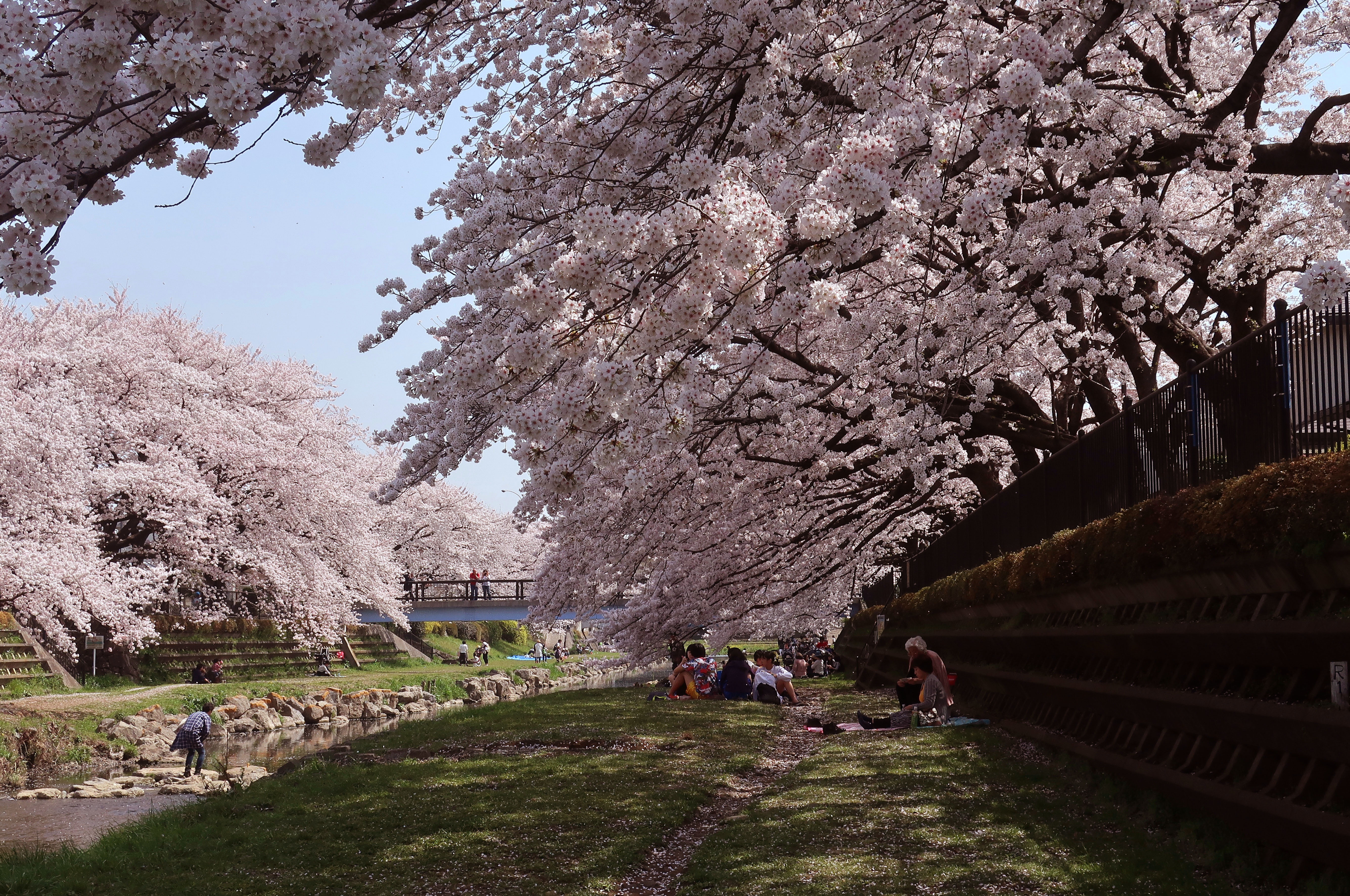
Bit if you decide to walk, you cross the Chofu River on the way, and if it happens to be cherry blossom season…this!
Jindai Botanical Garden
Hours: 9:30 – 17:00
Open: Every day except closed Mondays
Admission: Adults: ¥500, Children: ¥250
•
If you enjoyed this, subscribe!
Get all the latest Japan travel tips and tricks for free ヽ(*^ω^*)ノ
And here are the other places I take my friends when they come to town

•
Jonelle Patrick writes novels set in Japan, produces the monthly e-magazine Japanagram, and blogs at Only In Japan and The Tokyo Guide I Wish I’d Had
 Jonelle Patrick writes about Japan
Love this seasonal exploration of a Japanese garden.
It makes so much sense to do it that way, doesn’t it? Some gardens are so much better in certain seasons, especially in Japan!