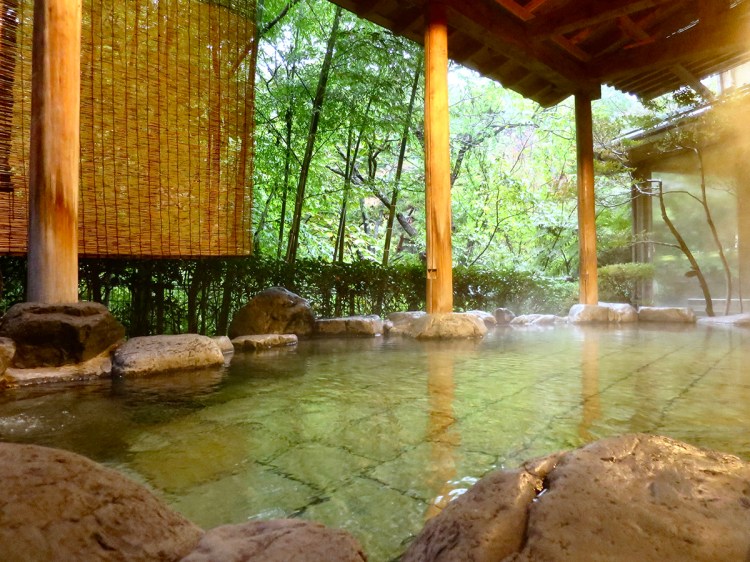
Japanese traditional inns’ #1 anxiety-producing rule is without a doubt, “You must bathe nude with strangers.” Naturally, those who come from cultures where nakedness is seldom allowed outside of intimate situations* this just feels wrong. And no amount of online assurance that “nobody cares how you look” and judgey admonishment to “just get over your Puritan ways” makes it feel any less uncomfortable. Naturally, the question arises…
Why can’t I wear a swimsuit in the bath?
The real reason has nothing to do with respecting Japanese culture. The real reason you won’t find any traditional inns (ryokan or onsen) with baths that allow swimwear (even in the private baths in your room) is if someone wears swimwear in an onsen bath, the staff have to completely drain the bath and sanitize it before it can be used again by anyone. This is no joke—by law, they have to sanitize it to the same standard as if they found a brown trout floating in the water.
The water in the baths at traditional inns is natural mineral spring water (it must be licensed by law) and has no purifying chemicals added. Ryokans—inns without their own spring on the property—must pay to have it trucked in at least once a week from a licensed spring. The bath water stays clean because every guest washes with soap and rinses thoroughly before they get in to soak. If you get in the bath wearing a swimsuit, it’s assumed you didn’t wash your body carefully with soap first (because how could you do that wearing a swimsuit?) and there’s no way for the inn to know how clean your suit is.
If anyone dips into the bath wearing a suit, the bath must be closed to all guests, and it can take a day or more to clean it to the level required by law. You end up ruining the experience for everyone who is staying at the inn (not to mention the innkeepers, who have to do the deep cleaning—and in the case of ryokans—arrange for more water to be trucked in.)
So please, if being naked with strangers makes you too uncomfortable, just say “no thanks” to the bath experience, and use the showering facility while other guests are likely to be eating or sleeping. There are plenty of other delights at your Japanese inn to make fond memories of instead!
*Locker rooms being the obvious exception
•
If you enjoyed this, subscribe!
Get all the latest Japan travel tips and tricks for free ヽ(*^ω^*)ノ
Would you like to be whisked away to Japan, wherever you are?
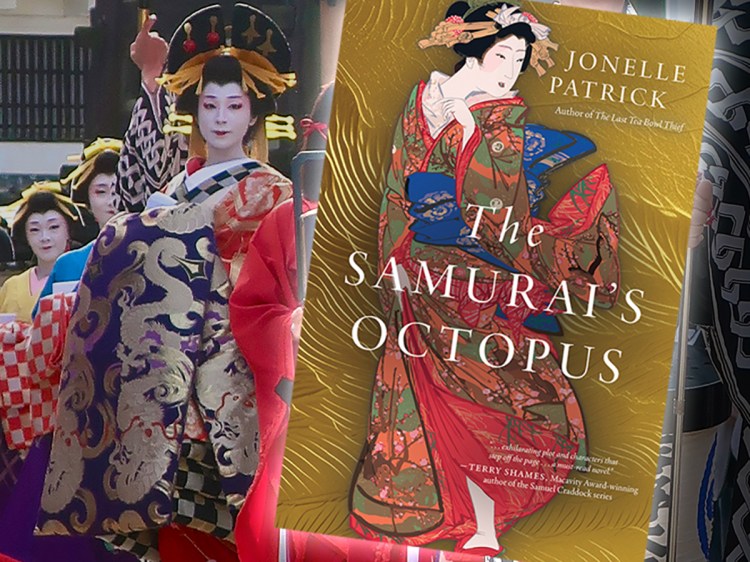

“The Samurai’s Octopus is a truly remarkable book, one that surprised and charmed me at every turn of the page…an enchanting, fascinating journey. You’re in for a treat.”
—James Ziskin, Anthony, Barry, and Macavity Award-winning author of the Ellie Stone mysteries
Jonelle Patrick writes novels set in Japan, produces the monthly e-magazine Japanagram, and blogs at Only In Japan and The Tokyo Guide I Wish I’d Had

