In Japan, working stiffs may not get much in the way of work-life balance, but machines sure do. Behold the off-duty vending machine!

This pair is on the overnight ferry that travels between Ochiai and Hokkaido, and between the hours of 9:00 pm and 6:00 am, it’s impossible to buy a meal ticket for the on-board cafeteria. But that’s not the only Japanese machine that clocks out for the night!
Ticket vending machines at train stations also shut down around 11:00, after the last train leaves that station for the day.

Game machines at arcades go dark after 11:00 pm and bank ATMS are also shuttered “after hours.”*
What? Why?
That makes no sense! Machines don’t need to eat and sleep!
But the people who service them do. There’s no single explanation for why some Japanese machines shut down “after hours” but the most common one is that the people who must be available to help customers if something goes wrong don’t work nights.
The most-cited reason for bank ATM closing hours, though, is that transactions are reconciled overnight, and there are points of vulnerability in the system that would allow thieves who know how to time their withdrawals to make off with unrecorded cash.
It’s also commonly suggested that Japanese banks need the overnight hours for system maintenance, made complex by modernization patches and ad-ons that require more time to upgrade and check. Another explanation is that when ATMs were first introduced, bank workers’ unions demanded that ATMs keep the same hours as human employees, in order to protect the jobs of people who might be laid off if customers used the machines instead of coming in for personal service.
And, of course, once a rule is agreed upon in Japan, it’s seldom repealed, even if outdated.
These closures don’t affect foreigners much, since most Japanese bank ATMs only dispense cash to customers with accounts at that bank, but Japanese customers know they’d better nab a wad of cash on their Friday lunch break if they don’t want to be caught with empty pockets over the weekend!
The reason game machines shut down at 11:00, even in arcades that are otherwise open all night, is that kids are the main customers for those games and most kids aren’t out past 11:00. Shutting the non-adult machines down after their customers are home in bed saves on the arcade’s non-trivial electricity bill.
That’s why they shut down train ticket vending machines too. As a rule, Tokyo trains don’t run between midnight and 5:00 am, so there’s no reason for riders to buy a ticket after the last train leaves each station. Shutting the ticket machines off saves electricity. The shutdown time may vary by station, because 12:00 pm is when the last scheduled train of the day reaches its final destination, not when it stops at that station. Ticket machine closing time at each station is usually timed to when the last train of the day stops there.
Saving electricity is something that has always loomed large in Japan, because they have no native source of oil, so it must all be imported. In recent years, they’ve increasingly relied on nuclear and renewable energy sources, but the precariousness of the energy supply is brought home every time there is a major earthquake and nuclear plants need to be shut down for safety checks or repairs.
But why do meal ticket machines shut down on the overnight ferry? That remains a mystery. If you find out, tell me!
*Lucky for travelers, the ATMs at 7/11 convenience stores stay open as long as the store itself is open, and don’t tack on an after-hours fee on top of the transaction fee (like banks do) if used after business hours. If you’re traveling to Japan, this is the easiest and cheapest way to get yen.
•
If you enjoyed this, subscribe!
Get all the latest Japan travel tips and tricks for free ヽ(*^ω^*)ノ
Would you like to be whisked away to Japan, wherever you are?
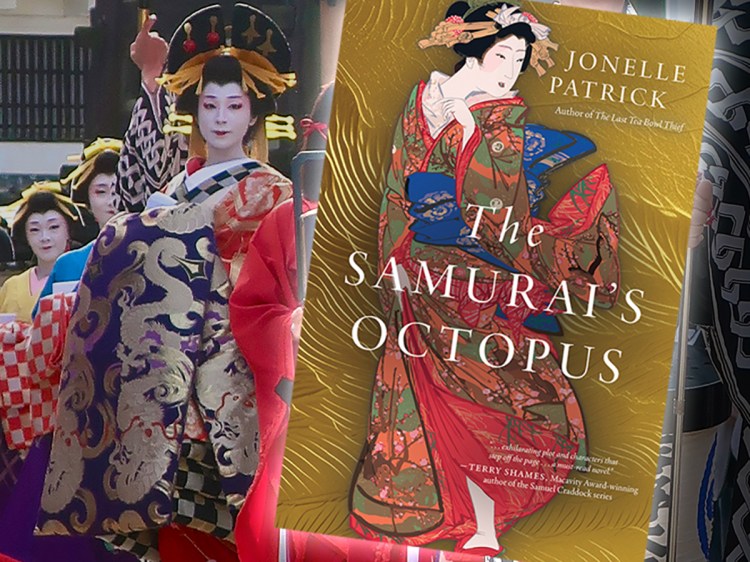

“The Samurai’s Octopus is a truly remarkable book, one that surprised and charmed me at every turn of the page…an enchanting, fascinating journey. You’re in for a treat.”
—James Ziskin, Anthony, Barry, and Macavity Award-winning author of the Ellie Stone mysteries

Jonelle Patrick writes novels set in Japan, produces the monthly e-magazine Japanagram, and blogs at Only In Japan and The Tokyo Guide I Wish I’d Had

